Introduction
Ice baths have become popular with athletes, runners, gym users and recovery-focused fitness shoppers. They are used for cold water immersion, post-workout recovery routines and general cold exposure at home.
The best ice bath should be practical, stable, easy to set up and suitable for your available space. Some people prefer portable inflatable ice baths, while others prefer hard shell tubs, foldable tubs or larger cold plunge setups.
In this guide, we explain what to look for when buying ice baths in the UK and how to choose the right option for recovery, home use, gym training, running and sports performance routines.
What is an ice bath?
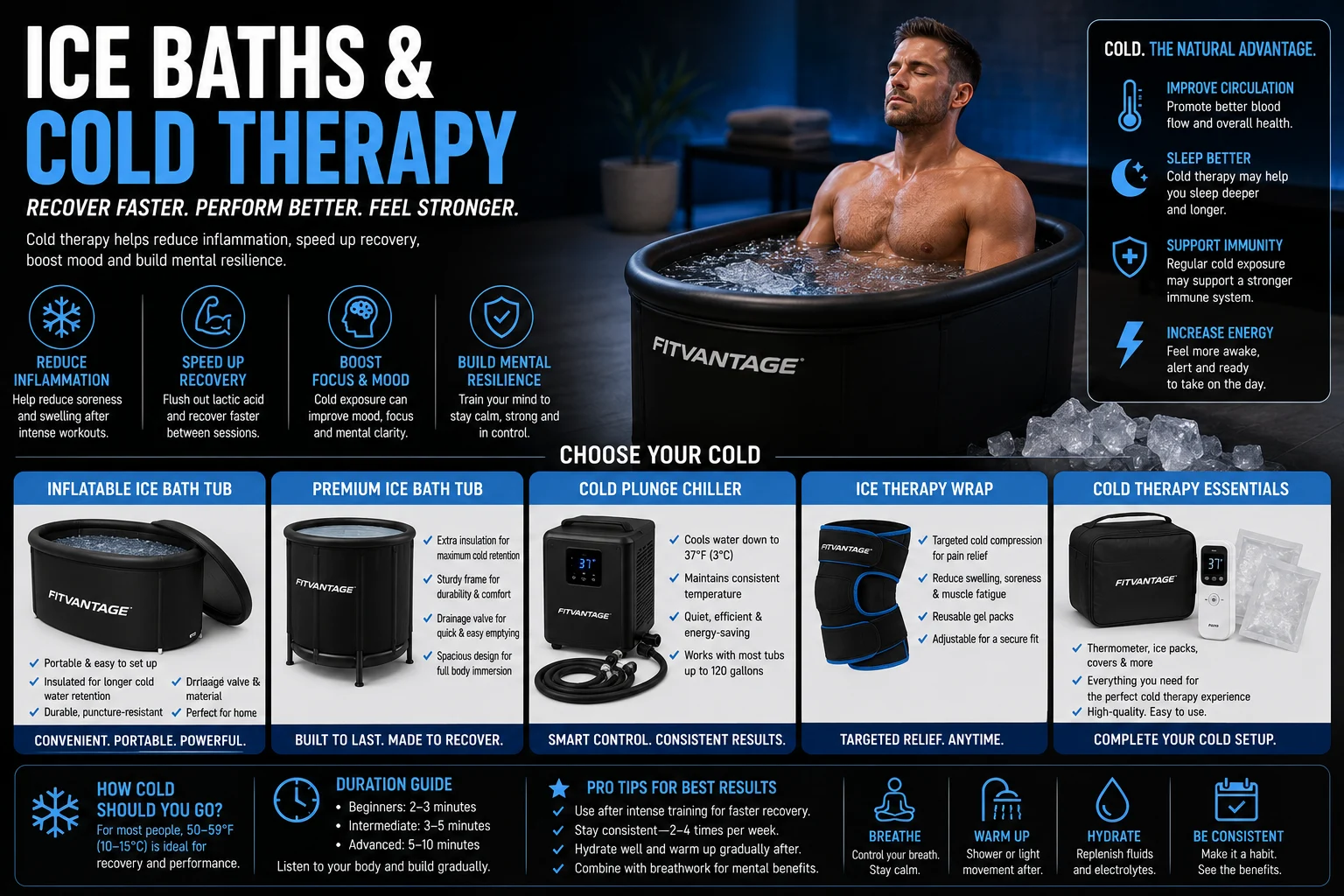
An ice bath is a tub or container filled with cold water, often with added ice, used for cold water immersion. It can be used after workouts, sports sessions or as part of a wider recovery routine.
Ice baths can range from simple portable tubs to more advanced cold plunge systems with insulation, covers, drainage valves and temperature control features.
Who should buy an ice bath?
An ice bath may be useful for athletes, runners, gym users, cyclists, footballers, combat sports users and people interested in cold water recovery at home.
It may also suit people who want a dedicated cold plunge tub instead of using a bath at home or travelling to recovery centres.
What to look for in an ice bath
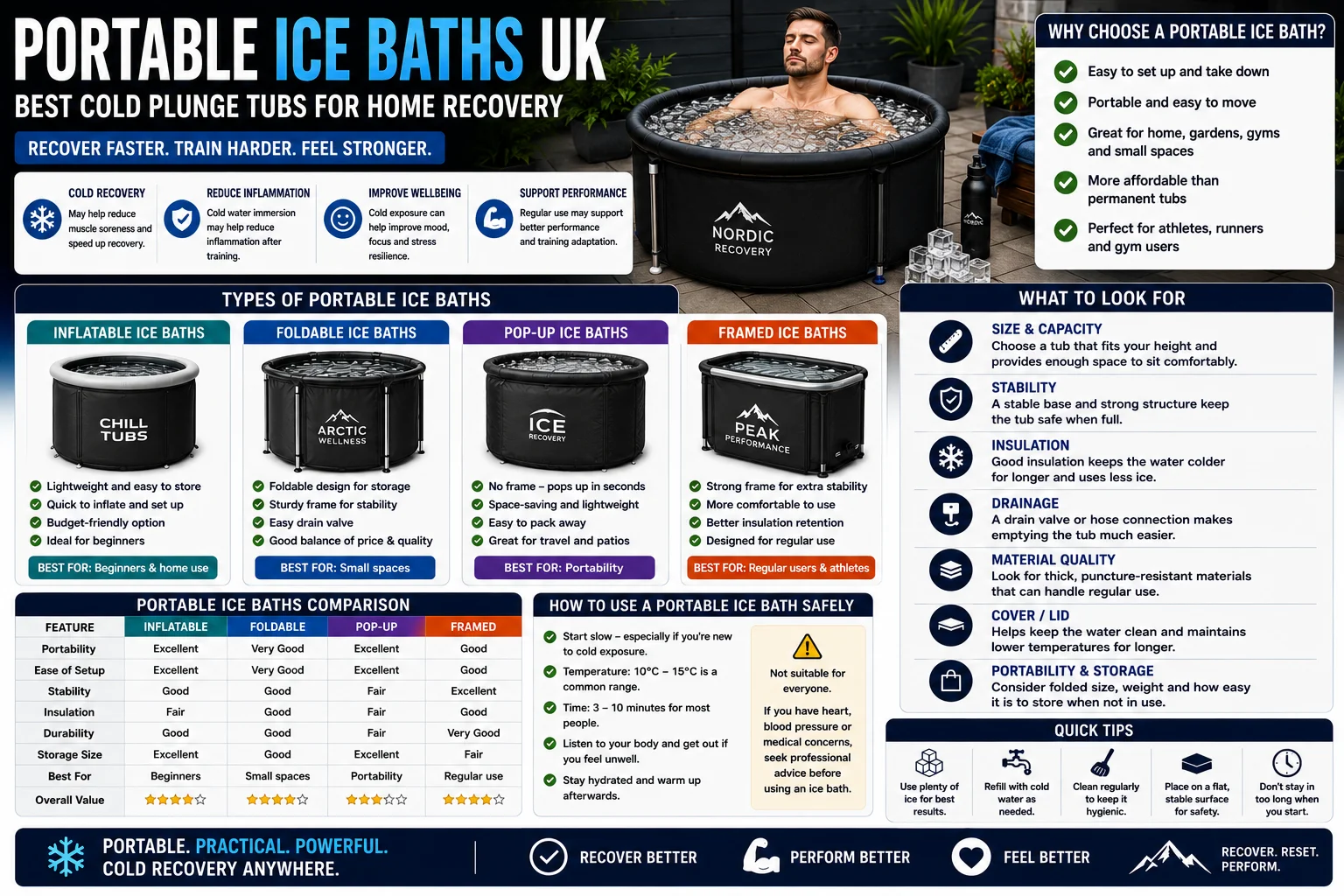
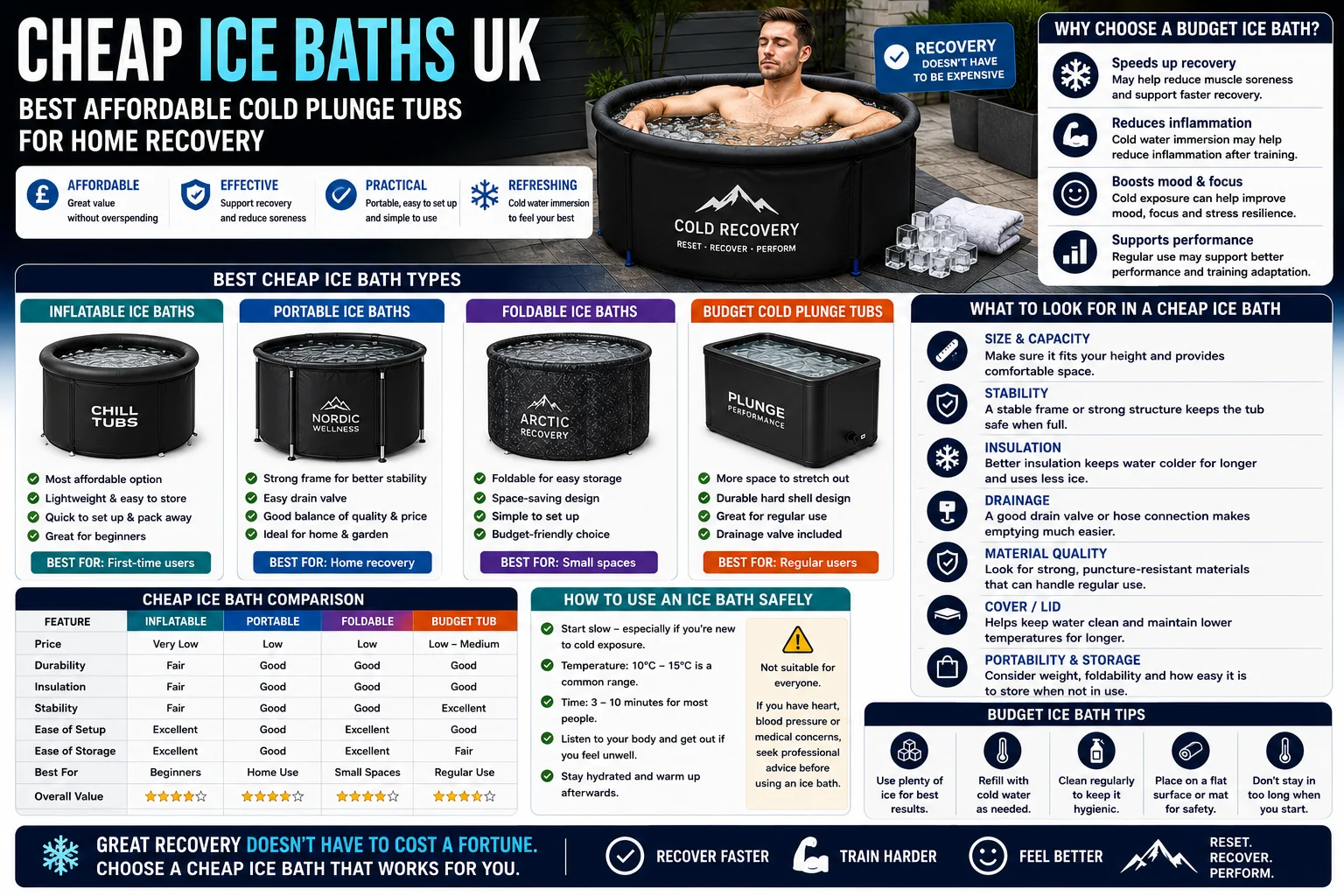
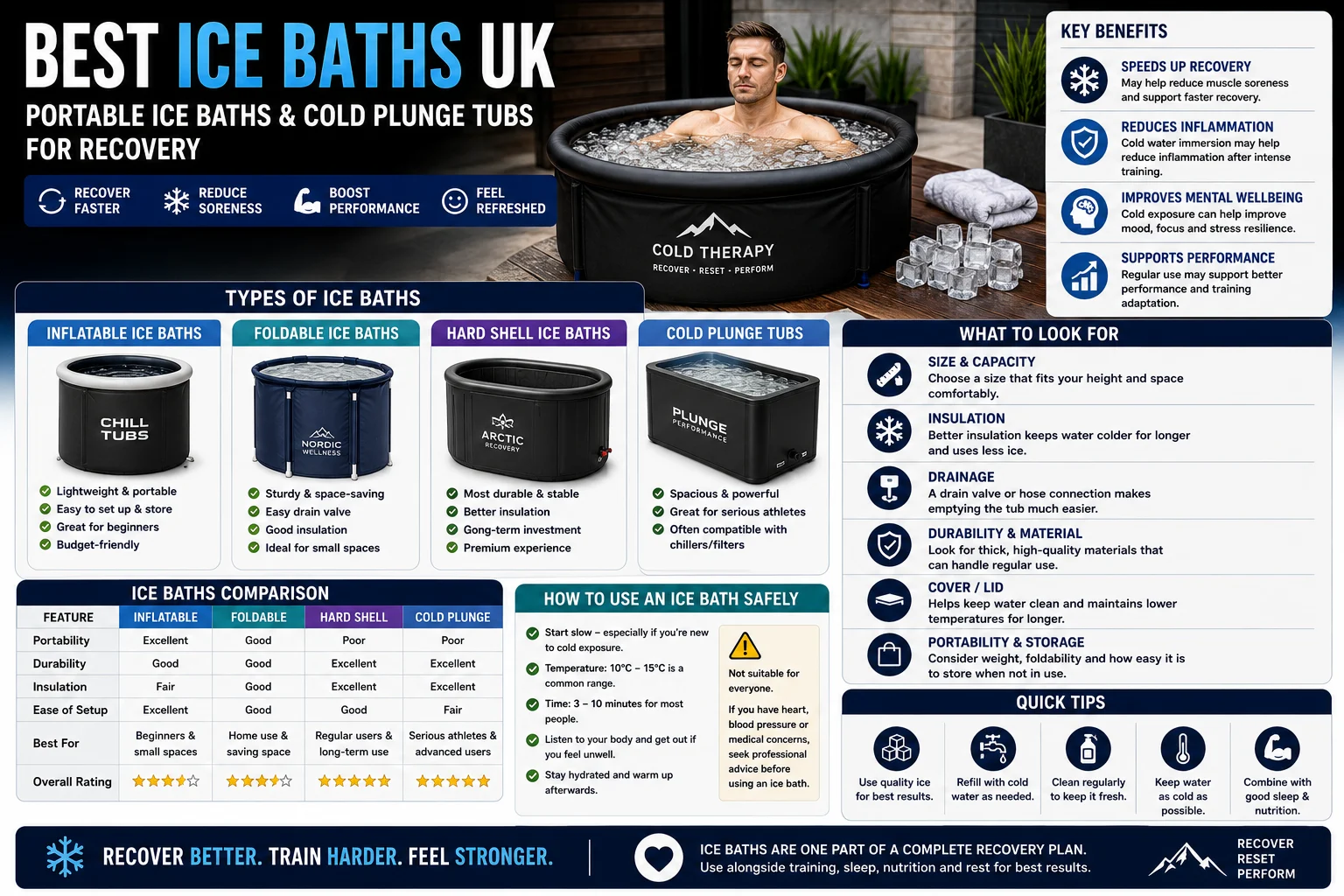
When choosing an ice bath, look at size, capacity, material, insulation, stability, drainage, portability, comfort, setup time, storage and whether it includes a lid or cover.
The best option depends on your space and routine. A portable ice bath may suit small gardens and home users, while a larger tub may suit serious recovery routines.
Best portable ice baths
Portable ice baths are popular because they are easier to set up, move and store than permanent cold plunge systems. They can be useful for gardens, patios, garages and small home recovery spaces.
Look for a portable tub that is stable when filled with water, easy to drain and large enough for your body size.
Best inflatable ice baths
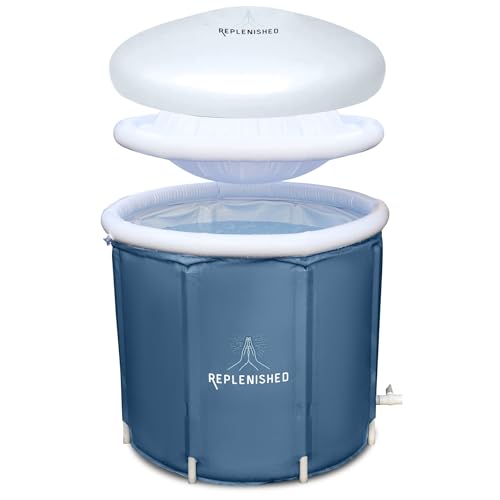
Inflatable ice baths are usually lightweight and easy to store when not in use. They can be a good option for beginners who want to try cold water immersion without installing a permanent tub.
The downside is that inflatable products can vary in durability. Check the material, seams, support frame and repair options before buying.
Best hard shell ice baths
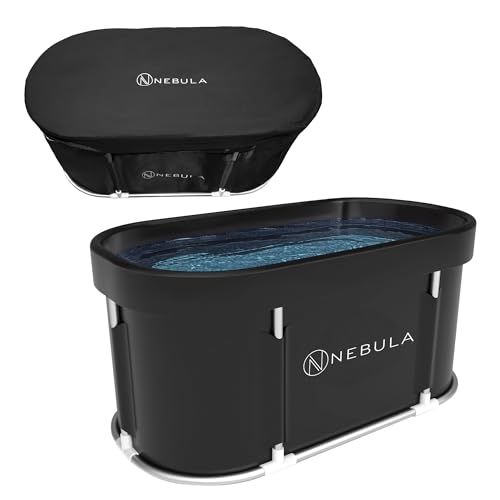
Hard shell ice baths are usually more durable and stable than inflatable tubs. They may suit users who plan to use cold water immersion regularly and want a more permanent setup.
They can take up more space and may cost more, but they often feel more secure and long-lasting than lightweight portable options.
Best ice baths for home use
For home use, consider where the ice bath will sit, how you will fill it, how you will drain it and how you will keep it clean. Gardens, garages and patios are common locations.
If space is limited, a foldable or inflatable ice bath may be easier to manage than a large fixed tub.
Best ice baths for gym recovery
Gym users may use ice baths after intense sessions, leg days, conditioning workouts or sports training. A practical ice bath should be easy to access, fill, drain and clean.
If you train regularly, durability and cleaning become more important than simply choosing the cheapest tub.
Best ice baths for runners
Runners may use ice baths after long runs, hard intervals, hill training or race days. A portable ice bath can be useful if you want a recovery option at home after training.
Cold water immersion should be used sensibly. It should not replace rest, sleep, nutrition, stretching or proper training load management.
Best ice baths for athletes
Athletes may prefer larger and more durable ice baths because they may use them more frequently. Stability, insulation, drainage and easy cleaning matter for regular use.
If several people may use the tub, hygiene and water management become especially important.
Ice bath size and capacity
Ice bath size matters because the tub needs to fit your body comfortably enough for safe use. A tub that is too small may feel cramped, while a very large tub may require more water and ice.
Check product dimensions carefully before buying. Consider height, width, water depth and whether you can sit comfortably inside.
Ice bath insulation
Insulation helps the water stay colder for longer. This can reduce the amount of ice needed and make the tub more practical for repeated use.
Portable and inflatable tubs vary in insulation quality, so check whether the product has insulated layers or a thermal cover.
Ice bath drainage
Good drainage is important because ice baths hold a lot of water. A drain valve or hose connection can make emptying the tub easier and less messy.
Before buying, think about where the water will go when drained. This matters if you use the tub indoors, in a garage or near delicate flooring.
Ice bath covers and lids
A cover or lid can help keep debris out of the water and may help the water stay cooler for longer. This is useful if the ice bath is kept outside.
If you plan to leave water in the tub between uses, a cover becomes more important for cleanliness and practicality.
Portable ice bath vs cold shower
A cold shower is easier and cheaper because it does not require a separate tub. However, an ice bath provides fuller cold water immersion and can feel more consistent for recovery routines.
If you are new to cold exposure, a cold shower may be a simpler starting point before buying an ice bath.
Portable ice bath vs bath at home
A normal bath can be used for cold water immersion, but it may not be practical for everyone. It can use a lot of ice, may be harder to clean afterwards and may not suit shared bathrooms.
A dedicated portable ice bath can be more convenient if you want to keep cold recovery separate from your normal bathroom use.
Inflatable ice bath vs hard shell ice bath
Inflatable ice baths are usually cheaper, lighter and easier to store. They suit beginners and people with limited space.
Hard shell ice baths are usually stronger, more stable and better for frequent use. They may suit serious users who want a longer-term recovery setup.
Are ice baths good for recovery?
Ice baths may support recovery routines for some people by helping them feel refreshed after hard training. They are commonly used in sports and fitness recovery settings.
However, recovery is not only about cold water. Sleep, nutrition, hydration, sensible training load and rest still matter most.
Are ice baths safe?
Ice baths should be used carefully. Cold water can be stressful on the body, especially for people with certain health conditions or those new to cold exposure.
Start gradually, avoid extreme temperatures and do not stay in too long. If you have heart, blood pressure, circulation or medical concerns, seek professional advice before using ice baths.
How long should you stay in an ice bath?
Beginners should keep sessions short and controlled. There is no need to stay in cold water for a long time, especially when starting.
Follow product guidance, listen to your body and stop if you feel unwell, dizzy, numb, excessively cold or uncomfortable in an unusual way.
How often should you use an ice bath?
Some people use ice baths after hard workouts or sports sessions, while others use them occasionally. Frequency depends on your training, recovery needs and tolerance.
More is not always better. Use ice baths as one part of a wider recovery plan rather than relying on them for every issue.
How to keep an ice bath clean
Cleaning matters because ice baths hold water and may be used outdoors. Follow the manufacturer’s cleaning guidance and avoid leaving dirty water sitting for too long.
A cover, regular draining and proper cleaning can help keep the tub more hygienic and pleasant to use.
Common mistakes when buying ice baths
One common mistake is buying an ice bath without checking size and capacity. A tub that is too small may be uncomfortable, while a tub that is too large may be difficult to fill and cool.
Another mistake is ignoring drainage. Emptying a full ice bath can be difficult if there is no practical drain valve or hose option.
Final thoughts
The best ice baths are practical, stable and suitable for your space. Portable and inflatable ice baths may suit beginners and small home setups, while hard shell tubs may suit regular users who want more durability.
Choose based on size, drainage, insulation, storage, cleaning and how often you plan to use it. Ice baths can be a useful recovery tool, but they should be used safely and as part of a balanced recovery routine.