Introduction
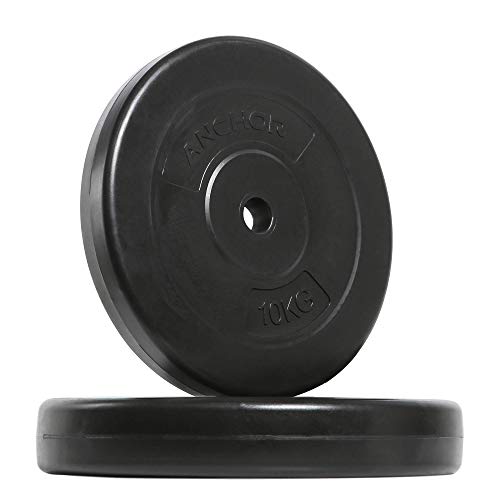
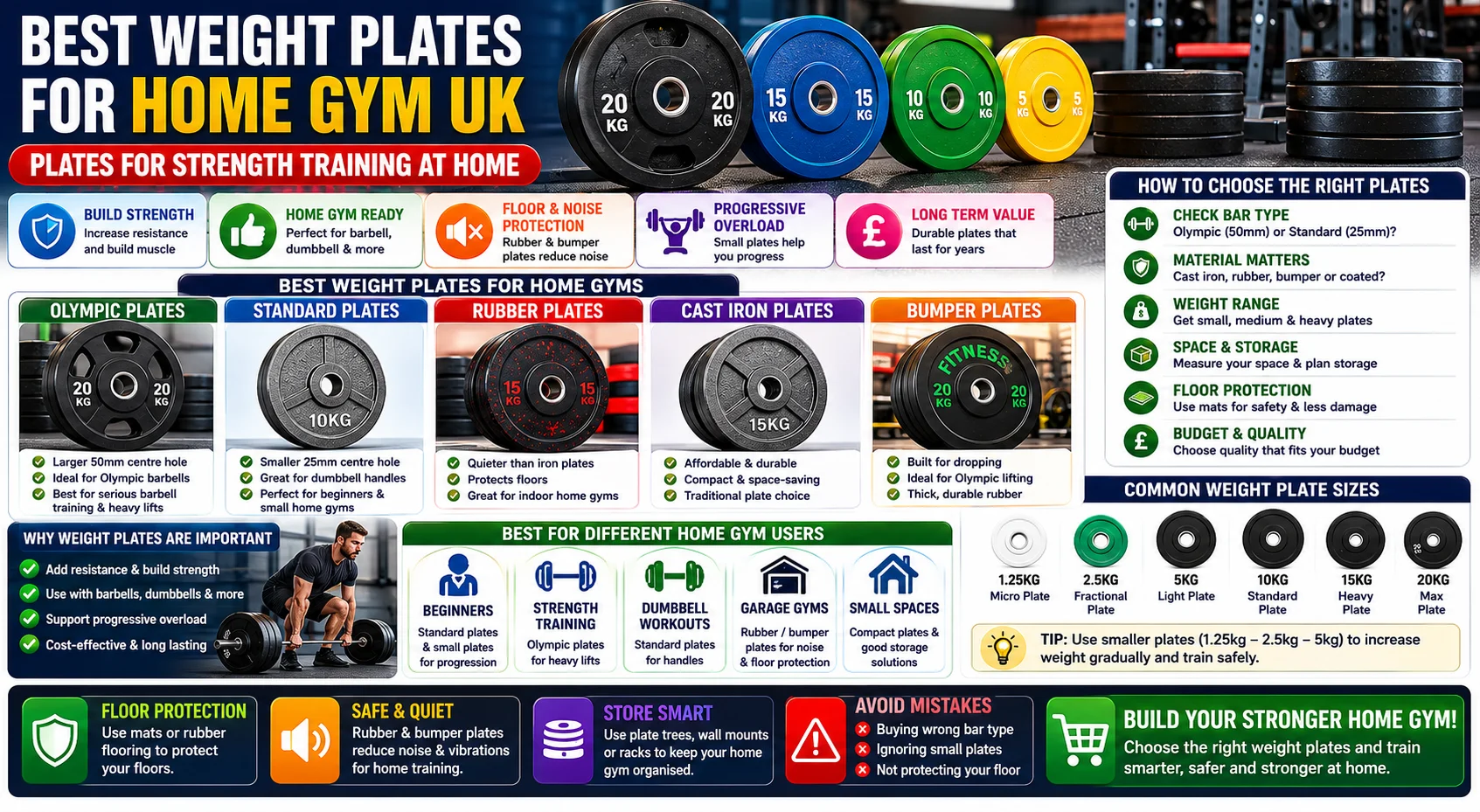
Bumper plates are weight plates usually made from dense rubber and designed for Olympic barbells. They are popular for home gyms, garage gyms, Olympic lifting, CrossFit-style workouts and strength training where floor protection and noise reduction matter.
The best bumper plates should fit your Olympic bar, handle repeated use and suit your training space. They are usually thicker than cast iron plates, but they can be more floor-friendly and better suited to lifts where the bar may be lowered or dropped under control.
In this guide, we explain what to look for when buying bumper plates in the UK and how to choose the right plates for home gyms, barbell training, Olympic lifting and strength progression.
What are bumper plates?
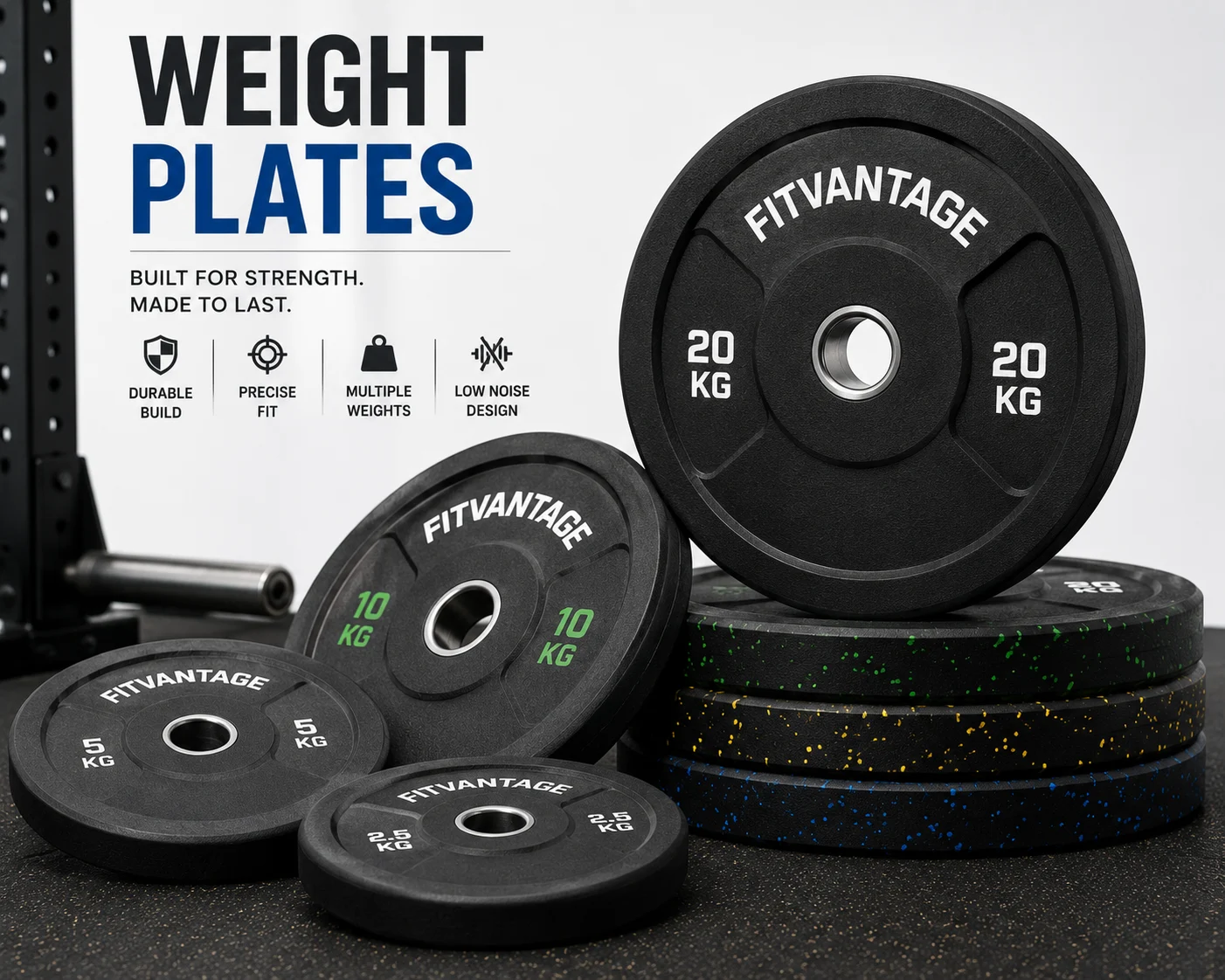
Bumper plates are rubber weight plates designed to fit Olympic barbells. Unlike basic cast iron plates, bumper plates are made to absorb more impact and reduce noise when the bar is lowered to the floor.
They usually have a larger centre hole for Olympic bars and are commonly used for deadlifts, cleans, snatches, overhead lifts and functional fitness training.
Who should buy bumper plates?
Bumper plates can be useful for home gym users, garage gym owners, Olympic lifters, CrossFit-style trainees, strength training users and anyone who wants quieter, more floor-friendly plates.
They may be especially useful if you train at home and want to reduce noise, protect flooring and use an Olympic barbell for compound lifts.
What to look for in bumper plates
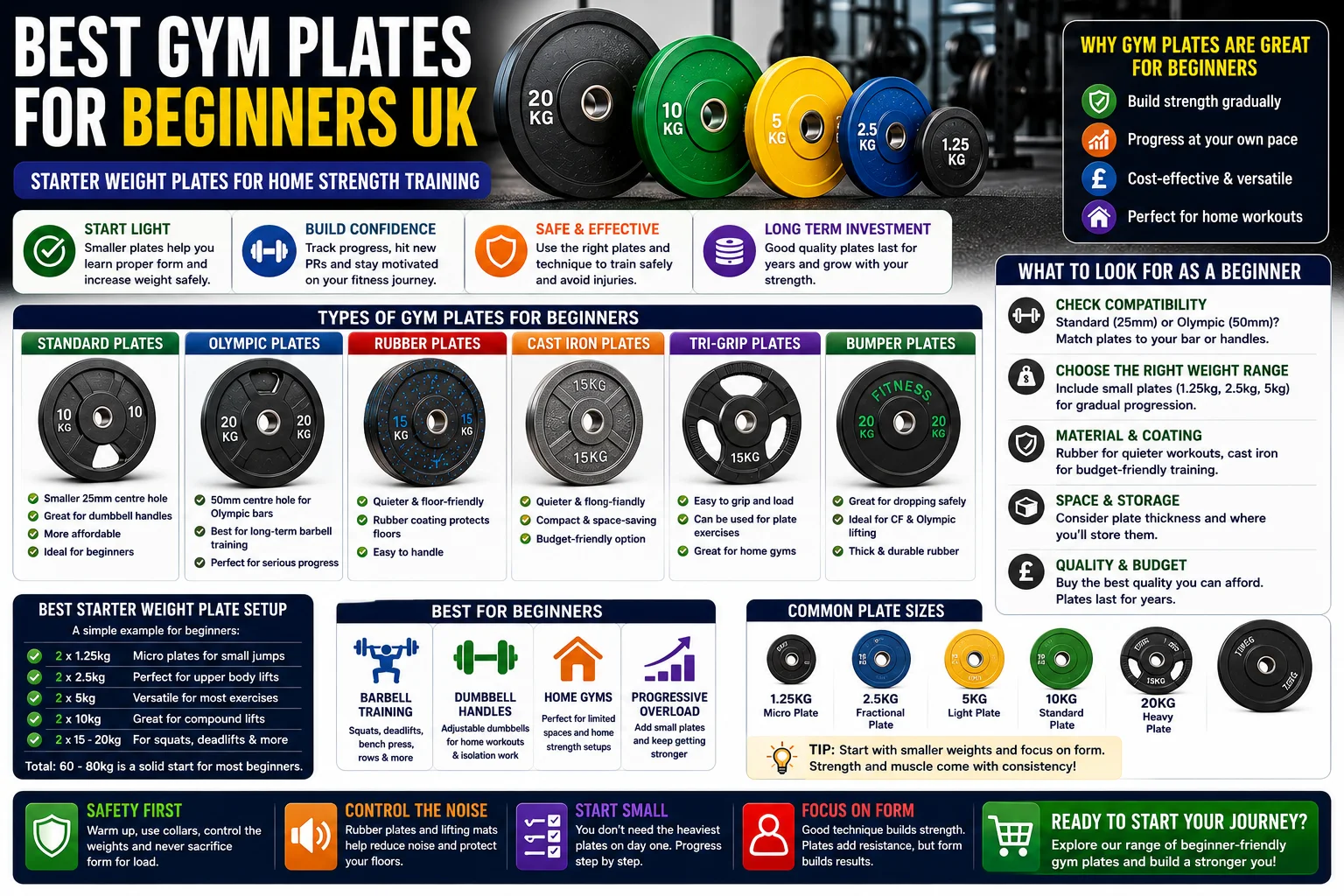
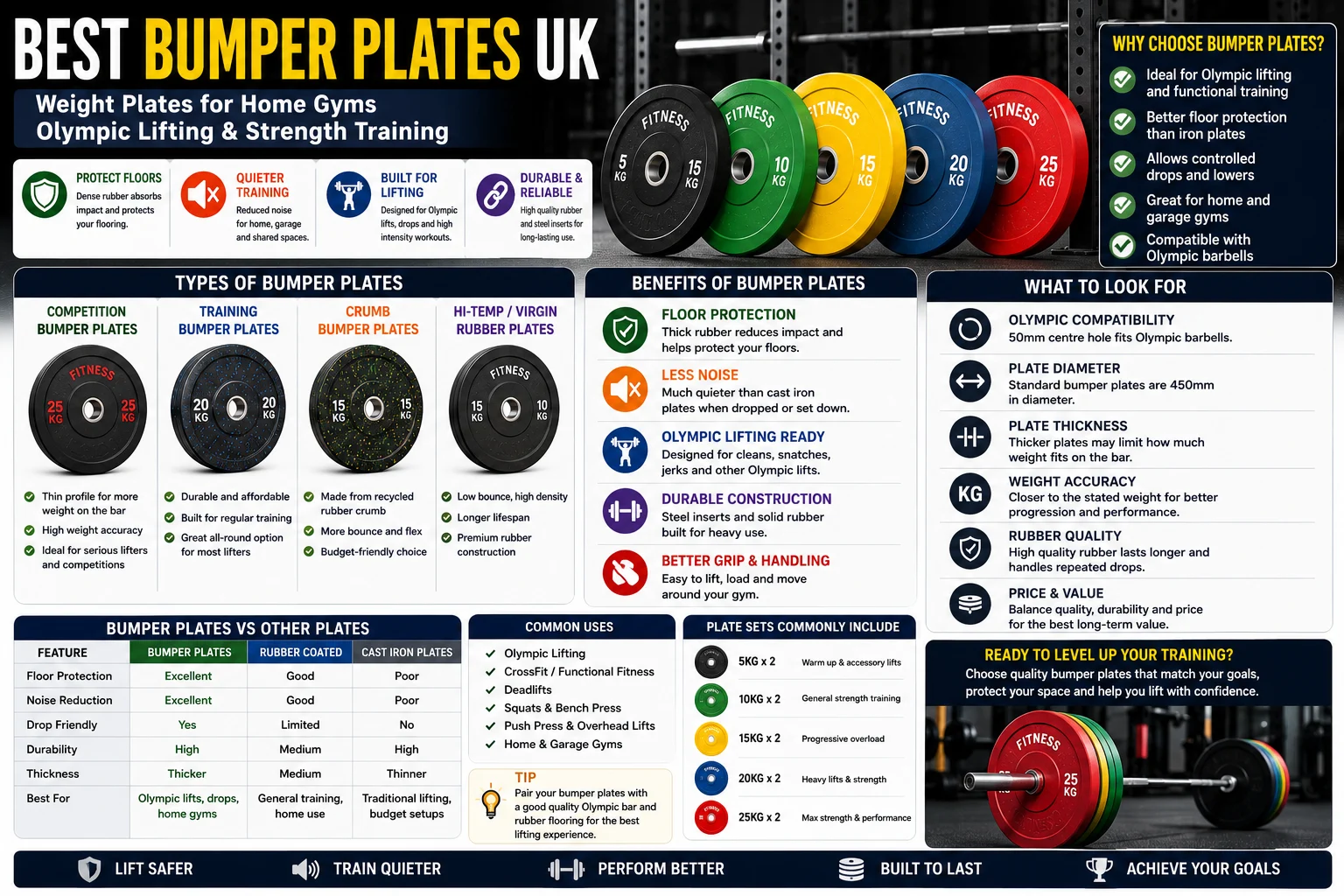
When choosing bumper plates, look at centre hole size, plate diameter, thickness, rubber quality, weight accuracy, durability, storage space, floor protection and whether plates are sold as singles, pairs or sets.
The most important point is compatibility. Bumper plates are usually designed for Olympic barbells, so they are not normally suitable for standard bars.
Best bumper plates for home gyms
For home gyms, bumper plates can be useful because they reduce noise and help protect floors compared with bare metal plates. This is important if you train indoors, in a garage or near neighbours.
However, bumper plates are thicker than many cast iron plates, so you need enough storage space and enough sleeve space on your barbell.
Best bumper plates for garage gyms
Garage gyms are a good environment for bumper plates because they usually have more space and stronger flooring options. Bumper plates can work well for deadlifts, cleans, presses and functional training.
Even in a garage, use proper rubber flooring or lifting mats. Bumper plates help reduce impact, but they do not make every floor safe for dropping heavy weights.
Best bumper plates for Olympic lifting
Bumper plates are commonly used for Olympic lifting because lifts such as cleans and snatches may involve lowering or dropping the bar from height under control.
If Olympic lifting is your main goal, choose plates designed for repeated impact and check whether they have strong centre inserts, good rubber quality and suitable thickness.
Best bumper plates for deadlifts
Bumper plates can be useful for deadlifts because they reduce noise and help protect the floor. They also usually have a consistent diameter, which can set the bar at a suitable pulling height.
If you are lifting very heavy, check plate thickness. Thick bumper plates can limit how much total weight fits on the bar.
Best bumper plates for beginners
Beginners can use bumper plates, but they do not always need them for basic strength training. If you are doing controlled lifts and not dropping the bar, cast iron or rubber-coated plates may be enough.
Bumper plates may be worth it for beginners who train at home, want less noise or plan to learn Olympic lifting later.
Best bumper plate sets
Bumper plate sets can be useful if you are building a home gym from scratch. A set may include several plate sizes, giving you enough weight for different exercises and progression.
Before buying a set, check whether the plates are sold as pairs or singles, the total weight included and whether the set includes smaller plates for gradual increases.
Competition bumper plates vs training bumper plates
Competition bumper plates are usually made to tighter weight tolerances and often have a thinner profile. They are designed for more serious lifting and may cost more.
Training bumper plates are usually more affordable and suitable for general home gym use, strength training and functional fitness workouts.
Rubber bumper plates vs crumb bumper plates
Rubber bumper plates are usually made from dense rubber and may feel firmer and more compact. Crumb bumper plates are often made from recycled rubber and may be thicker with more bounce.
Crumb plates can be useful for home gyms and noise reduction, but they may take up more space on the bar. Check thickness before buying.
Bumper plates vs rubber-coated plates
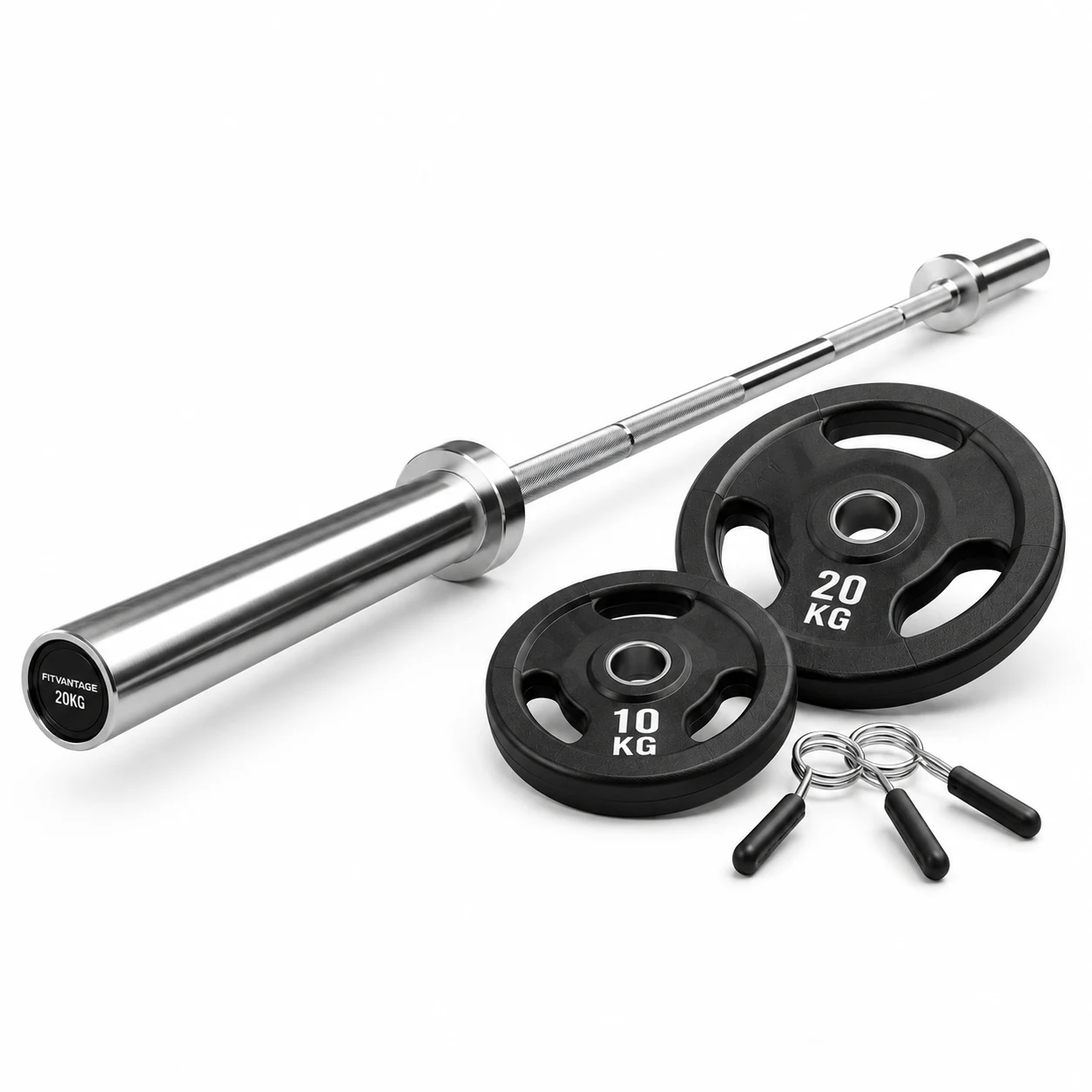
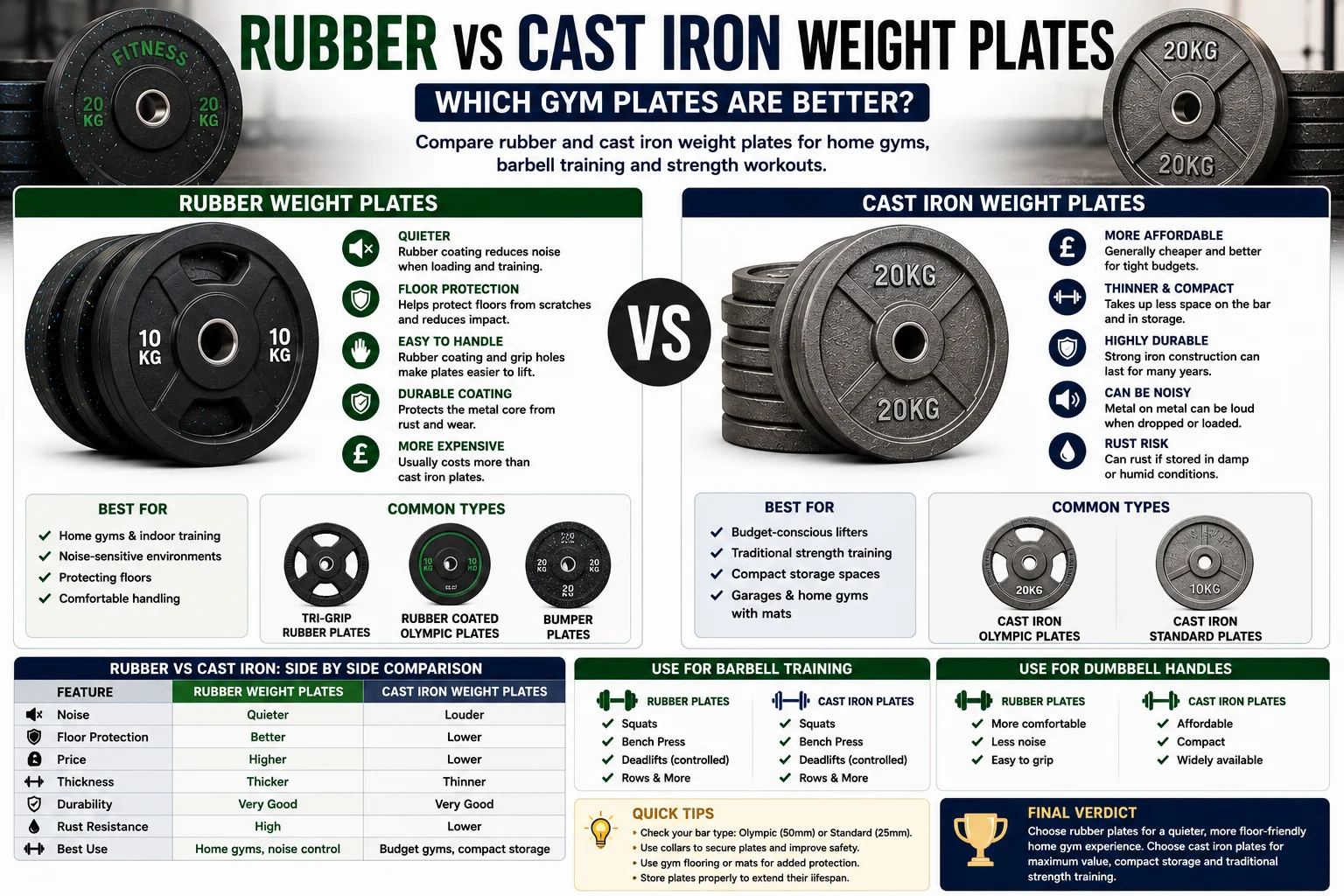
Bumper plates and rubber-coated plates are not always the same. Bumper plates are designed to handle more impact, while rubber-coated plates may simply have a protective coating over a metal plate.
If you plan to drop the bar, choose proper bumper plates rather than assuming any rubber-coated plate will be suitable.
Bumper plates vs cast iron plates
Bumper plates are usually quieter and more floor-friendly than cast iron plates. They are also better for Olympic lifting and workouts where the bar may be lowered to the floor regularly.
Cast iron plates are usually cheaper, thinner and more compact. They may be better for traditional strength training if you lift under control and have suitable flooring.
Bumper plates vs standard weight plates
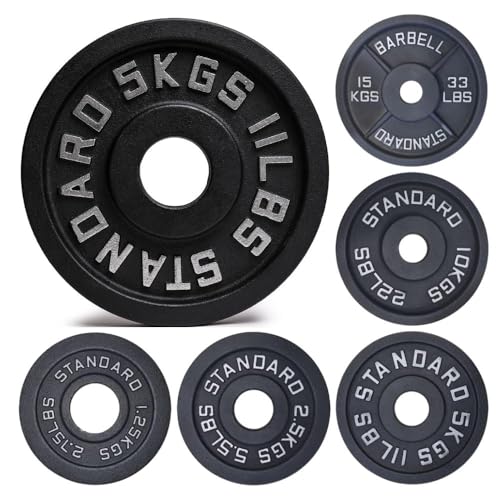
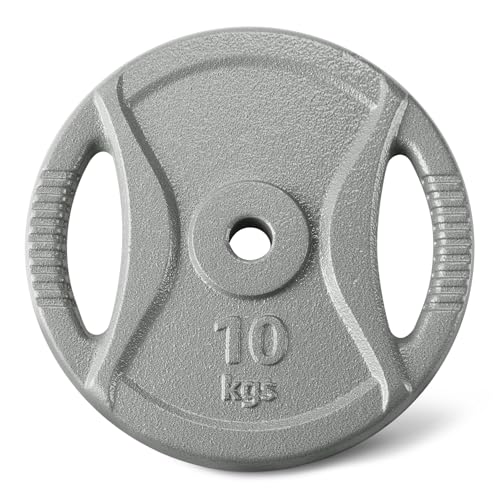
Bumper plates are usually Olympic-sized plates with a larger centre hole. Standard plates have a smaller hole and fit standard bars or some adjustable dumbbell handles.
If you own a standard bar, bumper plates will usually not be the correct choice. Always check your bar type before buying.
Are bumper plates worth it?
Bumper plates can be worth it if you train with an Olympic bar, want quieter workouts, need better floor protection or plan to do Olympic lifting or functional fitness.
They may not be necessary if you only do controlled basic strength training and want the cheapest or most compact plates.
Are bumper plates good for home gyms?
Yes, bumper plates can be good for home gyms because they are generally quieter and more floor-friendly than bare cast iron plates. They can make barbell training more practical at home.
However, they are not a replacement for good flooring. Use proper mats, especially for deadlifts or heavier training.
Are bumper plates good for beginners?
Bumper plates can be good for beginners if they fit the training setup and budget. They are useful for home gyms and Olympic barbell training.
Beginners should still focus on technique, safe loading and gradual progression rather than assuming bumper plates make lifting automatically safer.
How much bumper plate weight should you buy?
The right amount depends on your strength level, exercises and barbell training goals. Beginners may start with a moderate set and add more plates as strength improves.
Small plates are still important. Even if you buy bumper plates, include smaller change plates so you can increase weight gradually.
How to store bumper plates
Bumper plates should be stored safely using a plate tree, storage rack, wall pegs or rack-mounted storage. Good storage keeps your home gym safer and prevents plates from being left on the floor.
Because bumper plates can be thicker than cast iron plates, check storage space before buying a full set.
Common mistakes when buying bumper plates
One common mistake is buying bumper plates without checking bar compatibility. Bumper plates are usually made for Olympic bars, not standard bars.
Another mistake is ignoring plate thickness. Thick bumper plates may limit how much weight fits on the bar, especially for stronger lifters.
Final thoughts
The best bumper plates are durable, compatible with your Olympic bar and suitable for your home gym space. They are a good choice for Olympic lifting, garage gyms, functional training and quieter barbell workouts.
Choose bumper plates if you want better floor protection, reduced noise and a more lifting-friendly home gym setup. If your priority is low cost and compact storage, cast iron or basic rubber-coated plates may still be better.