Introduction
Foam rolling is a simple way to support stretching, mobility and recovery at home. It is popular with runners, gym users, cyclists, desk workers and people who want to reduce tightness after training or long periods of sitting.
Learning how to use a foam roller properly is important. Rolling too quickly, using too much pressure or choosing the wrong area can make foam rolling uncomfortable and less useful.
In this beginner guide, we explain how to use a foam roller for back tightness, leg soreness, gym recovery, running and everyday mobility.
What does a foam roller do?
A foam roller applies pressure to muscles using your bodyweight. By slowly rolling over tight or sore areas, you can use it as part of a stretching, mobility or post-workout recovery routine.
Foam rollers are commonly used on calves, quads, hamstrings, glutes, hips and the upper back. They are simple tools, but correct technique makes them much easier to use.
Who should use a foam roller?
Foam rollers can be useful for beginners, runners, gym users, cyclists, home workout users, desk workers and people who want an affordable recovery tool.
They may be especially useful if you feel tight after exercise, sit for long hours or want to add a simple mobility habit to your weekly routine.
How to use a foam roller safely
Start slowly and use controlled pressure. Place the target muscle on the roller, support your body with your hands or feet and roll gradually over the area.
Foam rolling should feel manageable. It may feel firm or slightly uncomfortable, but it should not feel like sharp pain, numbness or forced pressure.
How long should you foam roll?
Beginners can start with short sessions of around a few minutes. You may spend 30 to 60 seconds on each muscle area and repeat if it feels comfortable.
Long aggressive rolling is not necessary. Short, consistent sessions are usually better than occasional intense sessions that leave you sore.
How often should you use a foam roller?
Some people foam roll a few times per week, while others use it after workouts or runs. The right frequency depends on your comfort level, training routine and recovery needs.
If you are new to foam rolling, start with two or three gentle sessions per week and adjust based on how your body responds.
How to use a foam roller on calves
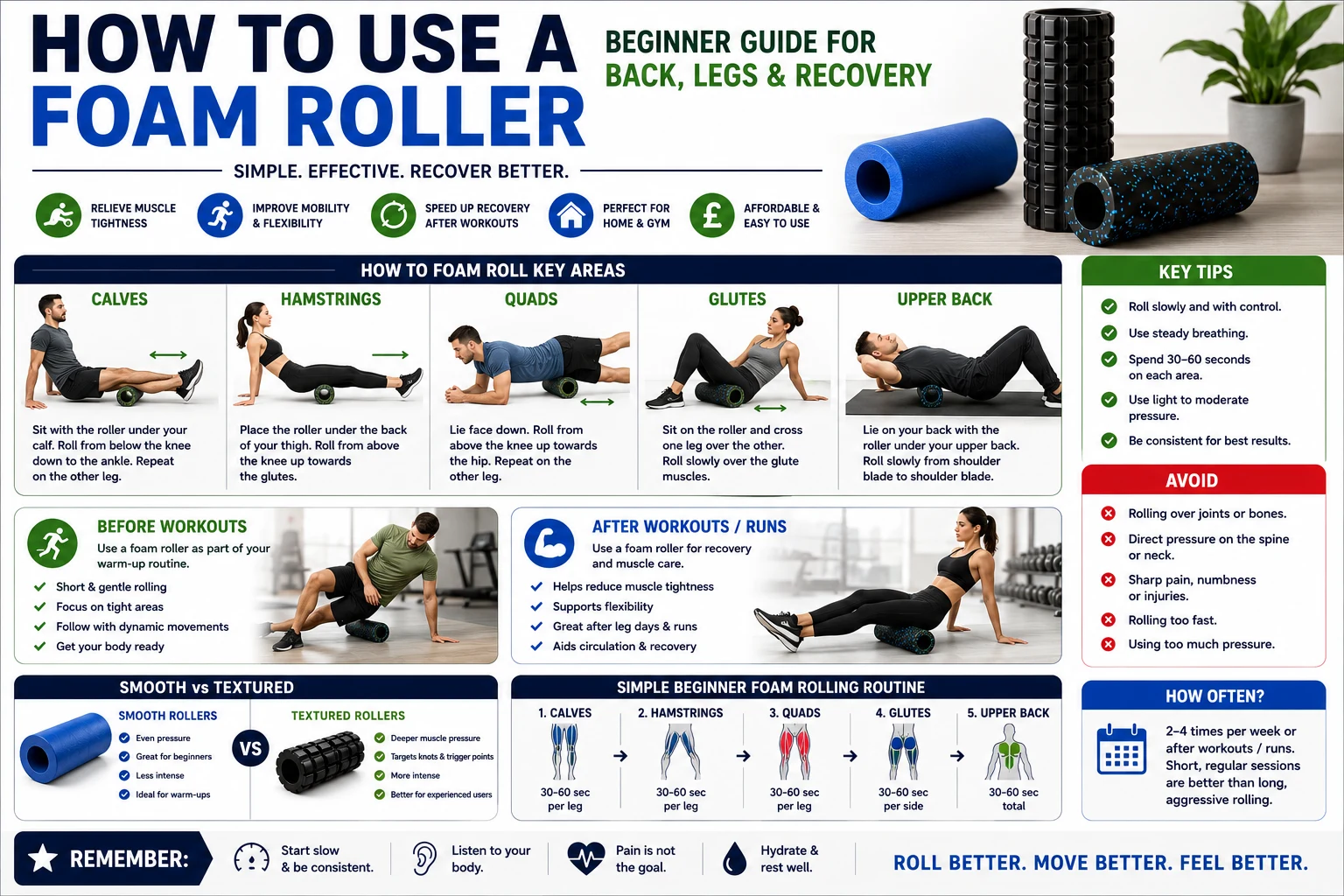
Sit on the floor with the foam roller under one calf. Support your body with your hands and slowly roll from below the knee towards the ankle.
Keep the pressure controlled. If it feels too intense, keep one foot on the floor to reduce bodyweight on the roller.
How to use a foam roller on hamstrings
Place the foam roller under the back of your thigh. Support your upper body with your hands and roll slowly from above the knee towards the glutes.
Move gradually and avoid rushing. Hamstrings can feel sensitive, so start with light pressure before increasing intensity.
How to use a foam roller on quads
Lie face down with the foam roller under the front of your thigh. Support yourself on your forearms and slowly roll from above the knee towards the hip.
The quads are large muscles, so a medium or firm roller may feel useful. Beginners should still start gently and avoid forcing pressure.
How to use a foam roller on glutes
Sit on the foam roller and shift your weight slightly onto one side. Roll slowly over the glute area using your hands and opposite foot for support.
Glutes can handle more pressure than some areas, but you should still keep the movement controlled and comfortable.
How to use a foam roller on the upper back
Lie on your back with the foam roller placed under your upper back. Bend your knees, keep your feet on the floor and gently roll across the upper back area.
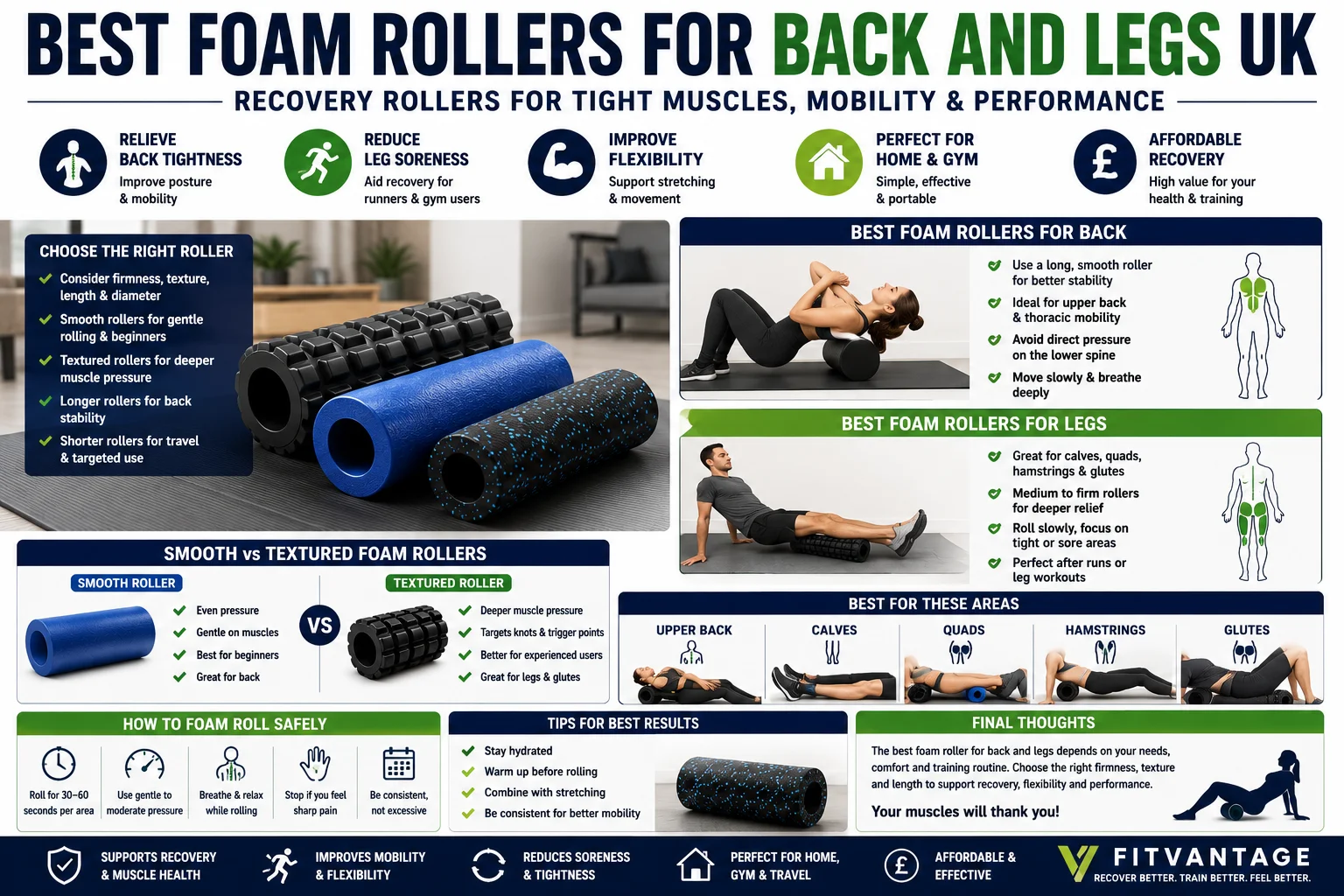
A longer smooth roller can feel more stable for this. Avoid rolling directly on the neck or using aggressive pressure on the spine.
Should you foam roll the lower back?
Be careful with direct foam rolling on the lower back. The lower back is sensitive, and aggressive pressure may not be suitable for many people.
If your lower back feels tight, it may be better to focus on surrounding areas such as glutes, hips, hamstrings and upper back mobility. Persistent or sharp back pain should be checked by a professional.
How to use a foam roller before workouts
Before workouts, foam rolling should be short and gentle. It can be used as part of a warm-up before dynamic movement, mobility drills or light exercise.
The goal before training is to feel prepared, not tired or sore. Avoid long aggressive rolling immediately before lifting, running or intense workouts.
How to use a foam roller after workouts
After workouts, foam rolling can be used as part of a cool-down or recovery routine. It may be useful after leg days, running, cycling or long gym sessions.
Roll slowly, breathe normally and focus on areas that feel tight or worked. Use moderate pressure rather than forcing pain.
How to use a foam roller for running recovery
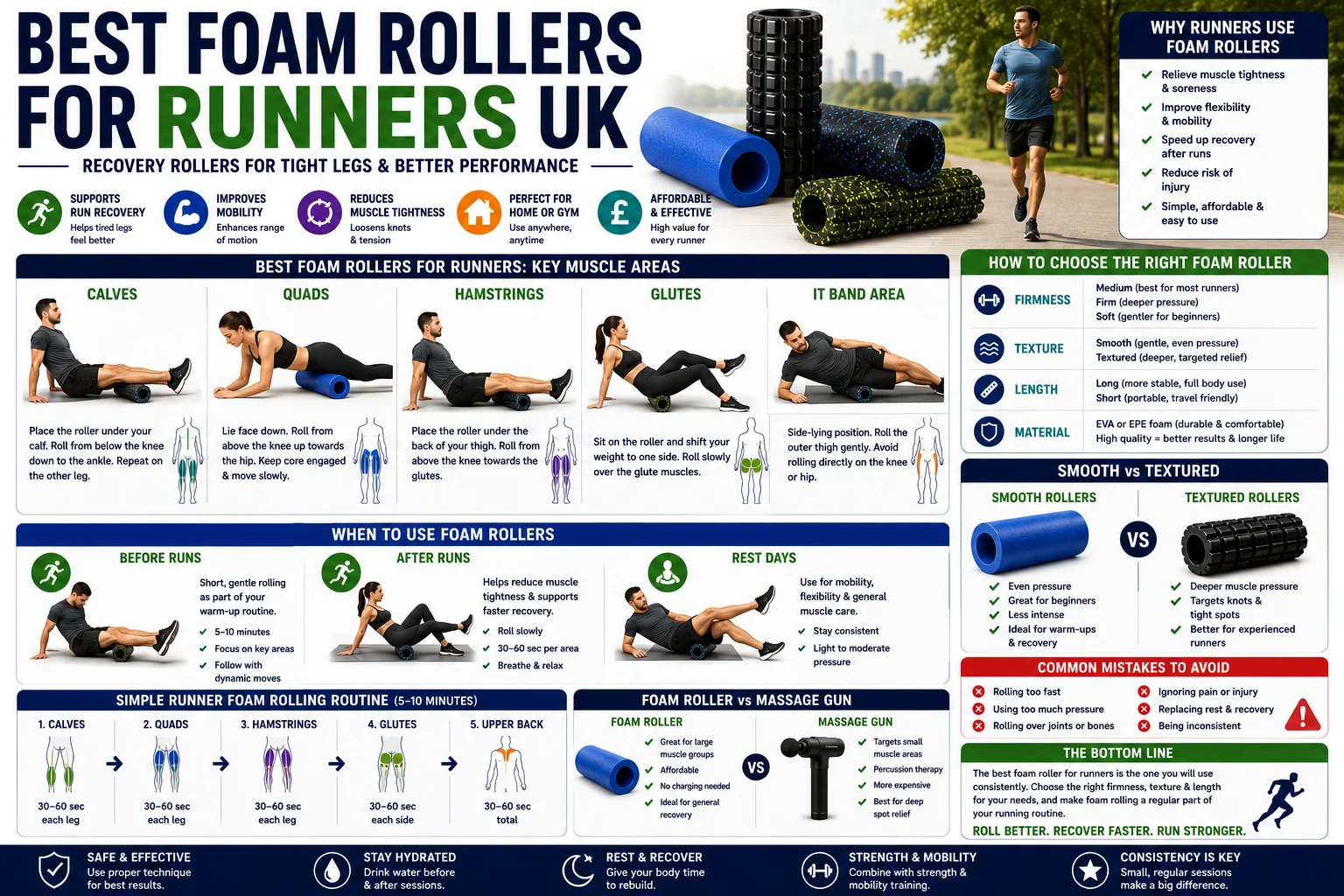
Runners often use foam rollers on calves, quads, hamstrings and glutes. These areas can become tight after longer runs, speed work or hill training.
Start with gentle pressure after runs or on recovery days. Avoid aggressive rolling if an area feels injured, swollen or unusually painful.
How to use a foam roller for gym recovery
Gym users can use foam rollers after strength sessions, especially after lower-body training. They can also be used before training as part of a warm-up routine.
For gym recovery, focus on larger muscle groups such as quads, hamstrings, glutes, calves and upper back. Keep sessions controlled and consistent.
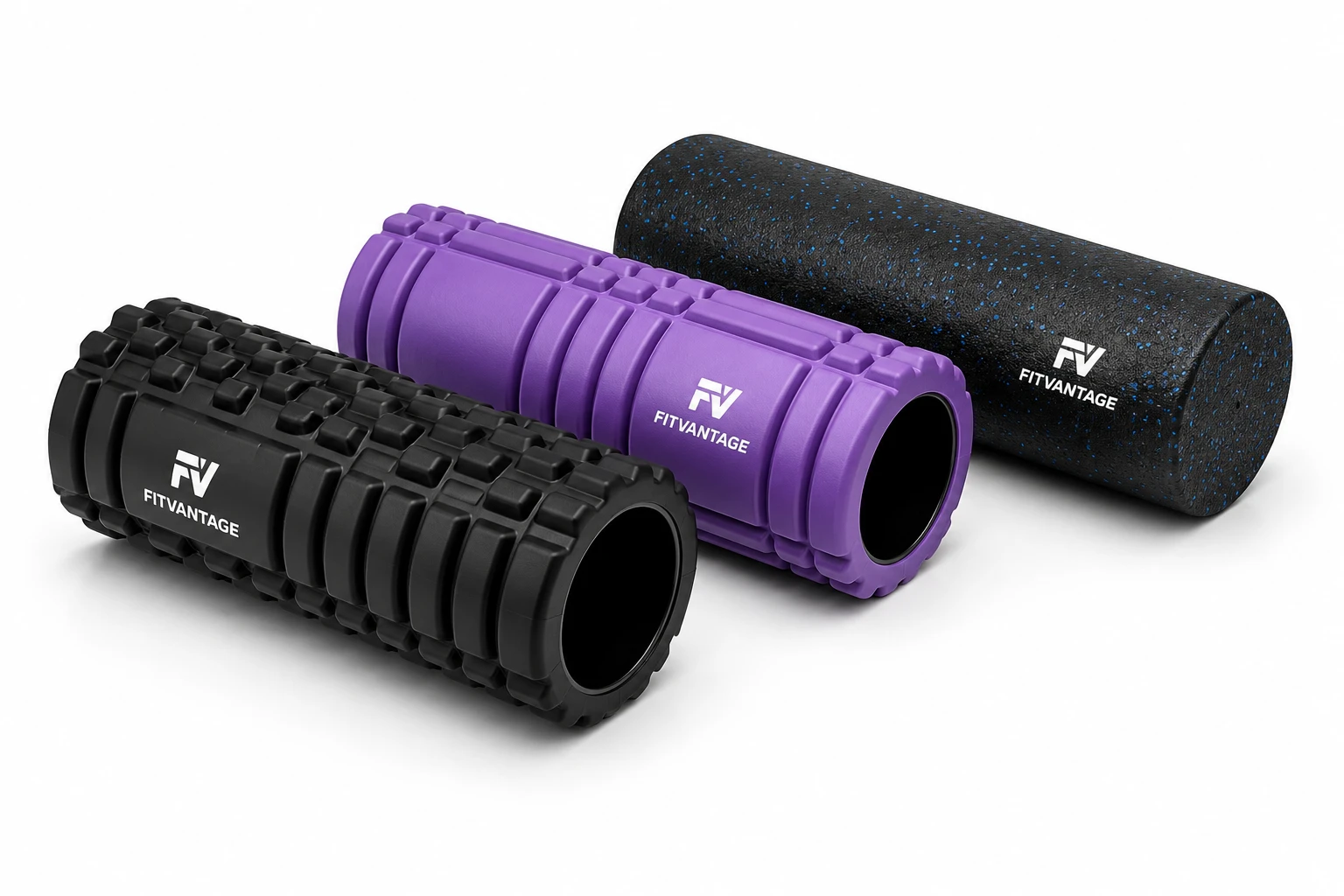
Smooth vs textured foam rollers for beginners
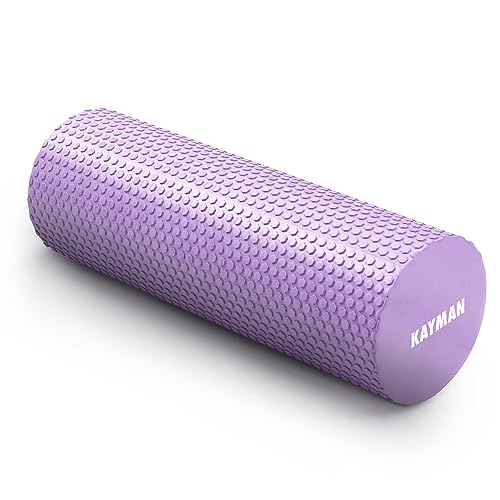
Smooth foam rollers are usually easier for beginners because they provide even pressure. They are useful for learning basic technique and building confidence.
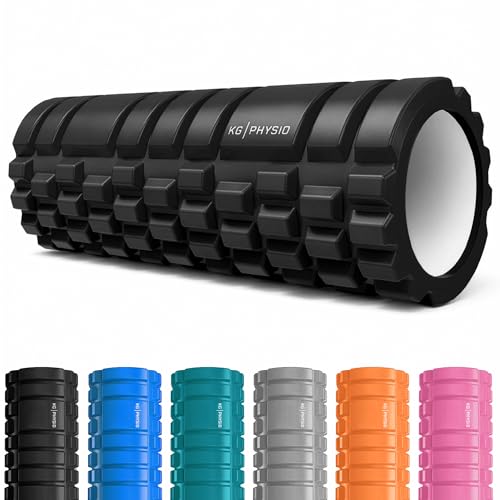
Textured foam rollers create more targeted pressure and can feel more intense. They may be better once you already understand how your body responds to foam rolling.
Soft vs firm foam rollers
Soft foam rollers are more comfortable and suitable for beginners or sensitive areas. They can be useful for gentle mobility and recovery.
Firm foam rollers apply deeper pressure and may suit experienced users, runners and gym users. If you are unsure, medium density is usually a sensible starting point.
Common foam rolling mistakes
One common mistake is rolling too quickly. Foam rolling works better when you move slowly and control the pressure.
Another mistake is using too much pressure too soon. More pain does not always mean better results. Foam rolling should feel manageable and useful, not extreme.
When should you avoid foam rolling?
Avoid foam rolling directly over sharp pain, swelling, bruising, fresh injuries or areas that feel numb or unusual. Do not use aggressive pressure on joints, bones, the neck or the spine.
If pain is persistent, worsening or linked to injury, seek professional advice rather than relying only on a foam roller.
Simple beginner foam rolling routine
A simple beginner routine can include calves, hamstrings, quads, glutes and upper back. Spend a short amount of time on each area and keep the pressure light to moderate.
You can use this routine after workouts, after runs or on recovery days. Consistency is more important than intensity.
Final thoughts
Foam rolling is simple, affordable and useful when done with control. Beginners should start with a smooth or medium-density roller and use gentle pressure.
Focus on large muscle groups, roll slowly and avoid sharp pain. Used consistently, a foam roller can support stretching, mobility, running recovery, gym recovery and everyday movement habits.