Introduction
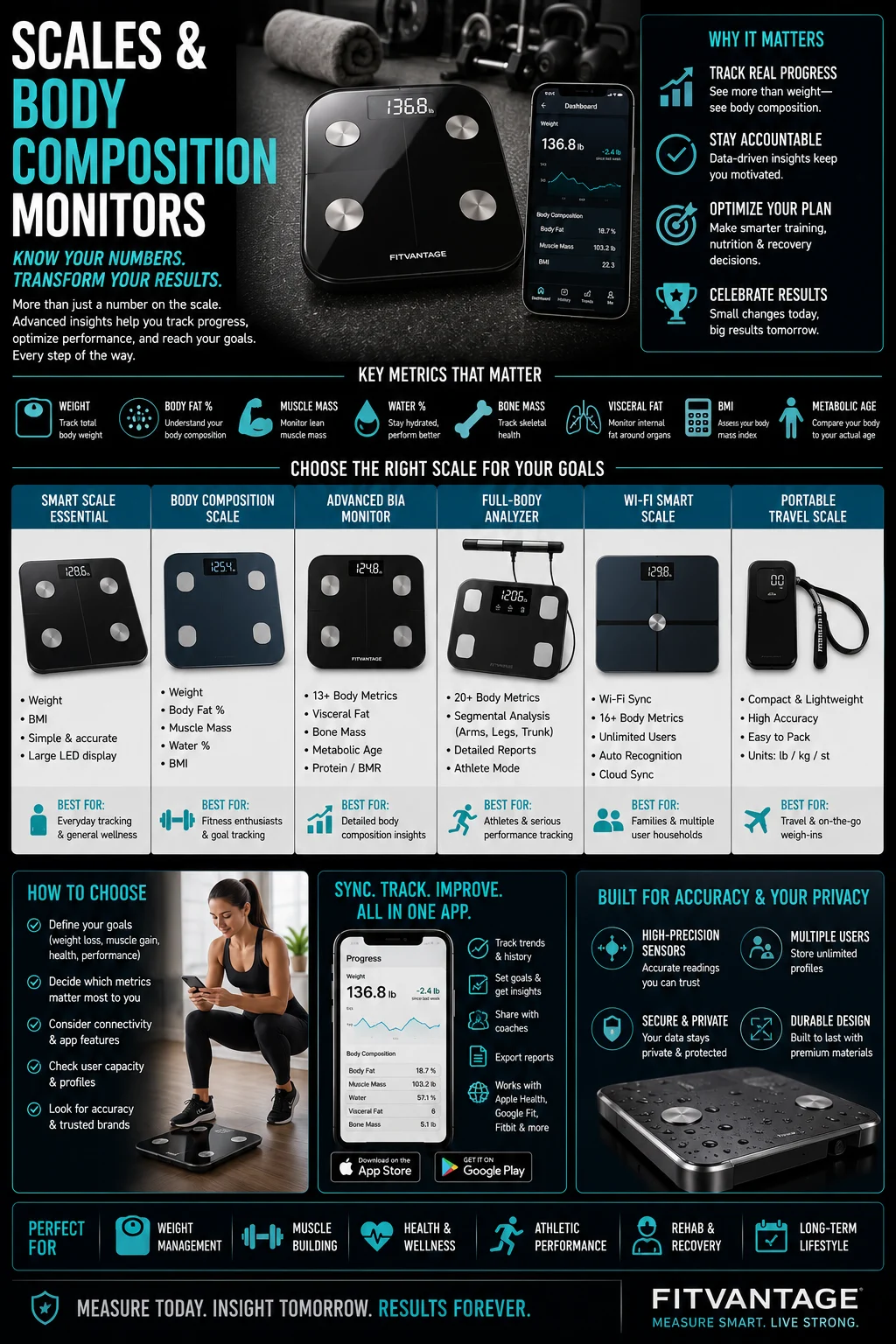
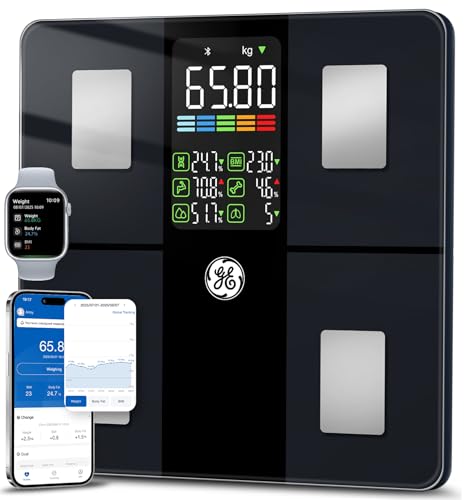
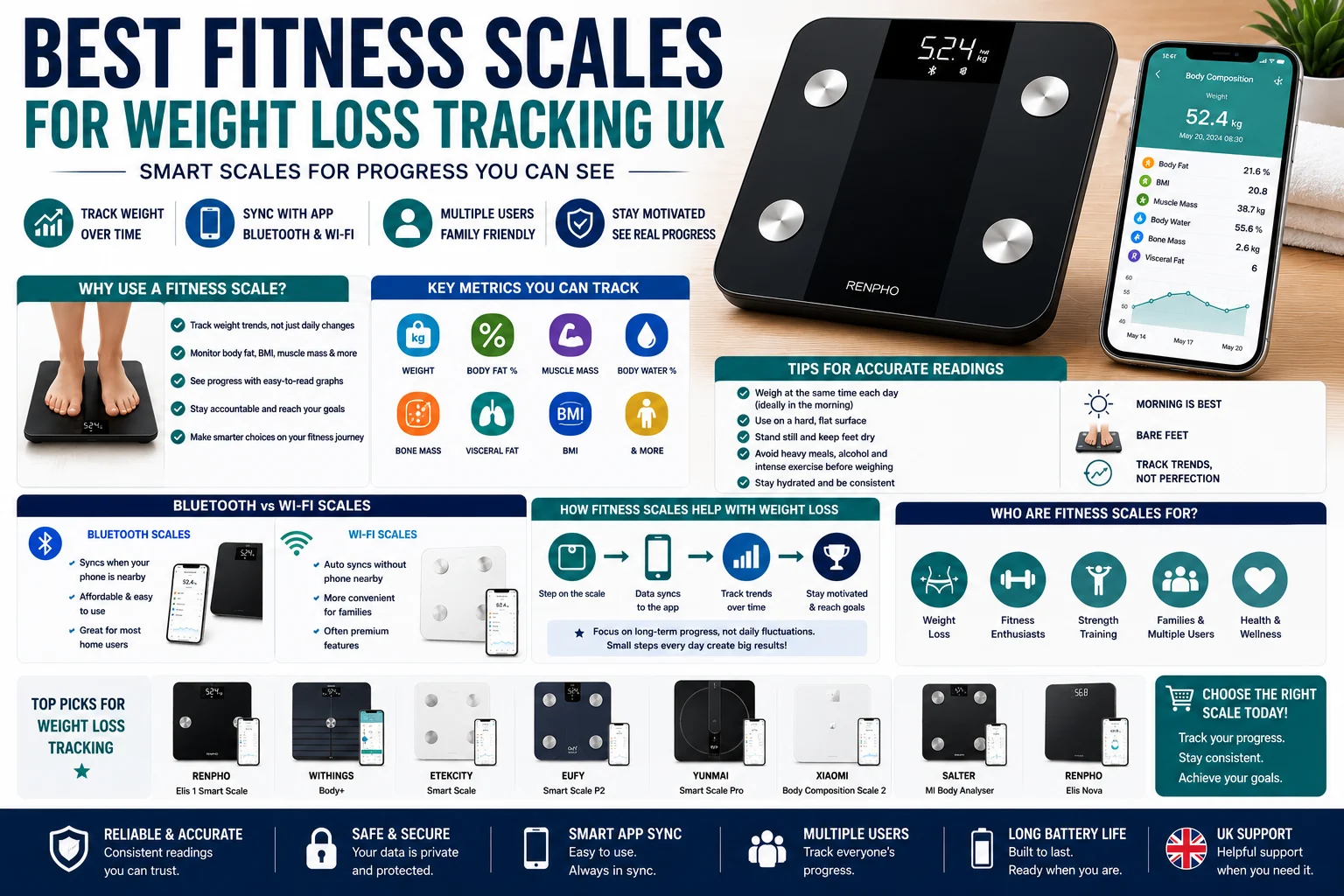
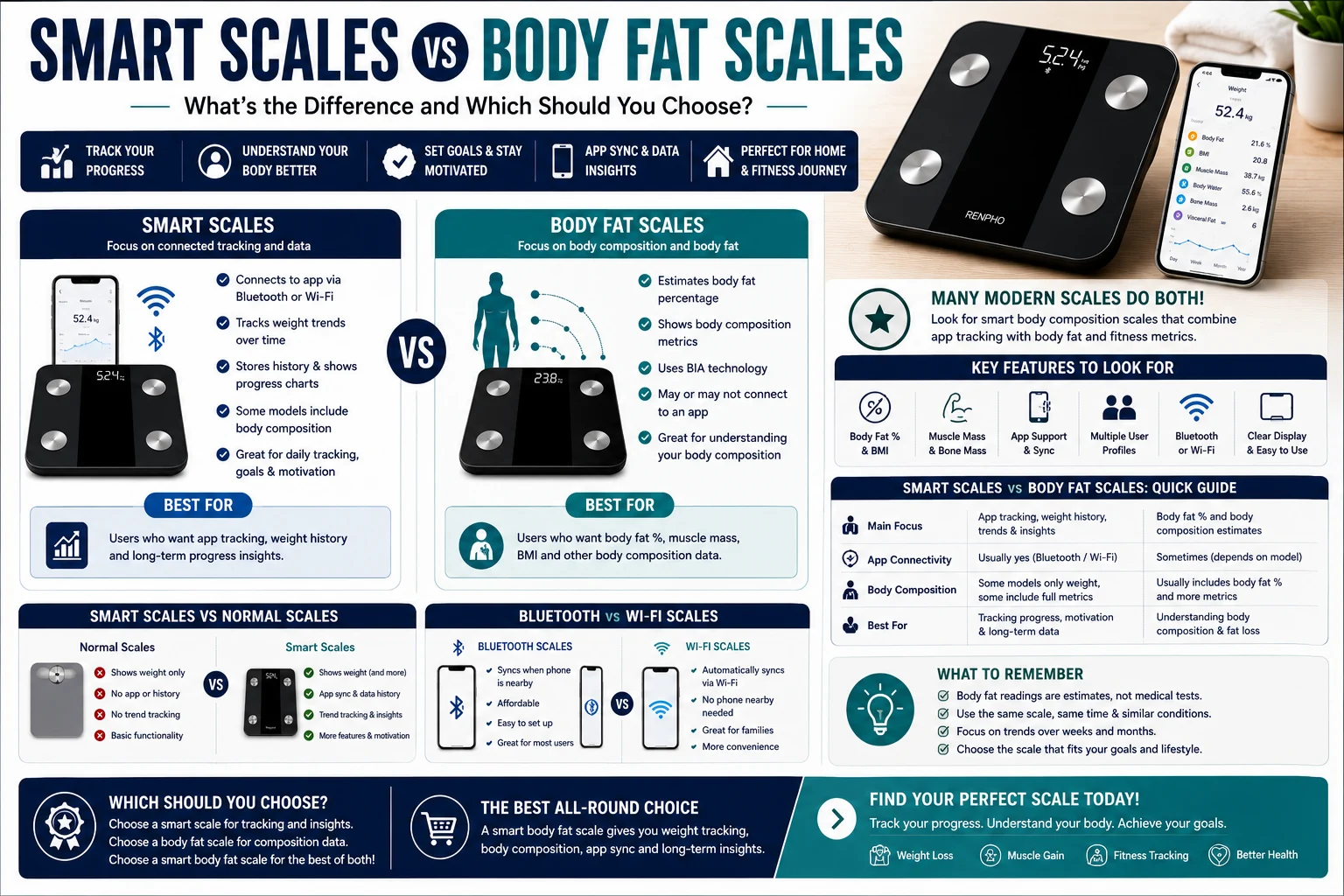
Body fat scales are popular because they give more information than a normal bathroom scale. Instead of only showing body weight, many smart scales estimate body fat percentage, muscle mass, BMI, body water and other body composition metrics.
But one common question is whether body fat scales are accurate. The honest answer is that they can be useful for tracking trends, but they are not perfectly accurate and should not be treated as medical-grade devices.
In this guide, we explain how body fat scales work, why readings can change and how to use them properly for weight loss, fitness tracking and home progress monitoring.
How do body fat scales work?
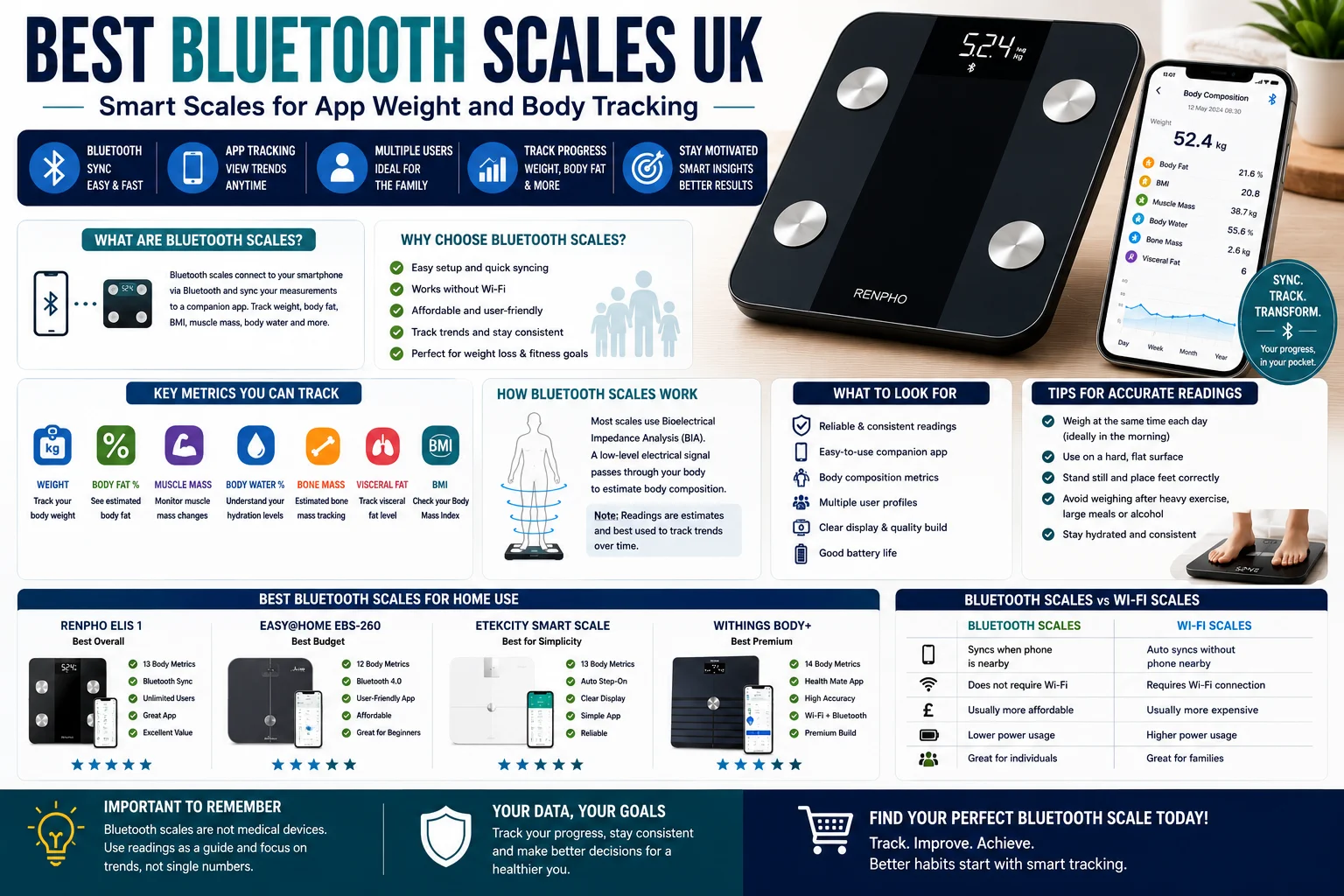
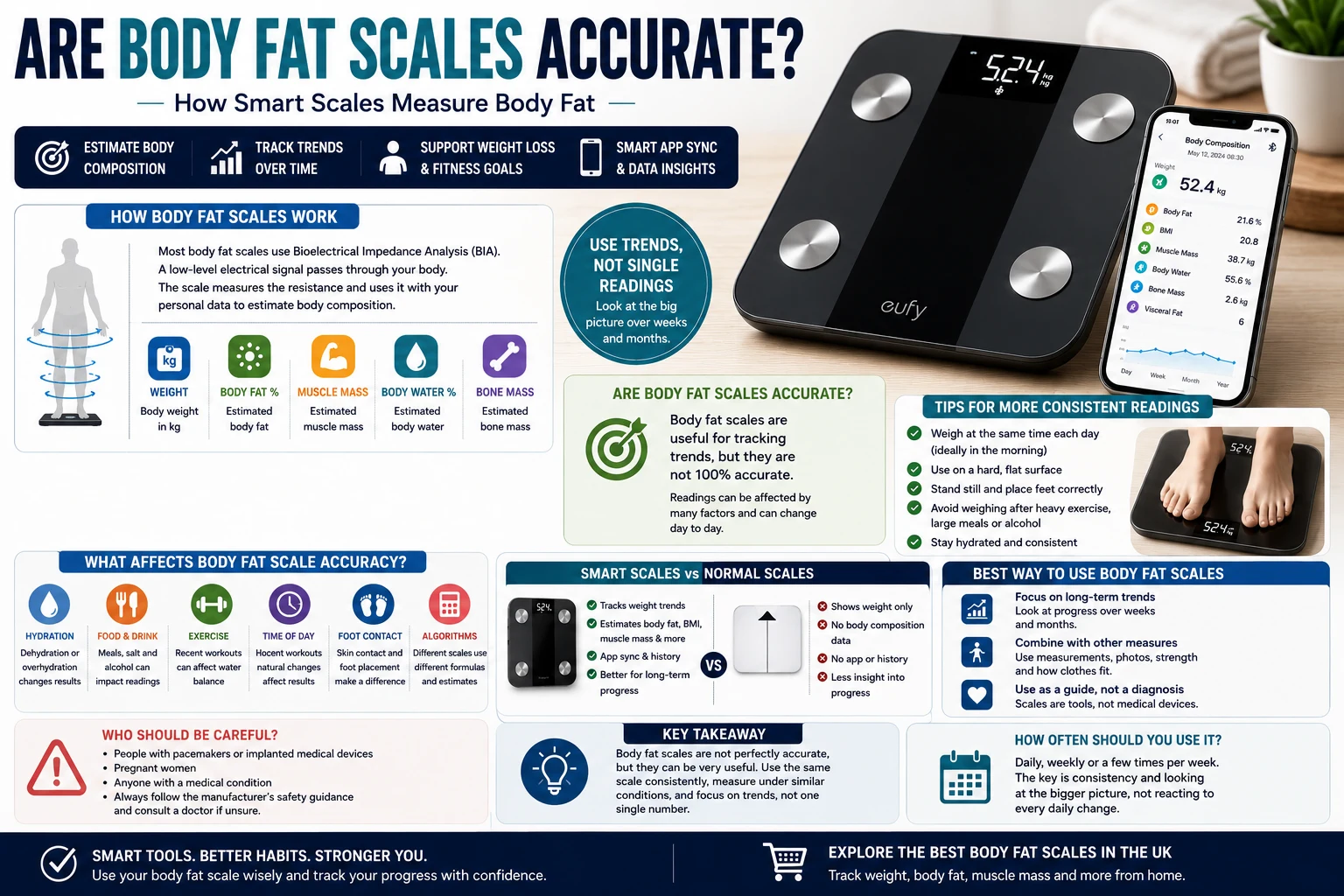
Most body fat scales use bioelectrical impedance analysis, often called BIA. This method sends a small electrical signal through the body and uses the result to estimate body composition.
Different tissues conduct the signal differently. The scale then uses this information, along with details such as height, weight, age and sex, to estimate body fat percentage and other metrics.
Are body fat scales accurate?
Body fat scales can provide useful estimates, but they are not perfectly accurate. The body fat percentage shown on a smart scale can be affected by hydration, food intake, exercise, time of day and how you stand on the scale.
This means one reading should not be treated as exact. Body fat scales are usually more useful for tracking long-term trends than judging your progress from a single number.
Why body fat scale readings change
Body fat scale readings can change for several reasons. If you are dehydrated, have just eaten, trained heavily or used the scale at a different time of day, the reading may be different.
Even small changes in water balance can affect body composition estimates. This is why it is common to see daily fluctuations, even when your actual body fat has not changed much.
Are smart scales better than normal scales?
Smart scales are better than normal scales if you want more tracking information. A normal scale only shows body weight, while a smart scale may show weight trends, body fat estimates, BMI, muscle mass and app history.
However, a smart scale is not automatically more accurate for body fat. Its main advantage is that it gives extra context and helps you monitor trends over time.
Body fat percentage vs body weight
Body weight tells you how heavy you are, but it does not explain what your weight is made of. Body fat percentage is an estimate of how much of your body weight comes from fat.
This can be useful because two people can weigh the same but have different body compositions. It can also help if you are trying to lose fat while maintaining or building muscle.
Can body fat scales track muscle gain?
Many smart scales estimate muscle mass, but this should also be treated as an estimate. It can still be useful if you are strength training and want a general view of body composition changes over time.
For example, if your weight stays similar but your estimated body fat slowly decreases and muscle estimate increases, that may suggest positive progress. The trend matters more than the exact number.
Best way to use body fat scales
The best way to use body fat scales is consistently. Use the scale at the same time of day, under similar conditions and on the same hard, flat surface.
Many people prefer weighing in the morning before eating. This can help reduce some variation caused by food, drink and daily activity.
How often should you use a body fat scale?
You can use a body fat scale daily, weekly or a few times per week. The most important thing is not to overreact to individual readings.
If daily numbers make you feel frustrated, weekly tracking may be better. Look at the general trend over several weeks rather than focusing on one day.
Tips for more consistent readings
To get more consistent body fat scale readings, use the same scale, same location and same time of day. Stand still, place your feet correctly and make sure the scale is on a hard surface.
Avoid comparing readings taken immediately after intense exercise, large meals or major hydration changes. These can all affect the estimate.
What affects body fat scale accuracy?
Several factors can affect body fat scale accuracy, including hydration level, recent exercise, food intake, alcohol, time of day, body temperature and foot contact with the scale.
Different scales also use different algorithms, so two scales may give different results. This is another reason to use one scale consistently rather than switching between devices.
Are body fat scales good for weight loss?
Body fat scales can be useful for weight loss because they help you look beyond body weight alone. They may show estimated changes in body fat, muscle mass and body water.
However, they should be used as a guide. A healthy weight loss plan should not depend entirely on one smart scale reading.
Are body fat scales good for fitness tracking?
Yes, body fat scales can be useful for fitness tracking if you understand their limits. They can help you monitor long-term progress and see general changes in body composition.
They are especially useful when combined with other signs of progress, such as strength improvements, measurements, progress photos, clothing fit and workout consistency.
Can body fat scales be wrong?
Yes, body fat scales can be wrong, especially if you treat one reading as exact. They are estimation tools, not medical diagnostic devices.
This does not mean they are useless. It simply means they should be used for trends and general guidance rather than exact body fat measurement.
Who should be careful using body fat scales?
Some people should be careful when using body composition scales, especially if they have implanted medical devices such as pacemakers. Always follow the manufacturer’s safety guidance.
If you have a medical condition, are pregnant, or need accurate body composition assessment, it is better to speak to a qualified health professional rather than relying only on a smart scale.
Final thoughts
Body fat scales are not perfectly accurate, but they can still be useful. Their main strength is helping you track long-term body composition trends from home.
For best results, use the same scale consistently, measure under similar conditions and focus on trends over weeks and months. Treat the numbers as estimates, not absolute facts.