Introduction
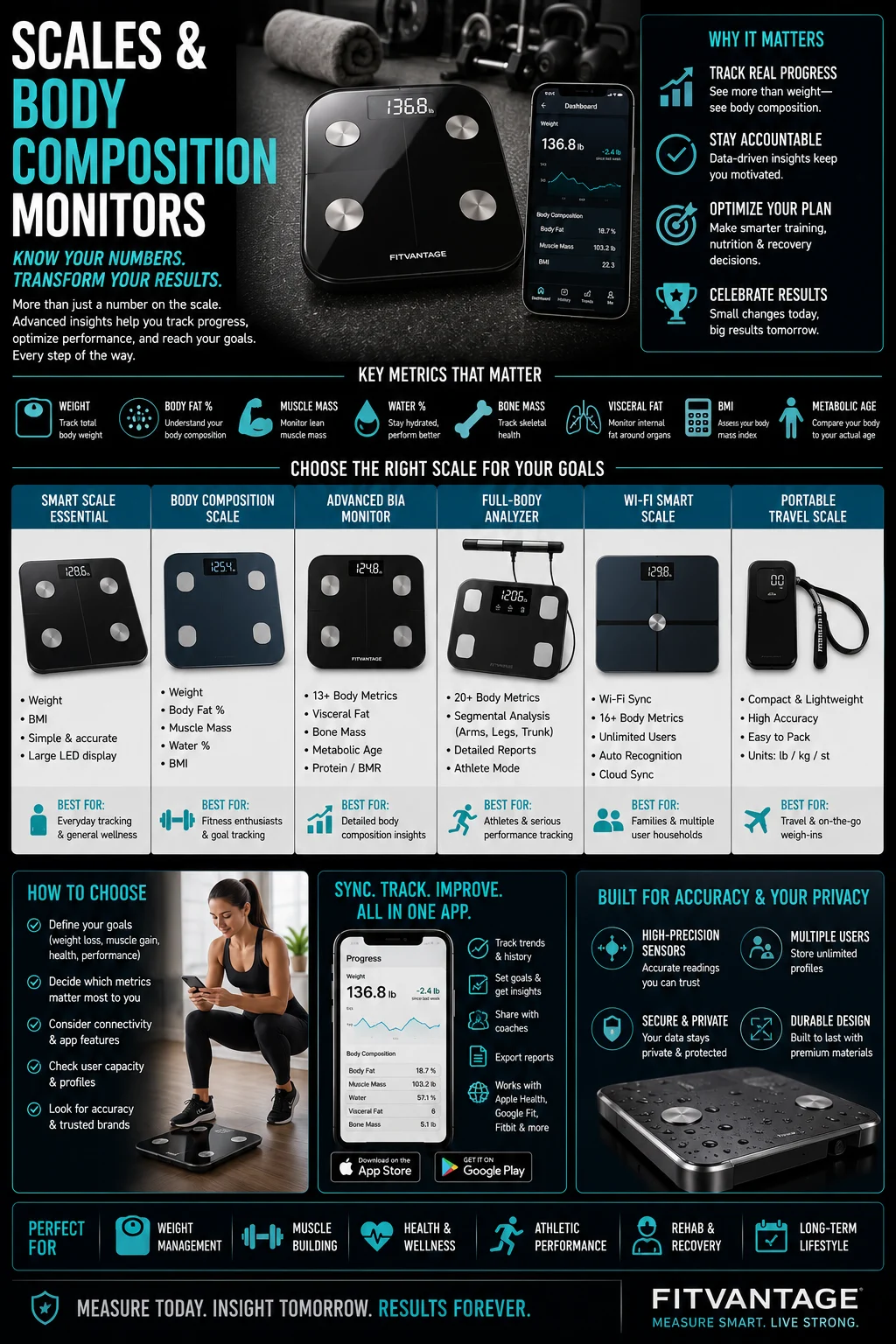
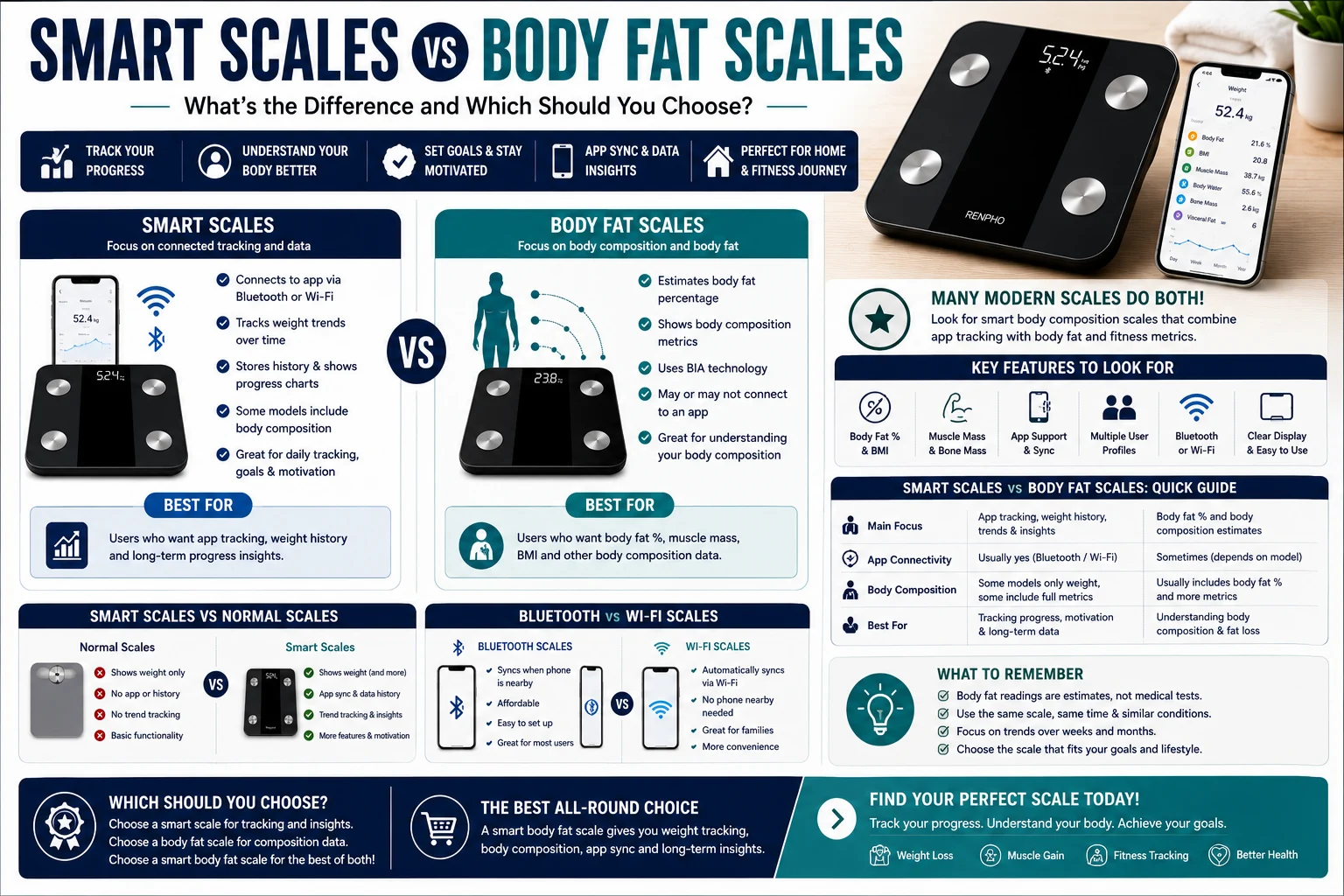
Smart scales and body fat scales are often used to describe similar products, but they are not always exactly the same. A smart scale usually focuses on app-connected tracking, while a body fat scale focuses on estimating body fat percentage and body composition.
Many modern scales do both. They measure body weight, estimate body fat, connect to an app and help you track progress over time.
In this guide, we compare smart scales vs body fat scales so you can understand the difference and choose the right option for weight loss, fitness tracking, muscle gain and home use.
What is a smart scale?
A smart scale is a digital bathroom scale that connects to an app, usually through Bluetooth or Wi-Fi. It records your measurements automatically and lets you track progress over days, weeks and months.
Some smart scales only focus on weight tracking, while others also estimate body fat percentage, BMI, muscle mass, body water and other body composition metrics.
What is a body fat scale?
A body fat scale is a scale that estimates body fat percentage as well as body weight. Most body fat scales use bioelectrical impedance analysis, often called BIA.
This method sends a small electrical signal through the body and uses the result, along with personal details such as height, age and sex, to estimate body composition.
Smart scales vs body fat scales: main difference
The main difference is focus. Smart scales focus on app tracking, data history and connected features. Body fat scales focus on estimating body fat and body composition.
However, many products now combine both. A modern smart body composition scale may be both a smart scale and a body fat scale.
Which is better for weight loss?
For weight loss, a smart scale can be useful because it tracks progress automatically and shows long-term trends. This helps you avoid overreacting to normal daily weight changes.
A body fat scale can add extra context by estimating body fat percentage. This can be useful if you want to see whether progress may be coming from fat loss rather than weight change alone.
Which is better for fitness tracking?
For fitness tracking, a smart body composition scale is usually the best option because it combines app tracking with body composition estimates.
This can help you monitor weight, estimated body fat, muscle mass and other metrics while keeping your data organised in one place.
Which is better for muscle gain?
If your goal is muscle gain, a body fat or body composition scale may be more useful than a basic smart scale. This is because body weight alone does not show whether you are gaining muscle, fat or water weight.
However, muscle mass readings from home scales are estimates. They are best used for tracking general trends, not exact measurements.
Which is better for beginners?
For beginners, the best choice is usually a simple smart scale with body fat tracking. It should be easy to set up, easy to read and connected to a clear app.
You do not need the most expensive model when starting. A reliable scale that tracks weight and estimated body fat is usually enough for basic progress monitoring.
Bluetooth vs Wi-Fi smart scales
Bluetooth smart scales usually sync readings when your phone is nearby. They are often affordable and simple to use.
Wi-Fi smart scales can sync automatically without needing your phone next to the scale. This can be more convenient for families, regular tracking or people who want less manual syncing.
Do all smart scales measure body fat?
No, not all smart scales measure body fat. Some smart scales mainly track body weight and send that information to an app.
If body fat tracking matters to you, check that the scale includes body composition features before buying.
Do all body fat scales connect to apps?
No, not all body fat scales connect to apps. Some body fat scales show estimated body fat on the display only, while others connect to an app for tracking over time.
If you want automatic history and progress charts, choose an app-connected smart body fat scale.
Are smart scales and body fat scales accurate?
Smart scales are usually fairly useful for tracking weight trends, but body fat and body composition readings are estimates. These estimates can be affected by hydration, food intake, exercise and time of day.
The best way to use either type of scale is to measure consistently and focus on long-term trends rather than single readings.
Smart scales vs normal bathroom scales
A normal bathroom scale measures body weight only. A smart scale saves your readings and may connect to an app. A body fat scale estimates body fat and sometimes other body composition metrics.
If you only care about body weight, a normal scale may be enough. If you want fitness tracking, progress history and body composition data, a smart body fat scale is more useful.
What features should you look for?
Look for a clear display, consistent readings, app support, Bluetooth or Wi-Fi connectivity, multiple user profiles and useful body composition metrics.
The app should be easy to understand. A scale with too many confusing numbers may be less useful than a simpler scale you actually use regularly.
Common mistakes when choosing a scale
One common mistake is assuming that the most expensive scale is always the best. The better choice is the scale that fits your tracking habits and goals.
Another mistake is expecting exact body fat measurements from a home scale. These products are useful for trends, but they are not medical-grade body composition tests.
Which should you choose?
Choose a smart scale if you mainly want app tracking, weight history and progress charts.
Choose a body fat scale if you mainly want estimated body fat and body composition information.
Choose a smart body fat scale if you want both app tracking and body composition estimates. For most fitness users, this is the best all-round option.
Final thoughts
Smart scales and body fat scales can both be useful, but the best option depends on your goal. Smart scales are best for connected tracking, while body fat scales are best for body composition estimates.
For most people, a smart body fat scale gives the best balance. It tracks weight, estimates body fat and stores your progress in an app so you can focus on long-term trends.