Introduction
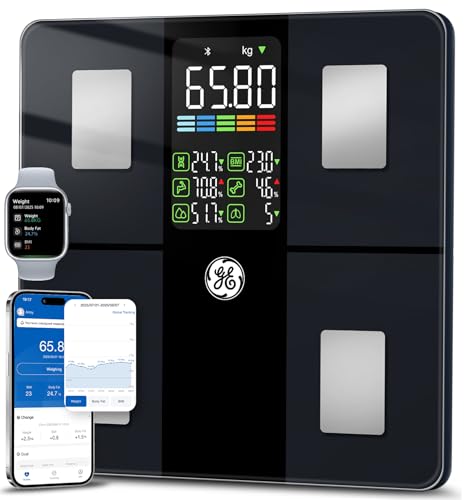
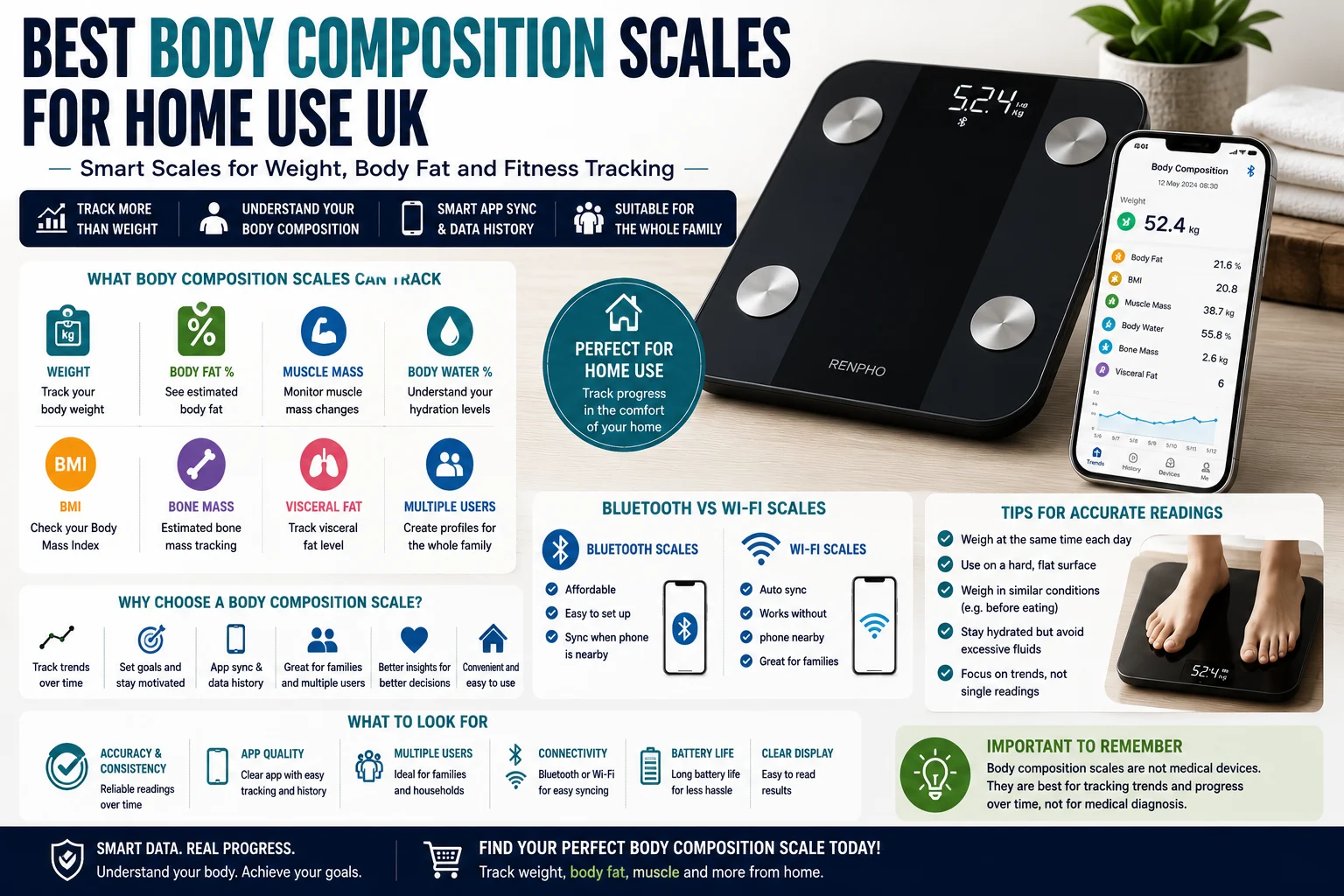
Body composition scales can help you track more than body weight from home. Many smart scales estimate body fat percentage, muscle mass, BMI, body water and other useful fitness metrics.
They are useful for people who want to monitor weight loss, muscle gain, general fitness or long-term health habits. While they are not medical-grade devices, they can help you understand progress trends over time.
In this guide, we explain what to look for when buying body composition scales for home use and how to choose the right smart scale for your goals.
What are body composition scales?
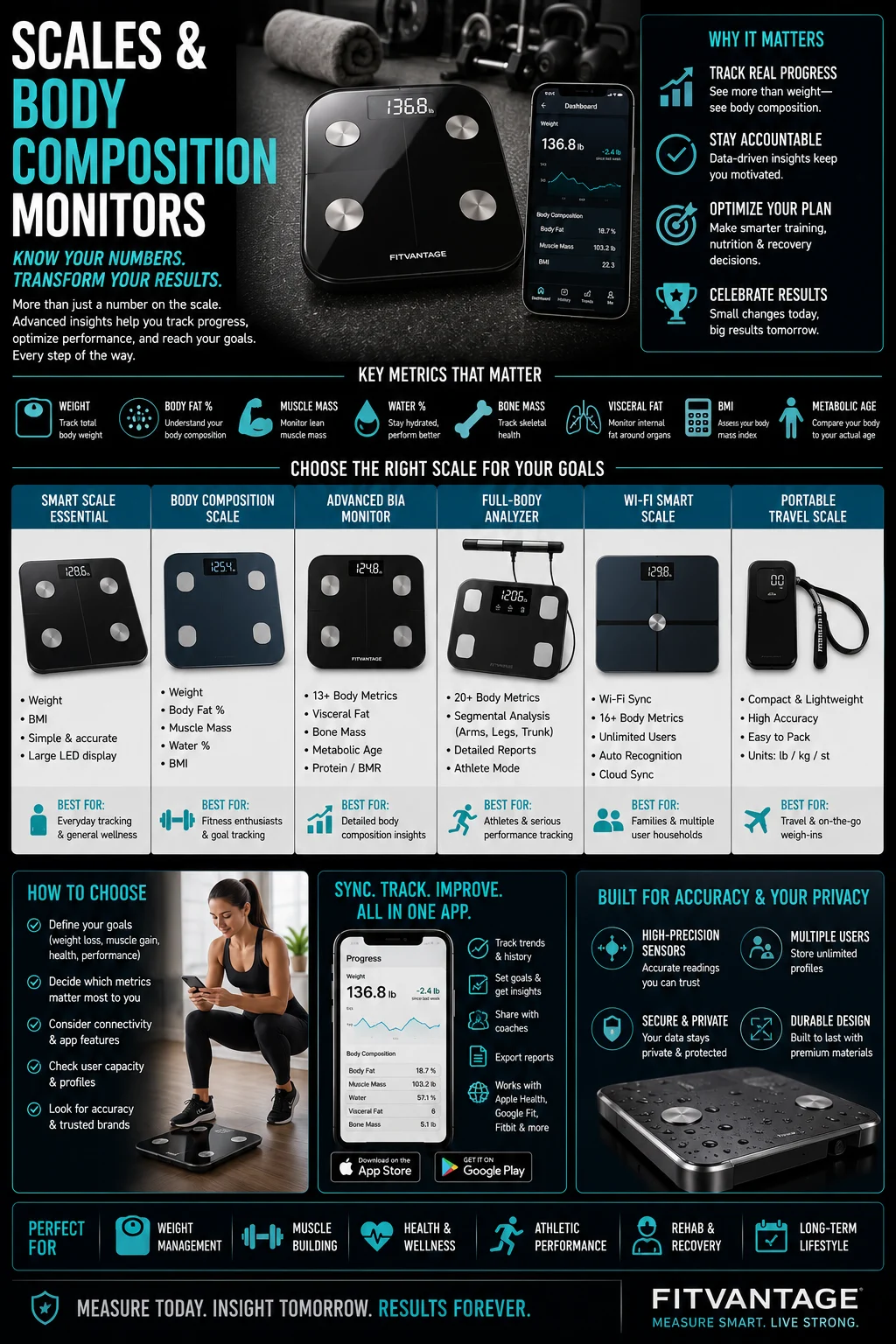
Body composition scales are digital scales that estimate different parts of your body composition. Depending on the model, they may show weight, body fat percentage, BMI, muscle mass, bone mass, body water and visceral fat estimates.
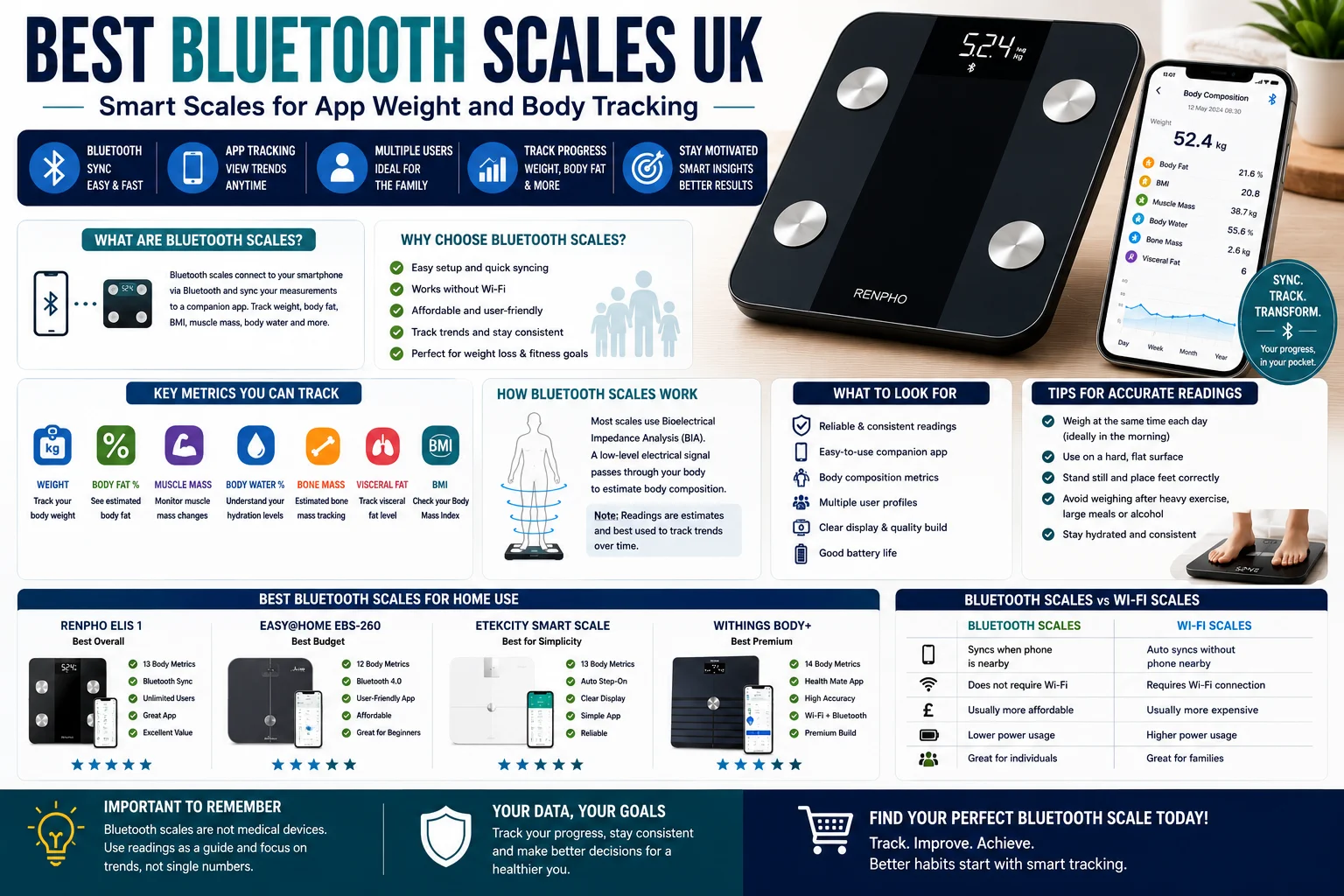
Most home body composition scales use bioelectrical impedance analysis, often called BIA. This sends a small electrical signal through the body and uses the result to estimate body composition.
Who should buy body composition scales?
Body composition scales can be useful for people tracking weight loss, strength training, fitness progress or general body changes at home.
They may be especially helpful if you do not want to rely only on body weight. For example, someone may lose fat and gain muscle while their weight changes slowly, so body composition tracking can provide extra context.
What to look for in body composition scales
When choosing body composition scales, look for consistent readings, useful app tracking, Bluetooth or Wi-Fi connectivity, multiple user profiles, a clear display and easy setup.
The best scale for home use should be simple enough to use regularly. Consistency and ease of use are more important than having a long list of confusing metrics.
Best body composition scales for home use
For home use, choose a body composition scale that is easy to read, stable underfoot and simple to connect to an app. A good scale should make regular tracking feel effortless.
If more than one person will use the scale, look for multiple user profiles. Some smart scales can recognise different users automatically, which is helpful for families or shared households.
Best body composition scales for weight loss
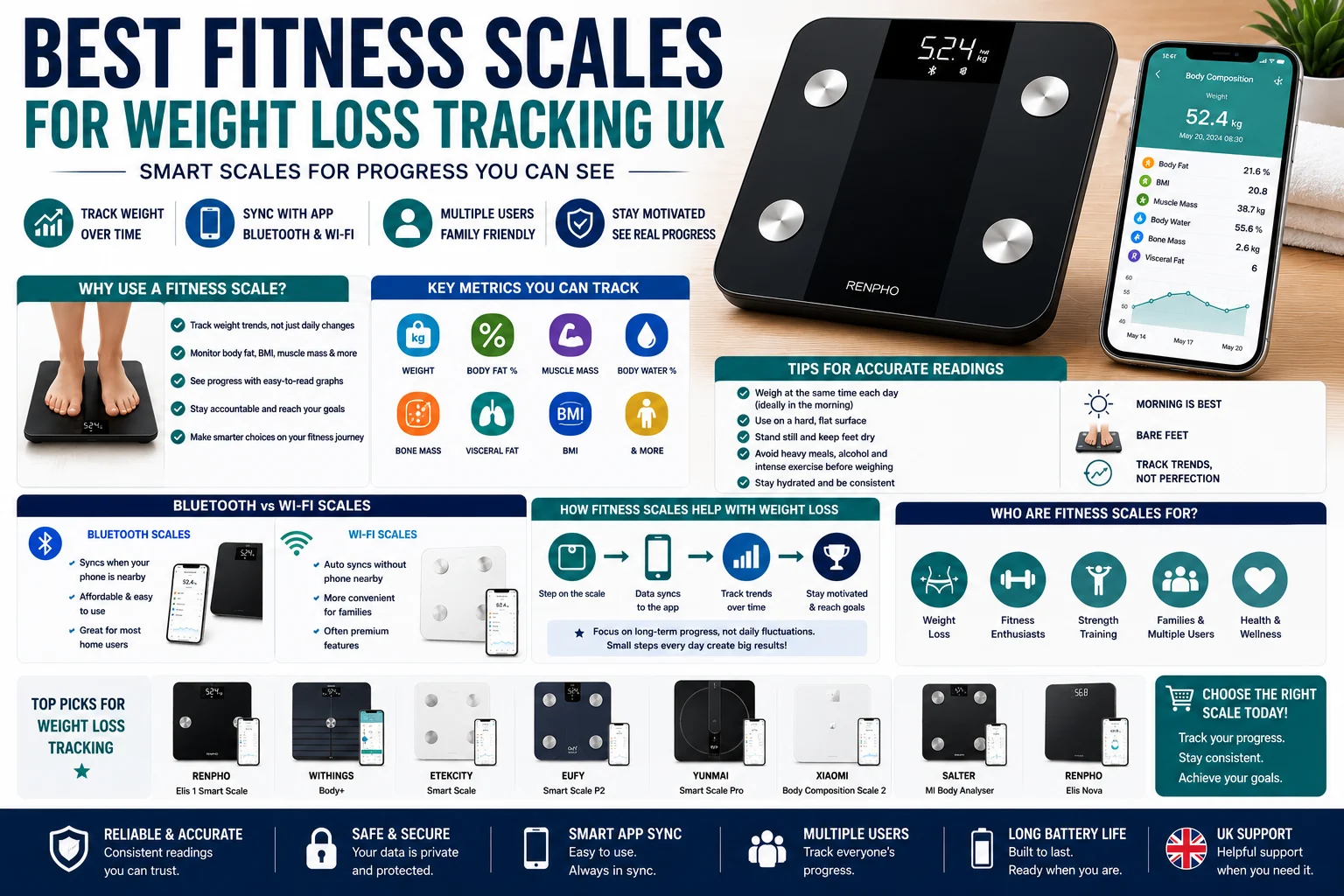
For weight loss, body composition scales can help you monitor changes in weight and estimated body fat percentage. This can be more informative than watching body weight alone.
However, daily readings can fluctuate because of hydration, food intake and exercise. It is better to focus on weekly and monthly trends rather than one reading.
Best body composition scales for muscle tracking
If you lift weights or do strength training, body composition scales can help you monitor estimated muscle mass alongside body weight.
This can be useful because fitness progress is not always shown clearly by weight alone. If your strength improves and your measurements change, estimated muscle and body fat trends can add useful context.
Best body composition scales for families
For families, choose a smart scale with multiple user profiles and simple app management. This allows several people to track their own progress separately.
Wi-Fi scales can be especially convenient because they may sync readings automatically without each person needing to open the app nearby every time.
Bluetooth vs Wi-Fi body composition scales
Bluetooth body composition scales usually sync readings to your phone when the app is nearby. They are often affordable and easy to use.
Wi-Fi body composition scales can usually upload readings automatically, which can be more convenient for regular tracking and multiple users.
Body composition scales vs body fat scales
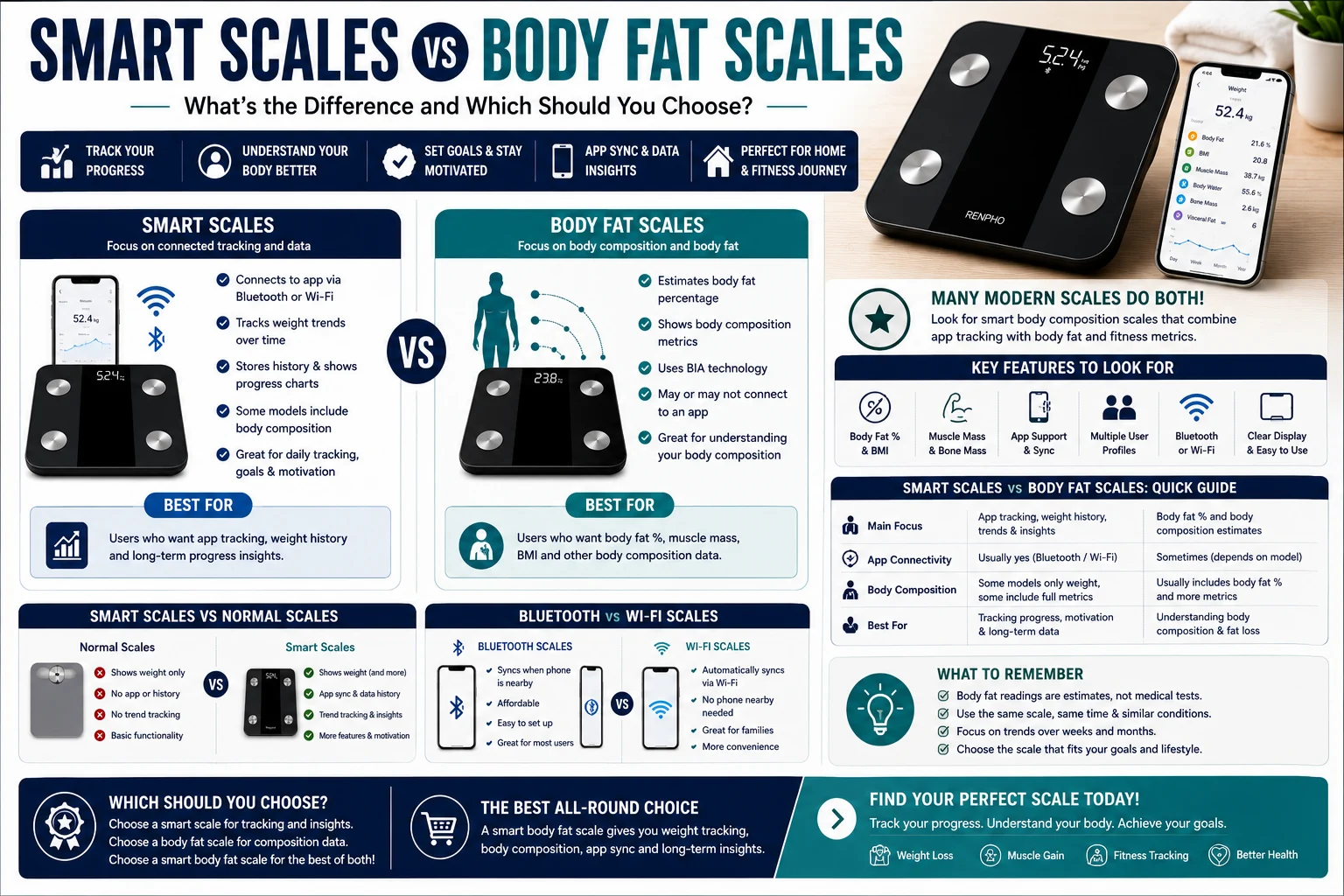
Body fat scales mainly focus on estimating body fat percentage alongside weight. Body composition scales usually offer a wider range of metrics, such as muscle mass, body water, bone mass and visceral fat estimates.
In practice, many modern smart scales use both terms. The key is to check which metrics the scale actually tracks and whether those metrics are useful for your goals.
Are body composition scales accurate?
Body composition scales can be useful for tracking trends, but they are not perfectly accurate. Readings can be affected by hydration, food intake, exercise, time of day and skin contact with the scale.
For home use, treat the numbers as estimates. The most useful information is usually the long-term direction of change rather than one individual reading.
How to get consistent readings at home
To get more consistent readings, use the scale at the same time of day and under similar conditions. Many people weigh themselves in the morning before eating.
Place the scale on a hard, flat surface and stand still during the measurement. Try not to compare readings taken after heavy exercise, large meals or major changes in hydration.
Common mistakes when buying body composition scales
One common mistake is buying the scale with the most metrics without checking whether the app is easy to use. If the app is confusing, you may not use the scale regularly.
Another mistake is expecting medical-level accuracy. Home body composition scales are best for general tracking, not diagnosis or professional assessment.
Final thoughts
The best body composition scales for home use are easy to use, consistent and helpful for long-term fitness tracking. They can give you more context than a normal bathroom scale by estimating body fat, muscle mass and other body metrics.
If you want to track weight loss, muscle gain or general progress from home, a smart body composition scale can be a useful tool. Focus on trends, use it consistently and avoid overreacting to daily fluctuations.