Introduction
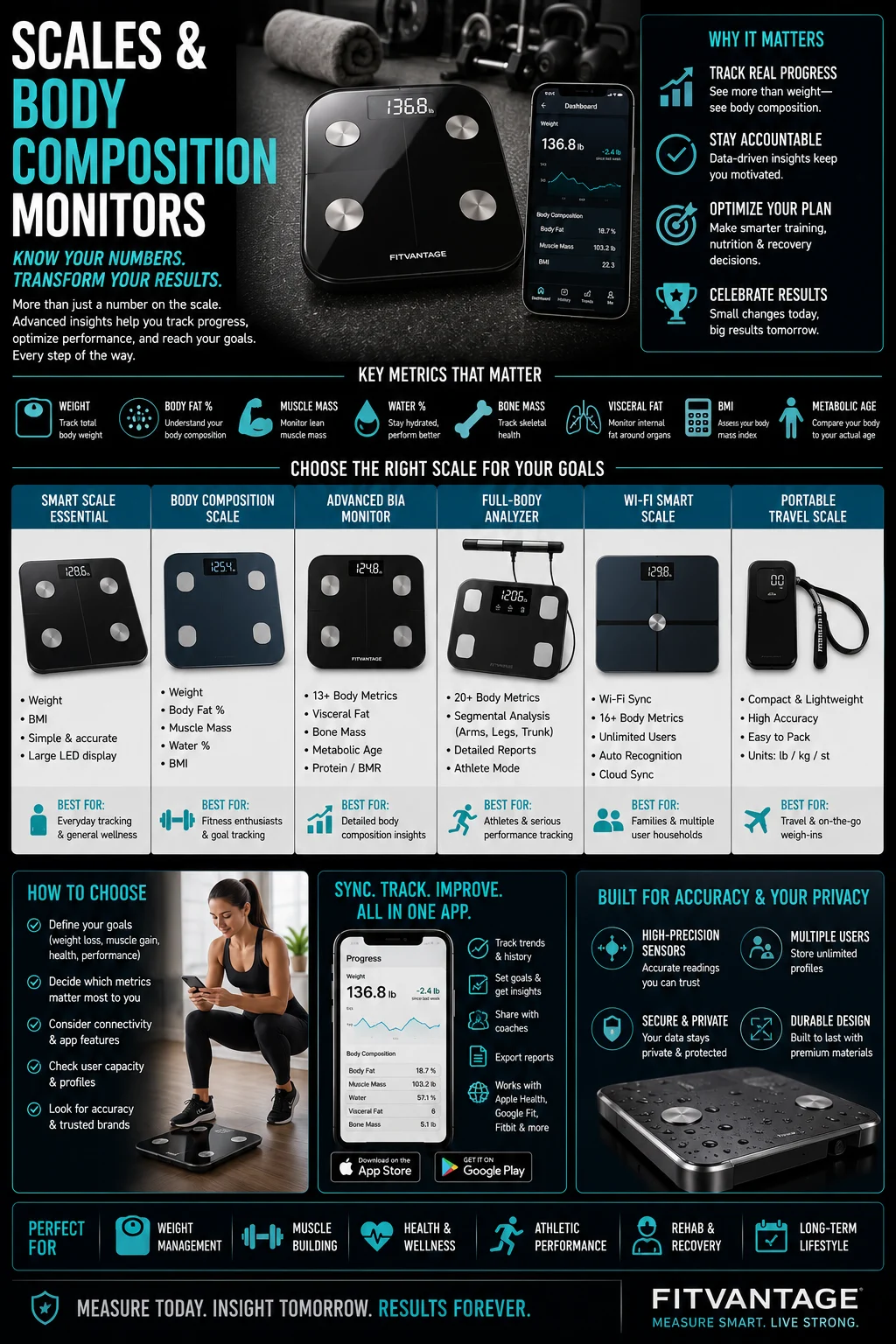
Body fat scales can be useful if you want to track more than just body weight. Many modern smart scales estimate body fat percentage, muscle mass, water weight, BMI and other body composition metrics.
They are popular with people trying to lose weight, build muscle, improve fitness or monitor progress at home. While they are not perfect medical devices, they can help you follow trends over time.
In this guide, we explain what to look for when buying body fat scales in the UK and how to choose the right smart scale for home use, fitness tracking and weight management.
What are body fat scales?
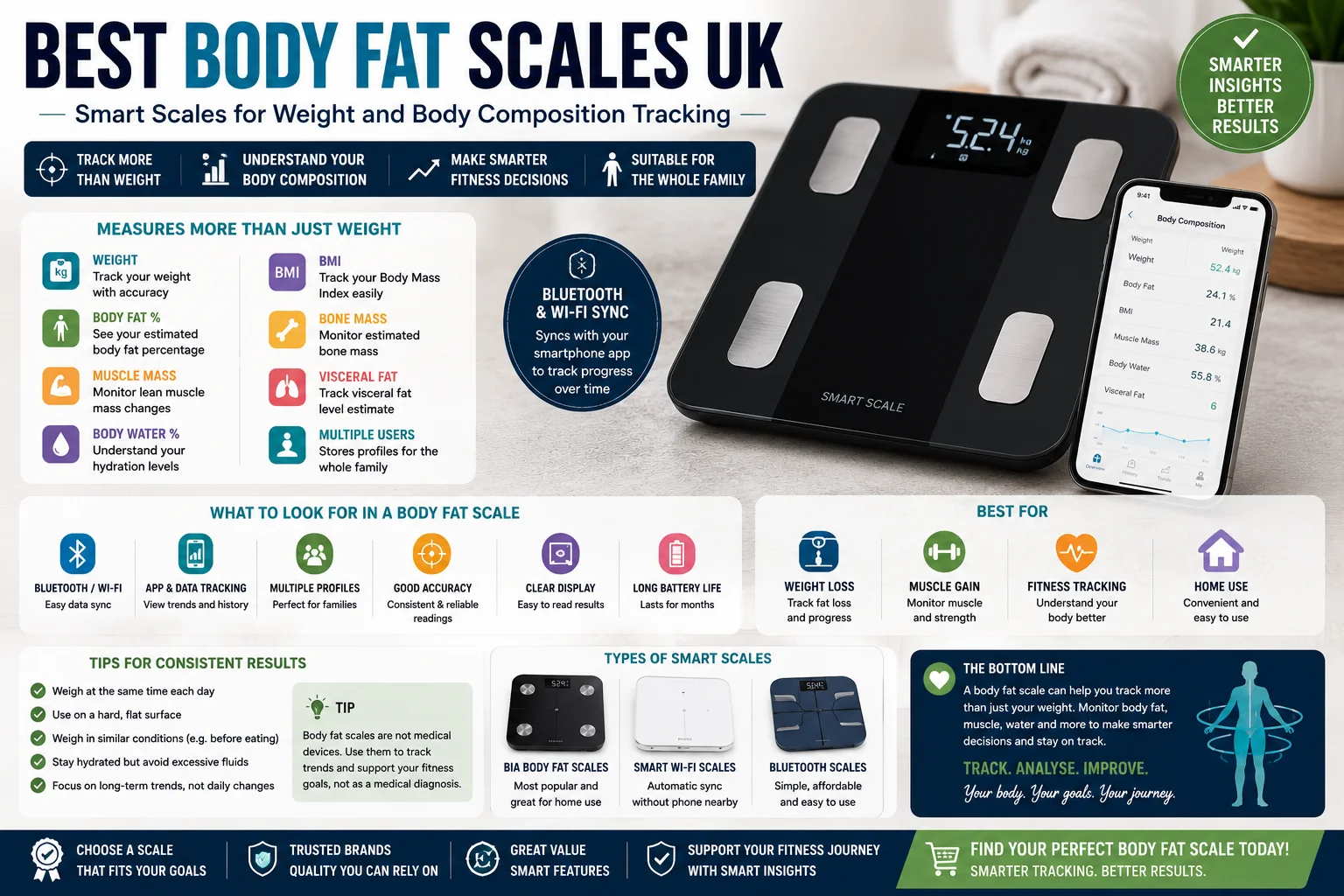
Body fat scales are digital scales that estimate body fat percentage as well as body weight. Many models also provide extra body composition data such as muscle mass, bone mass, body water, visceral fat estimate and BMI.
Most consumer body fat scales use bioelectrical impedance analysis, often called BIA. This sends a small electrical signal through the body and uses the result to estimate body composition.
Who should buy body fat scales?
Body fat scales can be useful for people who want to track fitness, weight loss, muscle gain or general body composition trends at home.
They may be especially helpful if you are training regularly and do not want to rely only on body weight. For example, your weight may stay similar while your body composition changes through fat loss and muscle gain.
What to look for in body fat scales
When choosing body fat scales, look for accuracy consistency, app support, Bluetooth or Wi-Fi connectivity, user profiles, clear display, easy setup and useful body composition metrics.
The best scale is not always the one with the most numbers. It should be easy to use regularly and should give consistent readings under similar conditions.
Best body fat scales for home use
For home use, choose a body fat scale that is simple to set up, easy to read and suitable for multiple users if more than one person will use it.
App-connected scales can be useful because they save your readings automatically and show progress over time. This makes it easier to spot trends instead of judging progress from one reading.
Best smart body fat scales
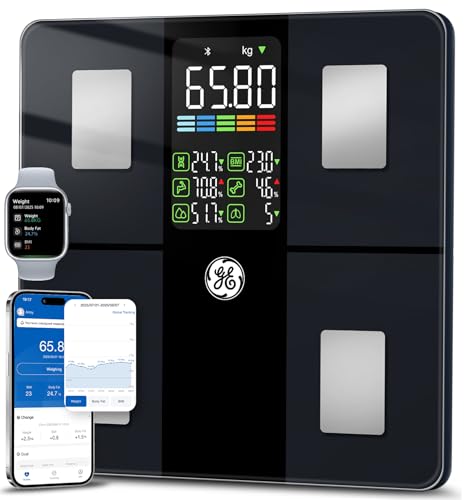
Smart body fat scales usually connect to an app using Bluetooth or Wi-Fi. They can track weight, body fat percentage and other body composition metrics over time.
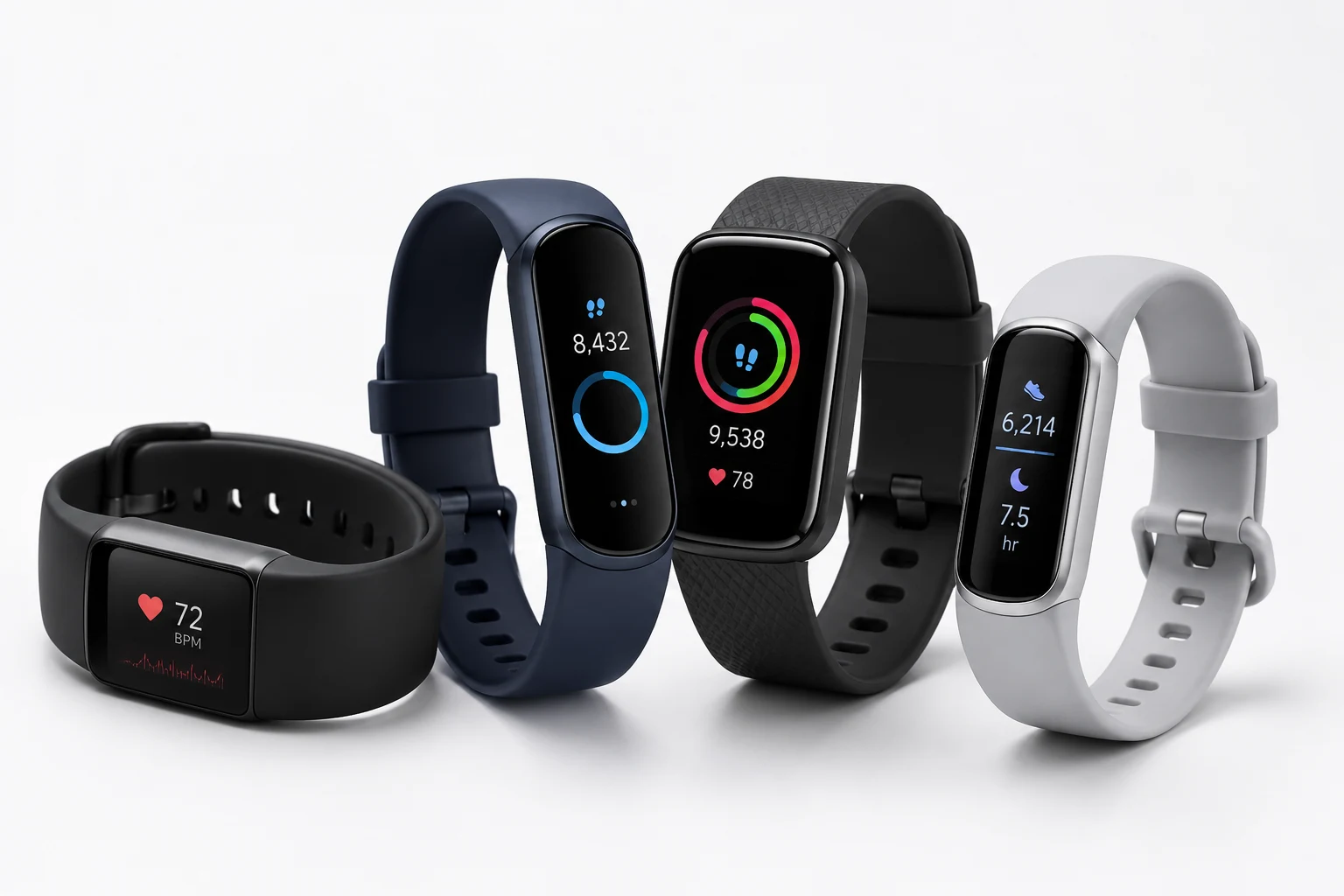
Some smart scales also sync with fitness apps, which can be helpful if you already track workouts, steps, calories or health data from a smartwatch or fitness tracker.
Best body fat scales for weight loss
For weight loss, body fat scales can help you track whether your progress is coming from body weight changes and estimated fat loss. This can be more useful than focusing only on the number on the scale.
However, body fat readings can fluctuate. For better results, use the scale at the same time of day, under similar conditions and focus on the long-term trend.
Best body fat scales for muscle tracking
If you are doing strength training, a body composition scale can help you monitor estimated muscle mass as well as body weight.
This can be useful because gaining muscle and losing fat at the same time may not show clearly on a normal bathroom scale. A smart scale gives you more context, even if the numbers are estimates.
Body fat scales vs normal bathroom scales
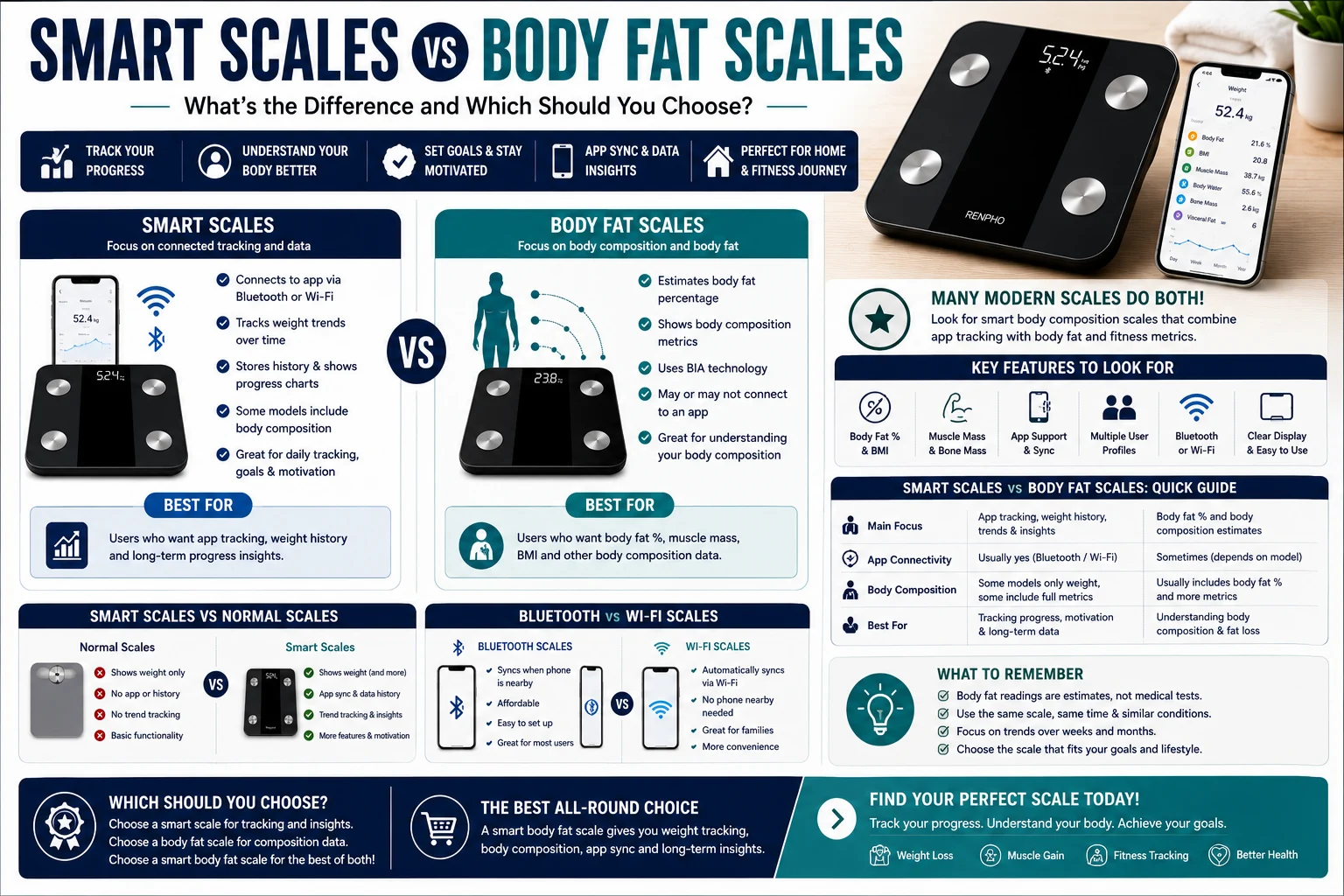
A normal bathroom scale measures body weight only. A body fat scale measures weight and estimates body composition metrics such as body fat percentage, muscle mass and water weight.
If you only want simple weight tracking, a normal scale may be enough. If you want more fitness and body composition data, a smart body fat scale may be more useful.
Bluetooth vs Wi-Fi body fat scales
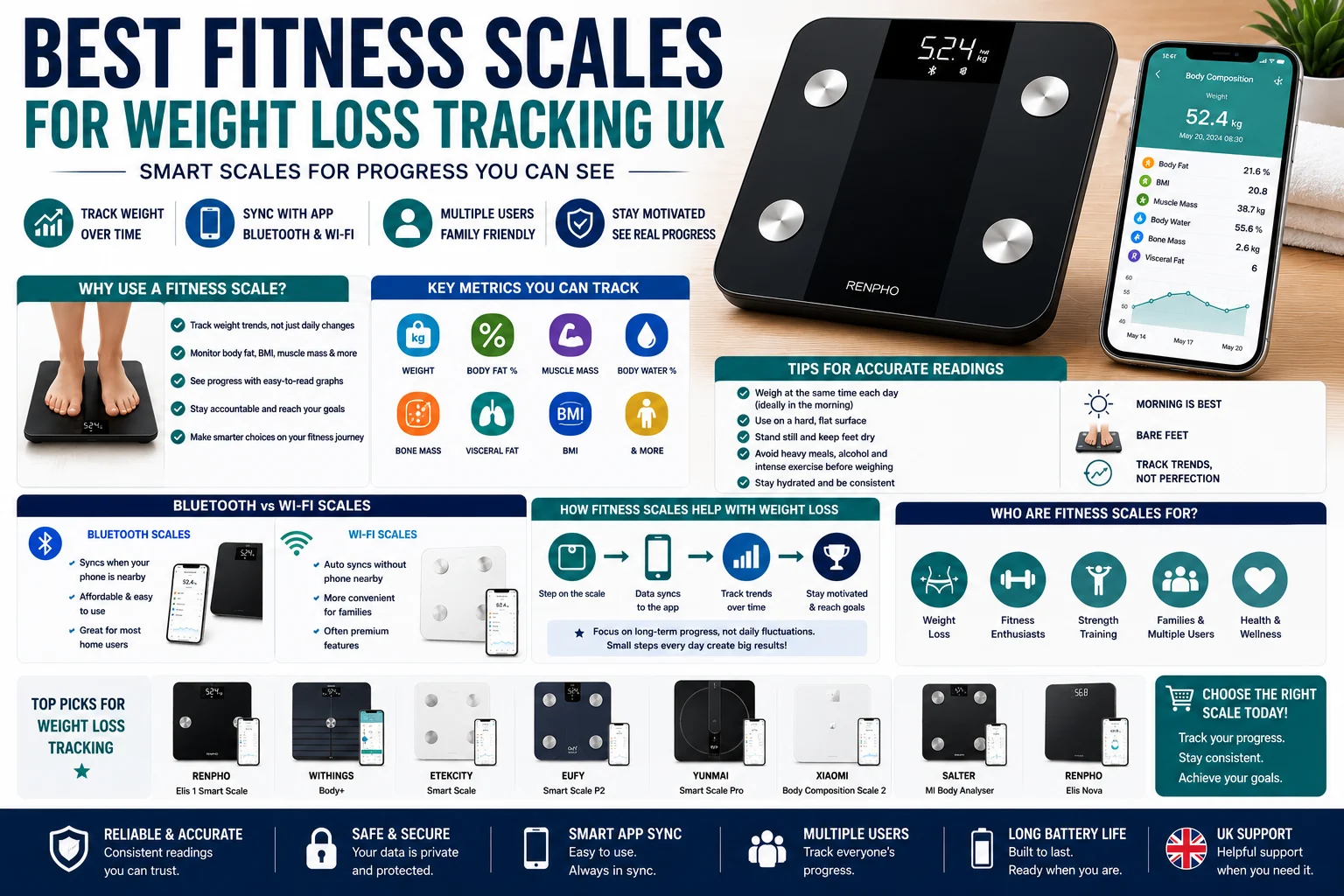
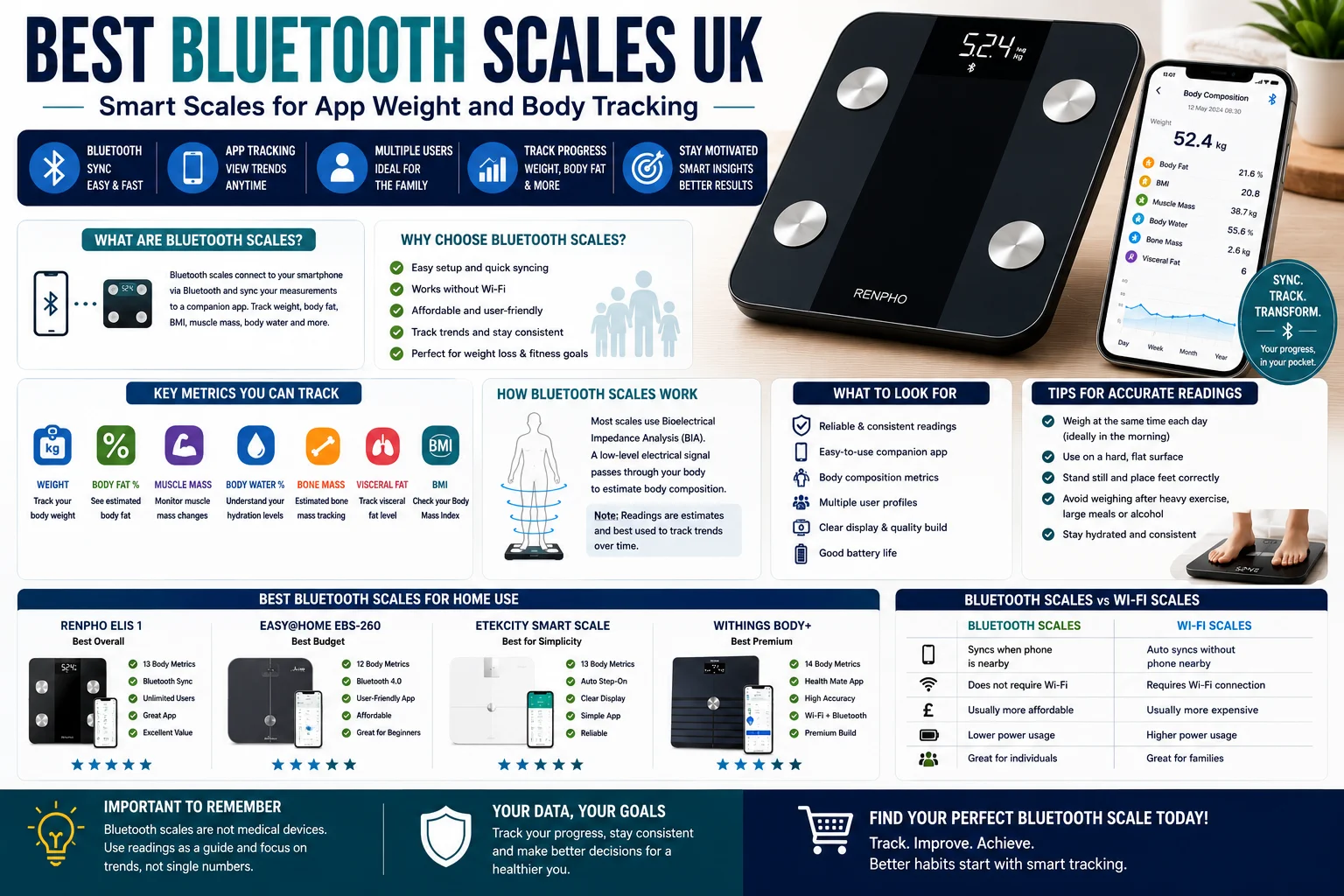
Bluetooth body fat scales usually sync readings to your phone when the app is nearby. They are often simple and affordable.
Wi-Fi scales can sync readings automatically without needing your phone next to the scale. This can be more convenient if several people use the same scale or you want automatic tracking.
Are body fat scales accurate?
Body fat scales can be useful for tracking trends, but they are not perfectly accurate. Readings can be affected by hydration, food intake, exercise, time of day and how you stand on the scale.
For most home users, the best approach is to use body fat scales consistently and look at the direction of change over weeks and months, rather than treating one reading as exact.
How to get more consistent readings
To get more consistent readings, use your body fat scale at the same time of day, ideally under similar conditions. Many people weigh themselves in the morning before eating.
Try to place the scale on a hard, flat surface and stand still during measurement. Avoid comparing readings taken at very different times of day or after heavy exercise.
Common mistakes when buying body fat scales
One common mistake is assuming that more metrics always means a better scale. Some scales show many numbers, but not all of them are equally useful for everyday tracking.
Another mistake is expecting medical-grade accuracy from a consumer smart scale. These products are best used for general progress tracking, not diagnosis.
Final thoughts
The best body fat scales are easy to use, consistent and useful for tracking long-term progress. They can help you monitor weight, estimated body fat and other body composition metrics from home.
If you are serious about weight loss, strength training or fitness tracking, a smart body fat scale can be a practical addition to your routine. Just remember to focus on trends, not single readings.