Introduction
Heart rate monitors can be useful for gym training because they help you track workout intensity, cardio effort, HIIT sessions and recovery between sets. Instead of guessing how hard you are working, a heart rate monitor gives you live feedback during training.
The best heart rate monitor for gym training should be comfortable, secure and easy to use during different workout styles. Some gym users prefer chest straps, while others prefer arm bands, smartwatches or fitness trackers.
In this guide, we explain what to look for when buying heart rate monitors for gym training in the UK and how to choose the right option for cardio machines, HIIT, circuits, strength training and general fitness tracking.
Why use a heart rate monitor in the gym?
A heart rate monitor can help you understand how hard your body is working during gym sessions. This is useful for treadmill runs, rowing machines, cycling, cross trainers, stair climbers, circuits and conditioning workouts.
It can also help you stay in the right training zone, avoid overdoing easy sessions and track whether your fitness is improving over time.
Who should buy a gym heart rate monitor?
A gym heart rate monitor can be useful for beginners, regular gym users, HIIT users, cardio-focused trainees, strength training users and people trying to improve fitness or weight management.
It may also be useful if you want to track calories, workout effort, recovery between intervals or progress across different gym sessions.
What to look for in heart rate monitors for gym training
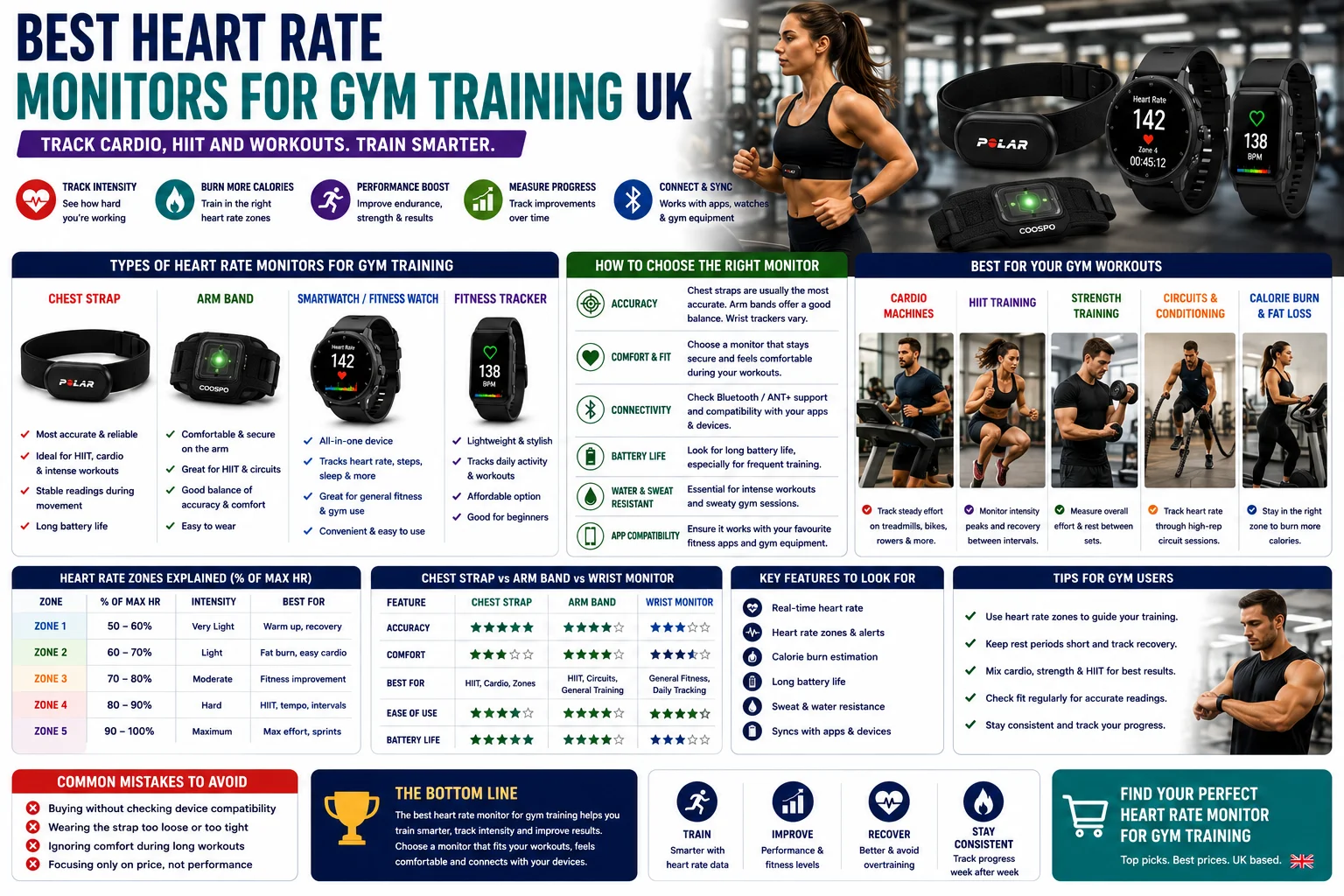
When choosing a heart rate monitor for gym training, look at accuracy, comfort, secure fit, Bluetooth connectivity, battery life, sweat resistance, app compatibility and ease of use.
A good gym heart rate monitor should stay in place during movement, pair easily with your phone or watch and feel comfortable enough to wear throughout the full workout.
Best heart rate monitors for cardio machines
Heart rate monitors can be useful on treadmills, exercise bikes, rowing machines, cross trainers and stair climbers. They help you see whether you are training at an easy, moderate or intense level.
Some monitors may connect to compatible gym equipment, while others connect to your phone, smartwatch or fitness app. Always check compatibility if this matters to you.
Best heart rate monitors for HIIT
HIIT workouts involve fast changes in intensity, so a secure heart rate monitor is important. You need a device that stays in place during jumps, sprints, circuits and quick transitions.
Chest straps and arm bands may be better than loose wrist trackers for HIIT because they can stay more stable during rapid movement.
Best heart rate monitors for strength training
Strength training is different from steady cardio because effort comes in sets rather than continuous movement. A heart rate monitor can still be useful for tracking overall intensity, rest periods and conditioning-style lifting sessions.
For pure strength sessions, heart rate is only one part of the picture. Weight lifted, reps, sets, rest time and progression still matter more.
Best heart rate monitors for circuits
Circuits often combine strength, cardio and short rest periods. A heart rate monitor can help you see how hard you are working and how quickly you recover between rounds.
For circuits, comfort and secure fit matter because movements can include squats, lunges, presses, burpees, running, rowing or cycling.
Best heart rate monitors for gym beginners
Beginners may benefit from heart rate monitors because they help show workout effort clearly. This can prevent training too hard too soon or spending every session at maximum intensity.
A beginner-friendly option should be simple, comfortable and easy to pair with a phone or watch. Too many complicated features can make the device harder to use consistently.
Chest strap heart rate monitors for gym training
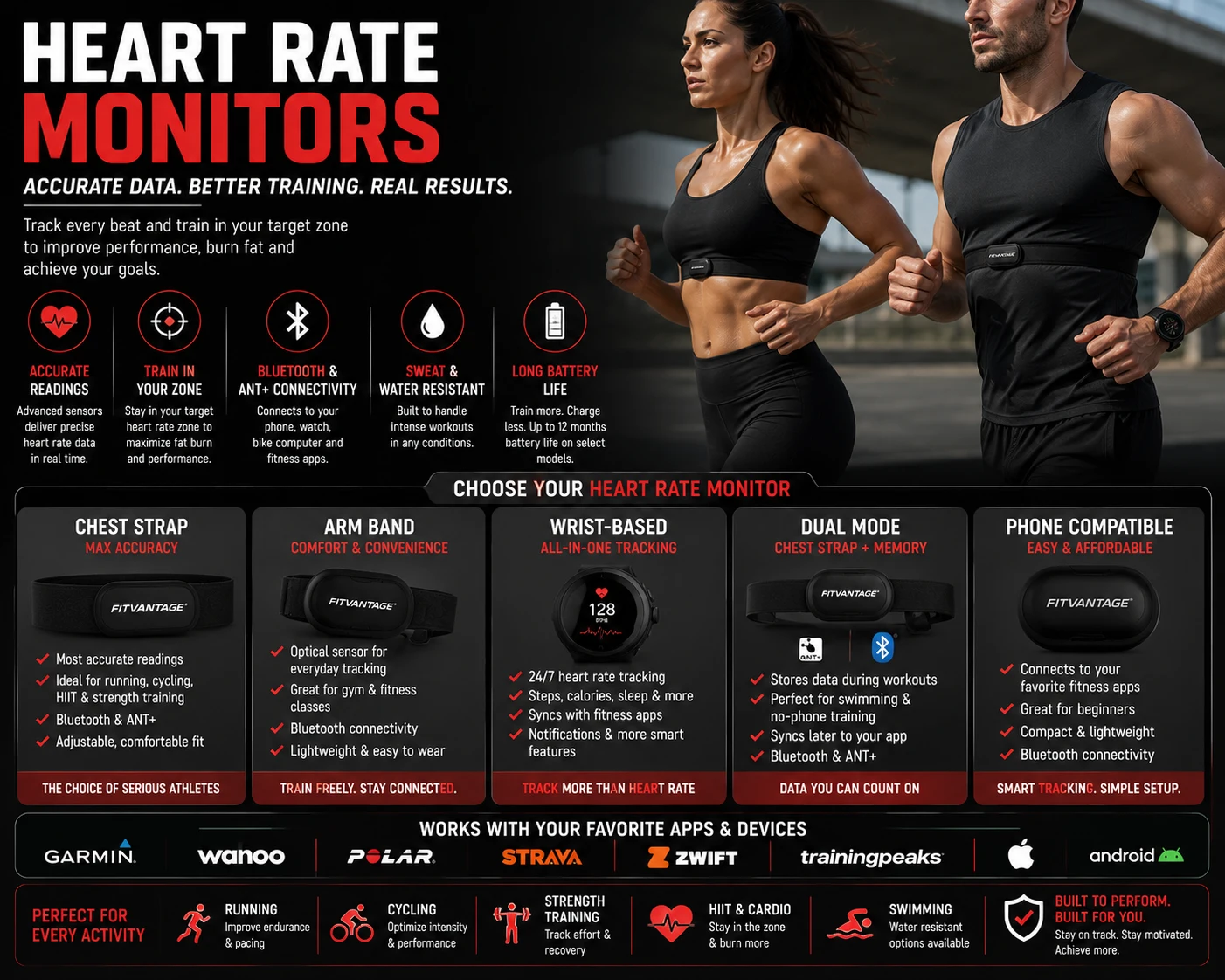
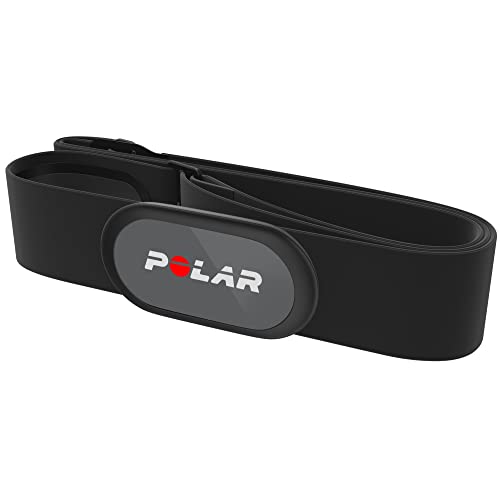
Chest strap heart rate monitors are often chosen for stable workout readings. They can be useful for cardio machines, HIIT, cycling, rowing and structured training zones.
The downside is comfort. Some gym users dislike wearing a strap around the chest, especially during longer or mixed workouts. Fit and adjustment are important.
Arm band heart rate monitors for gym training
Arm band heart rate monitors are usually worn on the upper arm or forearm. They can be a good balance between comfort and workout tracking.
Many gym users prefer arm bands because they are easier to put on than chest straps and may feel more secure than wrist trackers during movement.
Wrist heart rate monitors for gym training
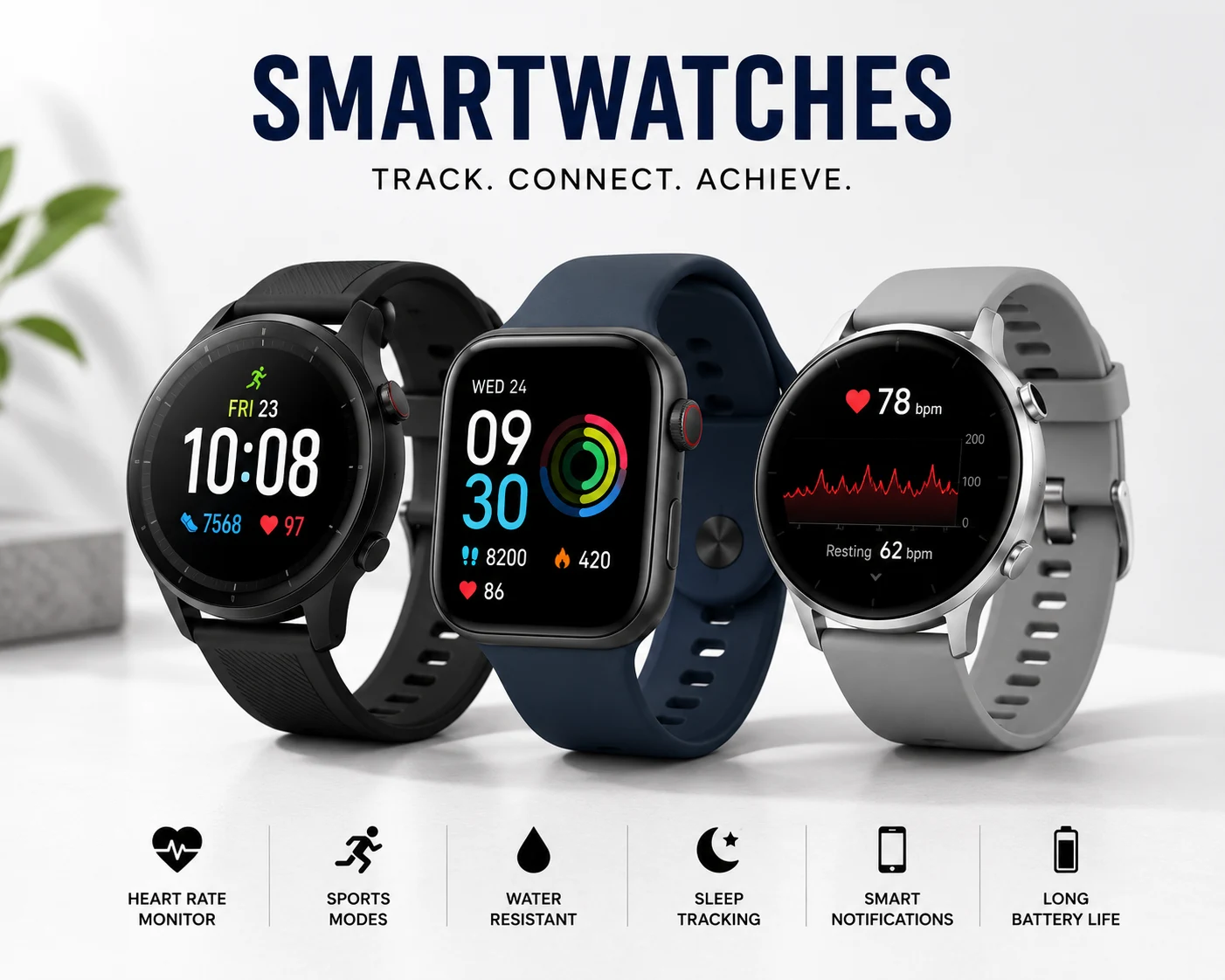
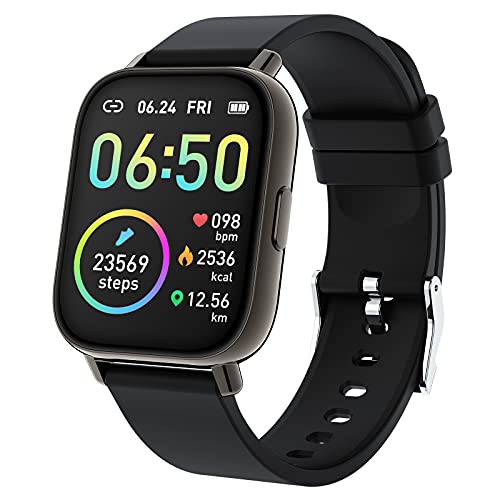
Wrist heart rate monitors are usually built into smartwatches and fitness trackers. They are convenient because they can track heart rate, workouts, steps, sleep and daily activity in one device.
However, wrist readings may vary during intense movement, gripping exercises or workouts where the watch moves on the wrist. For serious cardio or HIIT tracking, some users prefer a chest strap or arm band.
Bluetooth heart rate monitors for gym workouts
Bluetooth heart rate monitors can connect wirelessly to phones, watches, fitness apps and some gym machines. This is useful if you want live workout data or want to save sessions in your app.
Before buying, check whether the monitor works with your preferred app, watch or gym equipment. Bluetooth support alone does not guarantee every device will work perfectly together.
Heart rate monitor vs smartwatch for gym training
A smartwatch is convenient because it can track heart rate, workouts, notifications, steps and sometimes GPS. A dedicated heart rate monitor may be more focused on workout tracking.
Some gym users use both: a chest strap or arm band for heart rate data and a watch or phone to display and record the workout.
Heart rate monitor vs fitness tracker for gym training
A fitness tracker may be enough if you want simple daily activity and basic workout tracking. A dedicated heart rate monitor may be better if you want more focused training data during cardio or HIIT sessions.
The right choice depends on whether you want general lifestyle tracking or workout-specific heart rate data.
Are heart rate monitors accurate in the gym?
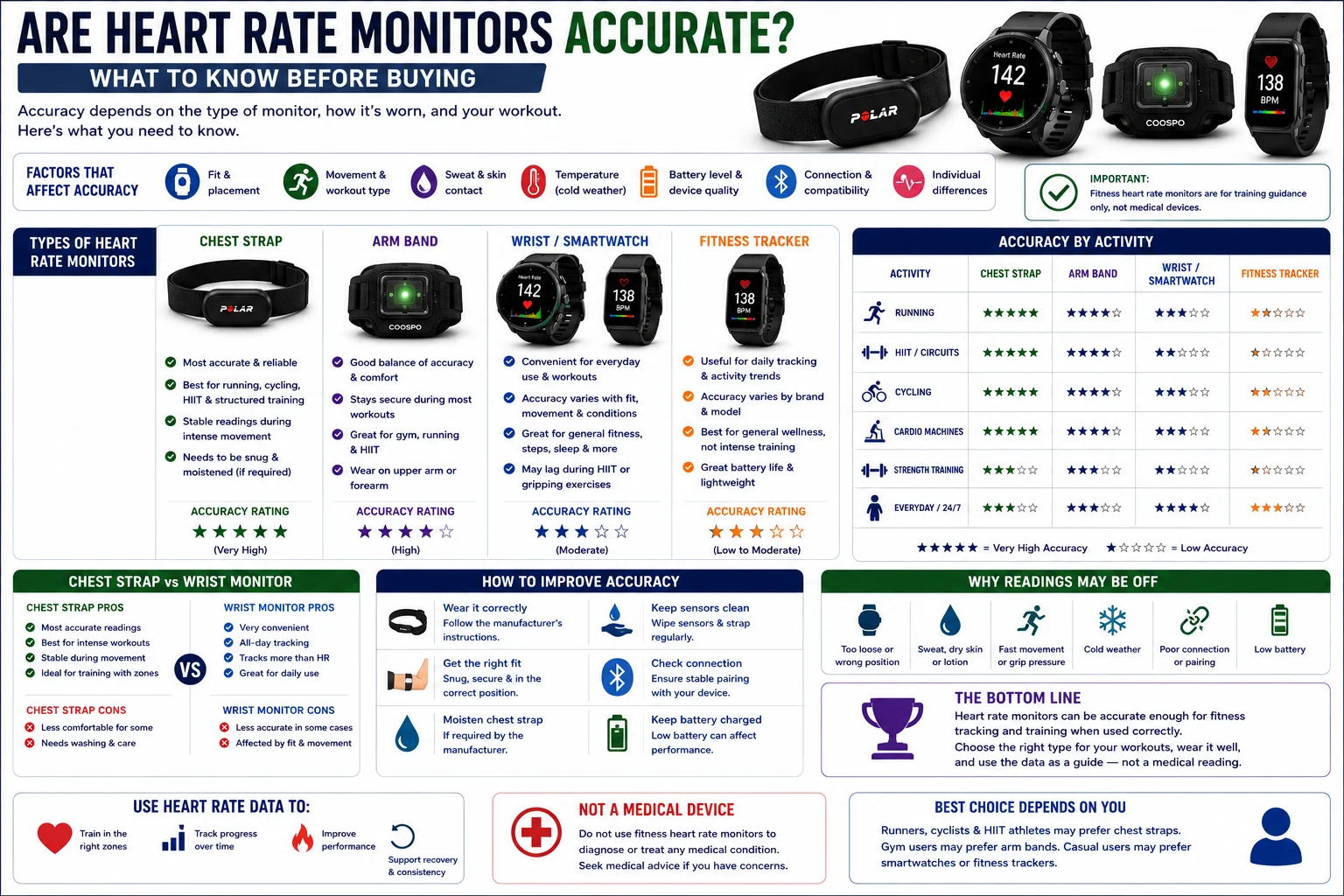
Accuracy depends on the device type, fit, movement, sweat, sensor quality and workout style. Chest straps are often chosen for stable exercise readings, while wrist monitors are more convenient but may vary more during certain exercises.
For most gym users, a good heart rate monitor provides useful training guidance. For medical concerns, do not rely on a fitness heart rate monitor as a medical device.
Can heart rate monitors help with weight loss?
Heart rate monitors can support weight loss routines by helping you track workout intensity and stay consistent with cardio or conditioning sessions.
However, a heart rate monitor does not cause weight loss by itself. Nutrition, total activity, calories, sleep and consistency still matter most.
Can heart rate monitors help with fitness progress?
Heart rate monitors can help you track whether your fitness is improving. For example, you may notice that the same treadmill speed feels easier over time or that your heart rate recovers faster between intervals.
This feedback can be motivating, especially if you train regularly and want to see progress beyond weight or appearance.
How to use heart rate zones in the gym
Heart rate zones are ranges that estimate workout intensity. Lower zones are easier and useful for steady cardio, while higher zones are used for harder efforts such as HIIT or intervals.
Zones are useful guidance, but they are not perfect. Use them alongside how you feel, your breathing, workout goal and recovery level.
Common mistakes when buying gym heart rate monitors
One common mistake is buying a monitor without checking compatibility with your phone, watch or fitness app. This can make the device frustrating to use.
Another mistake is choosing only by price. Comfort, secure fit, battery life and reliable pairing matter if you want to use the monitor regularly.
Final thoughts
The best heart rate monitors for gym training are comfortable, secure and suitable for your workout style. Chest straps may suit users who want stable readings, while arm bands and watches may suit people who prefer comfort and convenience.
Choose a heart rate monitor based on how you train, what devices you already use and how much data you actually need. The best gym heart rate monitor is the one you can wear consistently and understand easily.