Introduction
Heart rate monitors can be useful for runners who want to track effort, pace control, workout intensity and training zones more clearly. Instead of guessing how hard a run feels, a heart rate monitor can show whether you are running easy, moderate or hard.
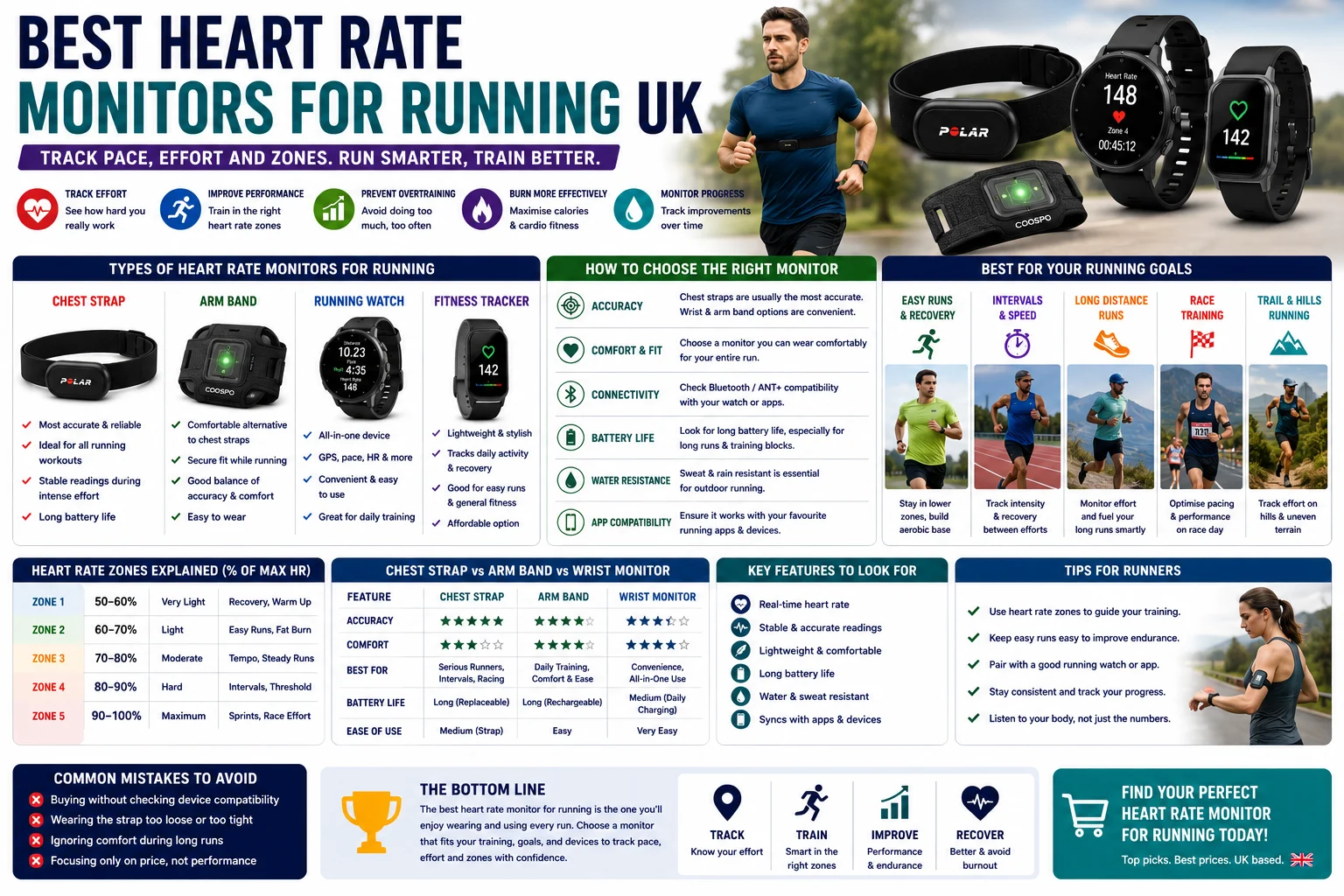
The best heart rate monitor for running should be comfortable, secure and compatible with your watch, phone or running app. Some runners prefer chest straps, while others prefer arm bands, smartwatches or fitness trackers.
In this guide, we explain what to look for when buying heart rate monitors for running in the UK and how to choose the right option for easy runs, intervals, long runs, cardio fitness and race training.
Why runners use heart rate monitors
Runners use heart rate monitors to understand effort more accurately. Pace can change depending on hills, wind, fatigue and terrain, but heart rate can help show how hard the body is working.
This can be useful for easy runs, tempo sessions, intervals, long runs and recovery runs. Heart rate data can also help runners avoid training too hard too often.
Who should buy a running heart rate monitor?
A running heart rate monitor can be useful for beginner runners, regular joggers, 5K runners, marathon runners, trail runners and anyone using heart rate zones in training.
It may also be useful if you want to improve pacing, monitor effort on hills, track cardio progress or connect heart rate data to a running watch or fitness app.
What to look for in heart rate monitors for running
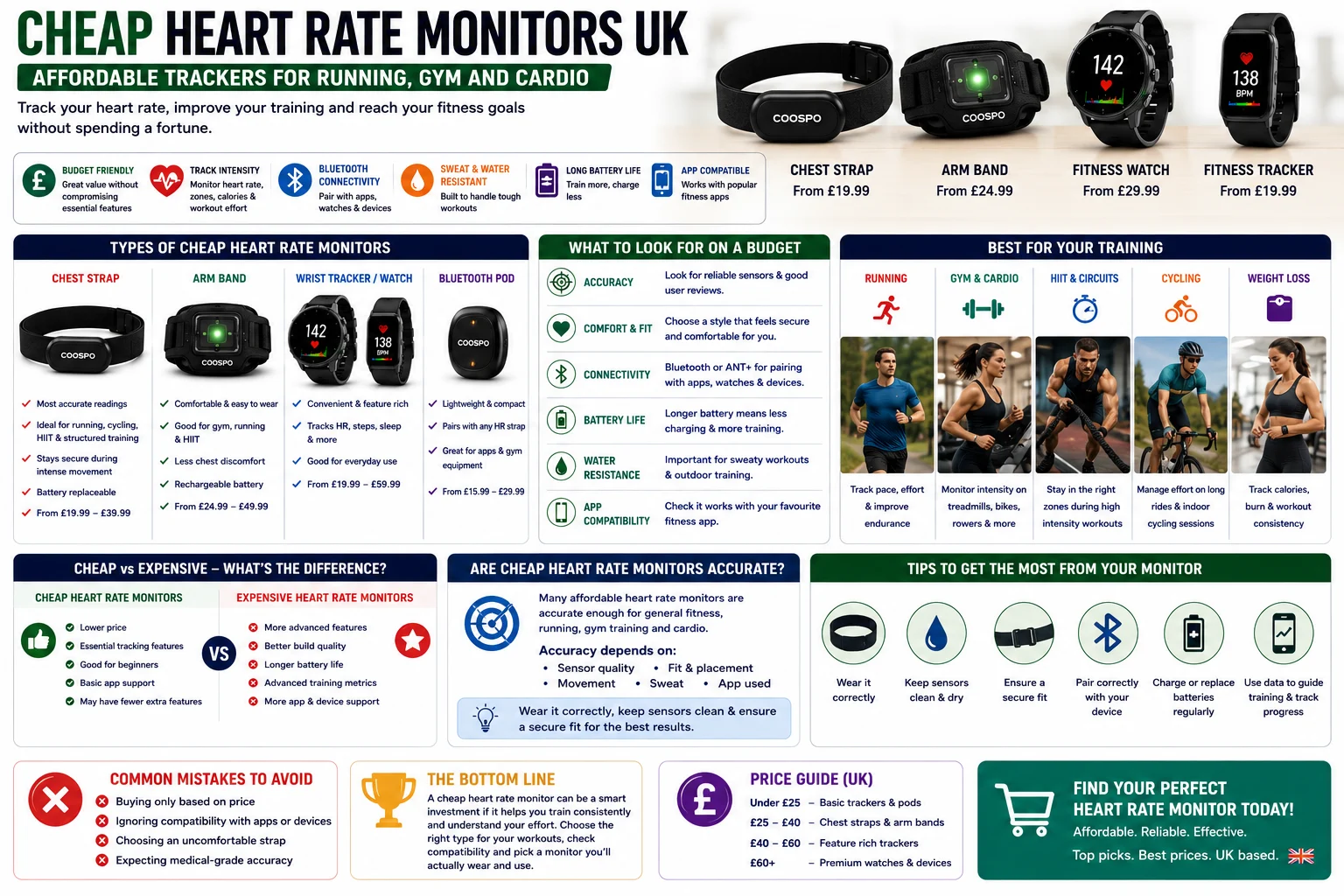
When choosing a heart rate monitor for running, look at accuracy, comfort, fit, battery life, Bluetooth or ANT+ connectivity, water resistance, app compatibility and how secure it feels during movement.
A running monitor should stay in place when you sweat, change pace or run for longer distances. Comfort matters because a monitor that feels annoying will not be used consistently.
Best chest strap heart rate monitors for running
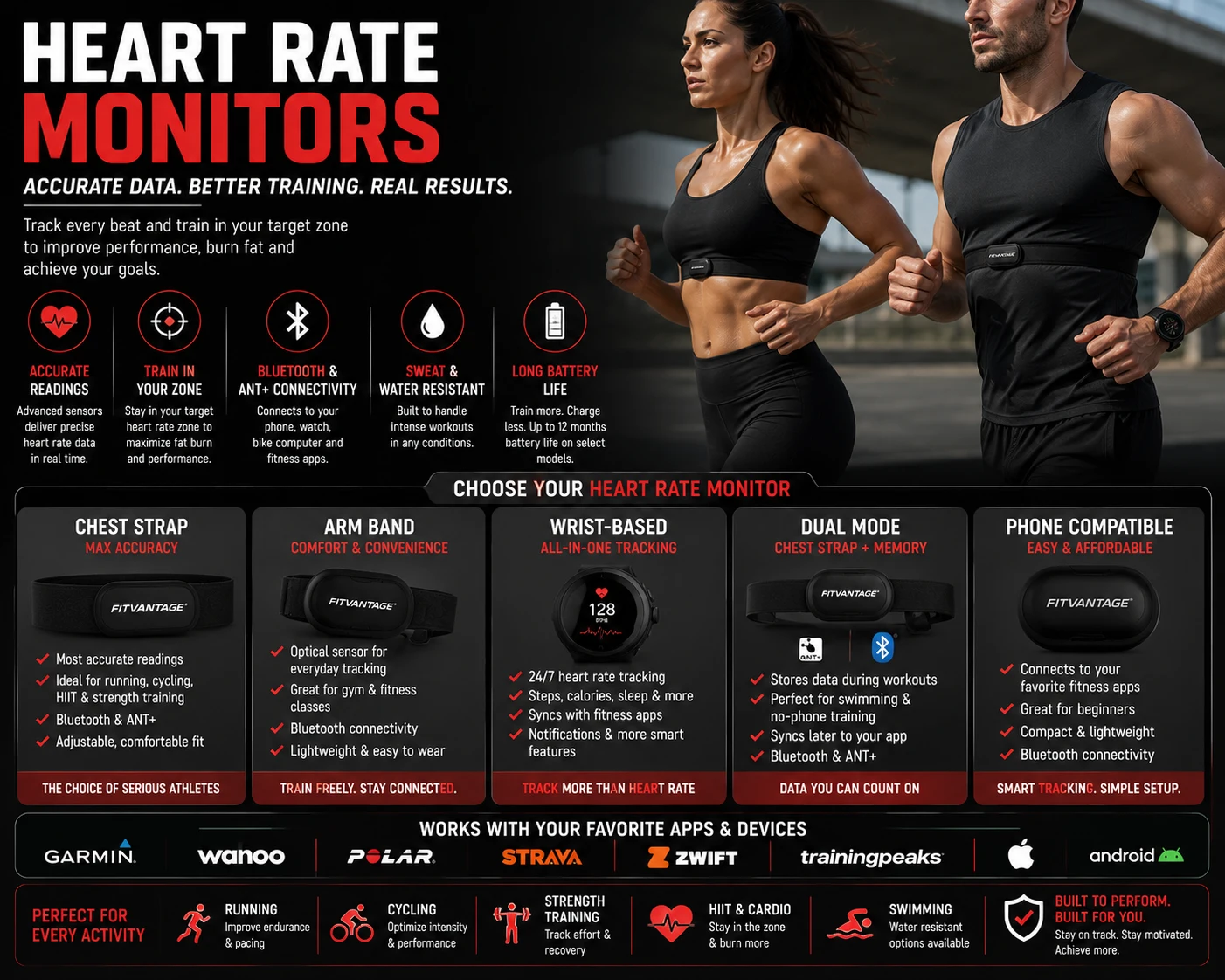
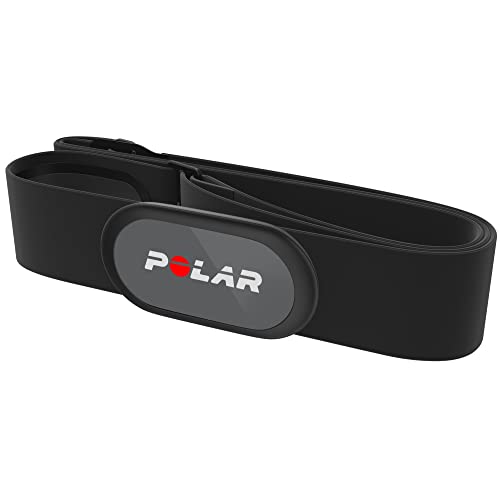
Chest strap heart rate monitors are popular with runners because they can provide stable workout readings. They are worn around the chest and usually connect to a watch, phone or app.
A chest strap may be best if you train seriously with heart rate zones, intervals, tempo runs or long runs. The main downside is that some runners find chest straps less comfortable than arm bands or watches.
Best arm band heart rate monitors for running
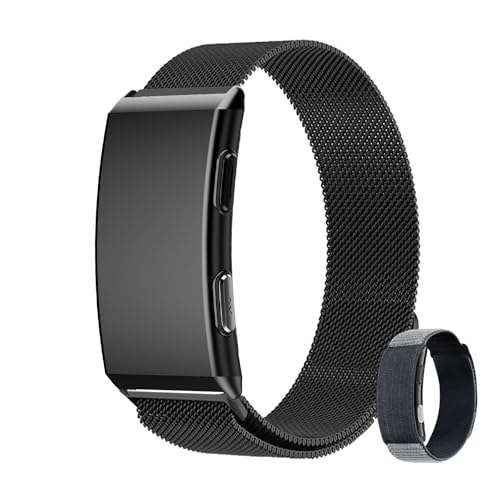
Arm band heart rate monitors are usually worn on the upper arm or forearm. They can be a comfortable alternative to chest straps while still staying secure during runs.
Arm bands may suit runners who want better workout tracking than a loose wrist monitor but do not like wearing a strap around the chest.
Best wrist heart rate monitors for running
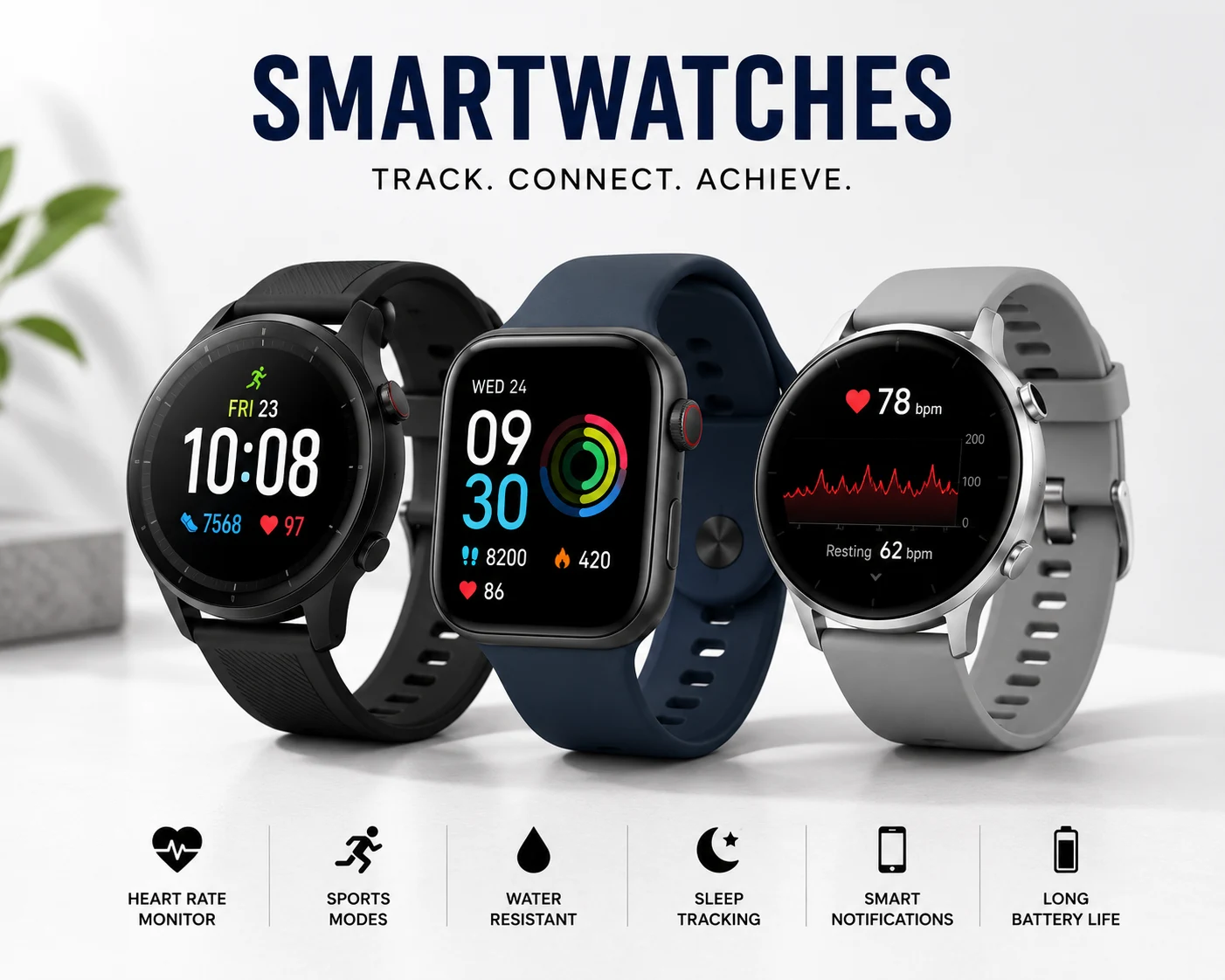
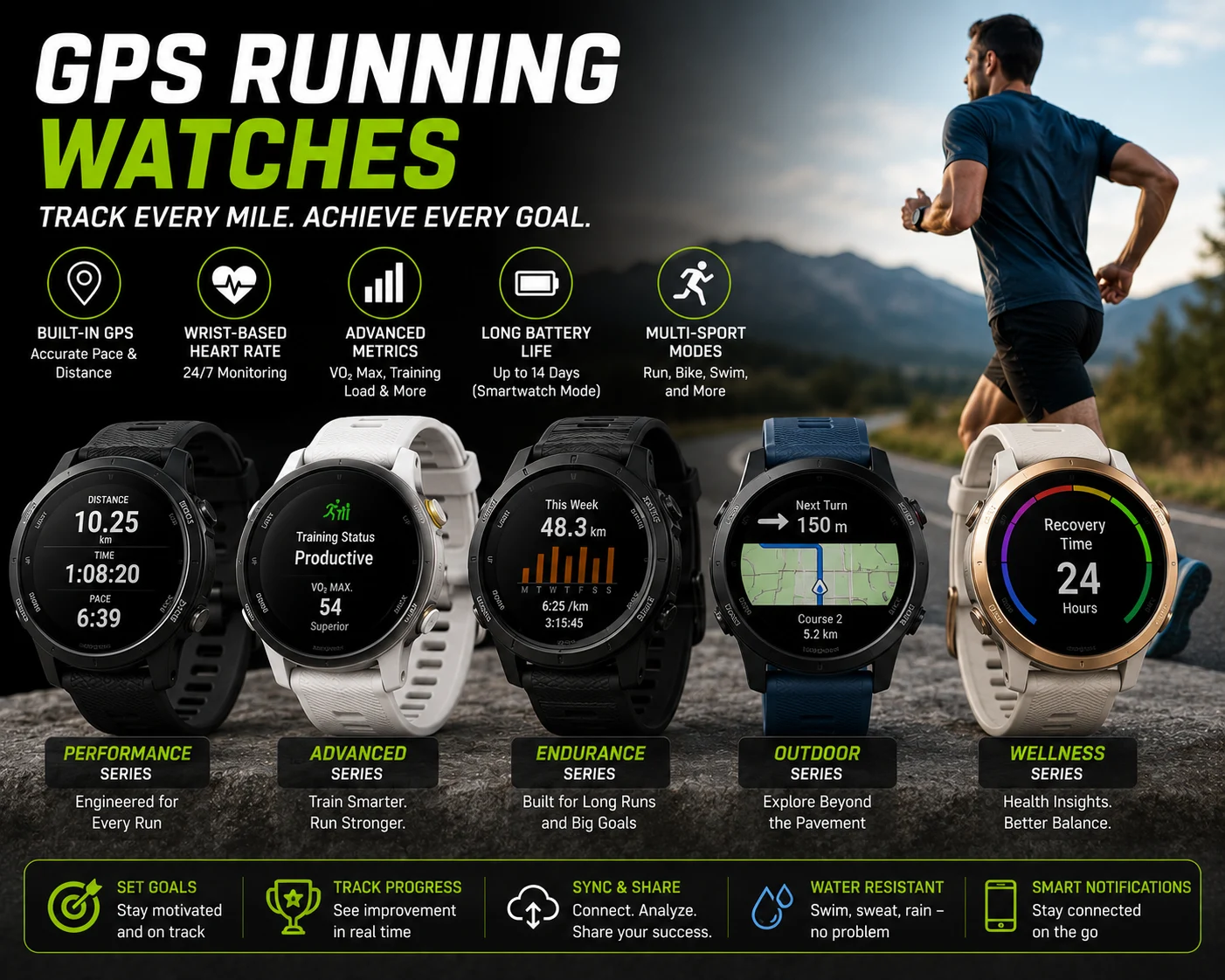
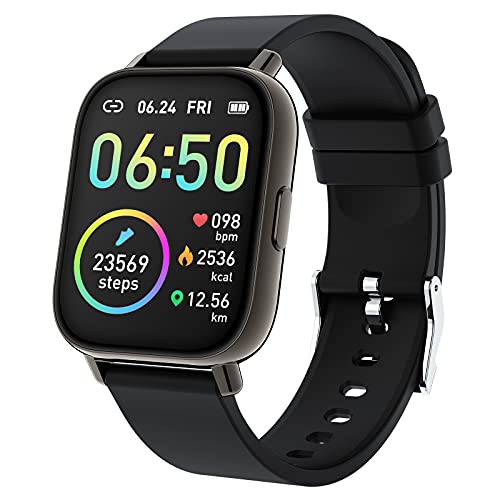
Wrist heart rate monitors are usually built into running watches, smartwatches or fitness trackers. They are convenient because they can show heart rate, pace, distance and workout data in one place.
However, wrist readings can vary depending on fit, sweat, cold weather and arm movement. For more structured heart rate training, some runners pair a watch with a chest strap or arm band.
Bluetooth heart rate monitors for running
Bluetooth heart rate monitors can connect wirelessly to phones, apps, watches and some gym equipment. This is useful if you want live heart rate data during runs or want to save workouts in an app.
Before buying, check whether the monitor works with your preferred running app, watch or phone. Compatibility matters more than the headline feature list.
ANT+ heart rate monitors for running
ANT+ support can be useful if you use sports watches, cycling computers or fitness devices that support ANT+. Some heart rate monitors support both Bluetooth and ANT+.
If you use multiple devices or plan to upgrade your training setup later, a monitor with both Bluetooth and ANT+ may be more flexible.
Best heart rate monitors for easy runs
Easy runs should usually feel controlled and comfortable. A heart rate monitor can help you keep easy runs from becoming too hard.
This is useful because many runners accidentally run easy days too fast. Heart rate data gives a simple way to keep effort lower when recovery or base training is the goal.
Best heart rate monitors for interval training
Intervals involve harder efforts followed by recovery periods. A heart rate monitor can help you see how hard you are working and how quickly your heart rate settles between efforts.
For intervals, a secure chest strap or arm band may be better than a loose wrist tracker because the monitor needs to stay stable during faster movement.
Best heart rate monitors for long runs
For long runs, heart rate tracking can help runners avoid starting too hard. It can also show how effort changes as fatigue builds during the run.
Battery life and comfort are important for long runs. A monitor should feel comfortable enough to wear for the full session without causing irritation.
Best heart rate monitors for race training
During race training, heart rate monitors can help runners understand effort across different sessions. They can support easy runs, tempo work, intervals and longer endurance sessions.
They are not a replacement for good training structure, but they can give useful feedback when used alongside pace, distance and perceived effort.
Heart rate monitor vs running watch
A running watch can track pace, distance, time, GPS and often wrist heart rate. A dedicated heart rate monitor focuses more directly on heart rate data.
Many runners use both. The watch displays and records the run, while a chest strap or arm band provides heart rate data.
Heart rate monitor vs fitness tracker for running
Fitness trackers are useful for daily steps, activity and general wellness. A running heart rate monitor is more focused on workout intensity and training sessions.
If you run occasionally, a fitness tracker may be enough. If you train regularly, a dedicated monitor or running watch may be more useful.
Are running heart rate monitors accurate?
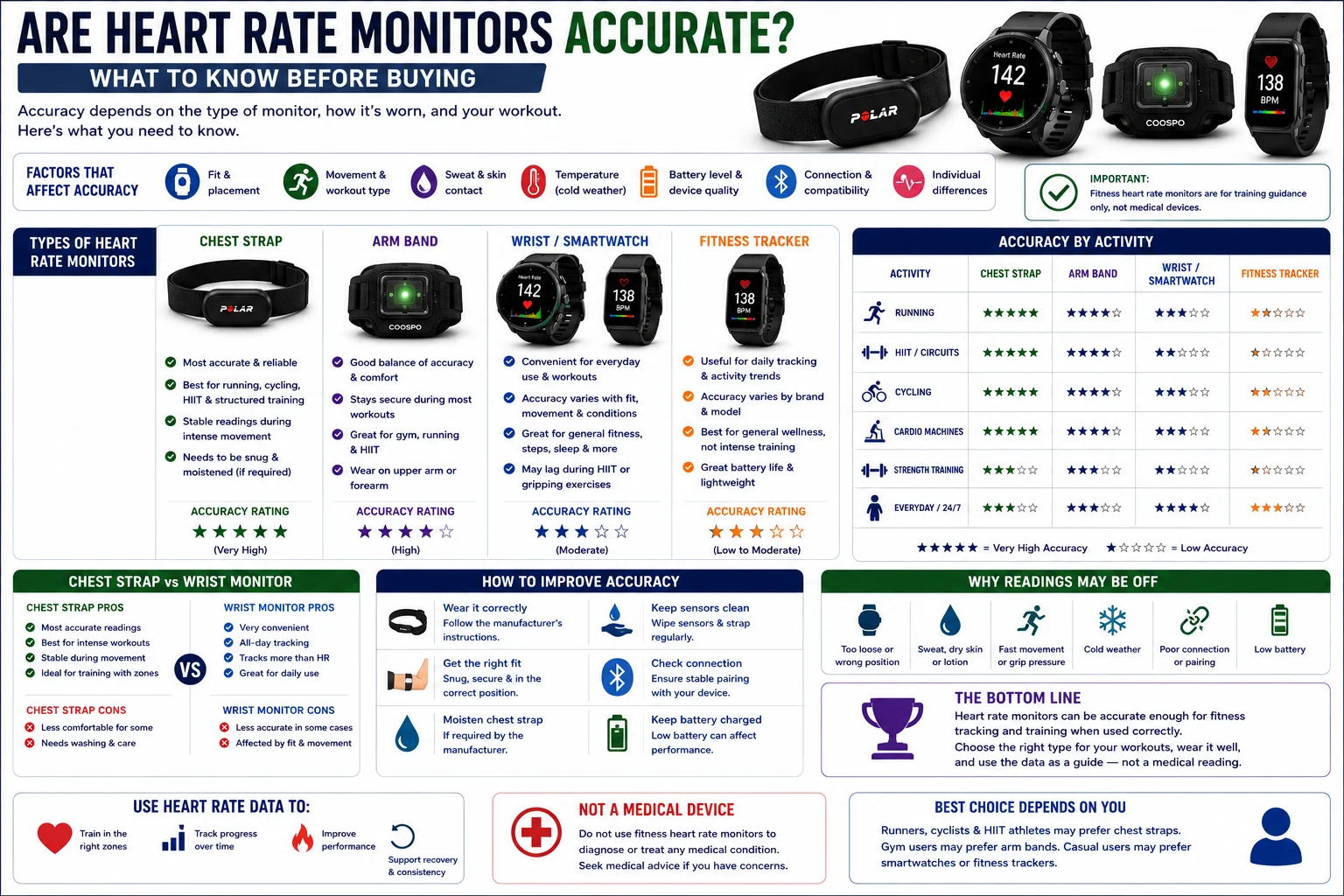
Accuracy depends on the monitor type, fit, sensor quality and running conditions. Chest straps are often chosen by runners who want stable workout readings.
Wrist monitors can be convenient, but readings may vary more during intense movement, loose fit or cold weather. For most runners, the best setup is the one that provides useful data consistently.
Can heart rate monitors improve running?
A heart rate monitor can support better running habits by helping you control effort and avoid overtraining. It can help keep easy runs easy and hard sessions properly structured.
However, it will not improve running by itself. Training consistency, recovery, sensible mileage, strength work and good pacing still matter most.
Are heart rate monitors good for beginner runners?
Heart rate monitors can be useful for beginner runners because they help show effort. Beginners often run too hard too soon, and heart rate data can encourage more controlled training.
Beginners should not become obsessed with numbers. Heart rate is useful guidance, but breathing, comfort and consistency also matter.
How to use heart rate zones for running
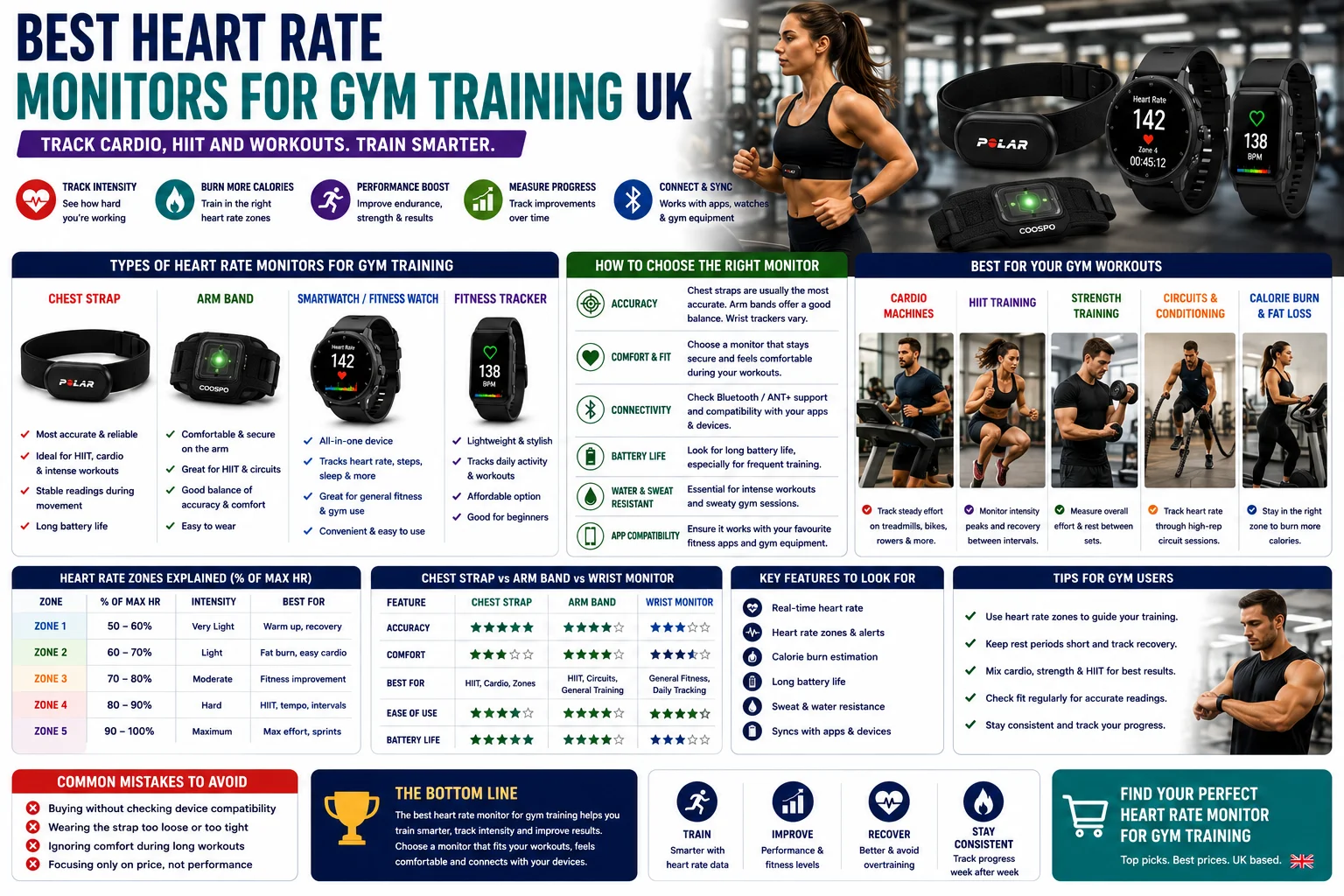
Heart rate zones are ranges used to estimate effort. Lower zones are usually easier and suitable for recovery or base runs, while higher zones are used for harder sessions.
Zones can be useful, but they are estimates. Use them alongside how you feel, your pace and your training goal for the session.
Common mistakes when buying running heart rate monitors
One common mistake is buying a monitor without checking whether it connects to your watch, phone or running app. Compatibility should be checked before buying.
Another mistake is choosing a device that feels uncomfortable. Comfort and fit matter because running involves repeated movement and sweat.
Final thoughts
The best heart rate monitors for running are comfortable, secure and compatible with your training setup. Chest straps may suit runners who want stable workout data, while arm bands and watches may suit runners who prefer convenience.
Choose a monitor based on your running style, device compatibility and how much data you actually need. The best running heart rate monitor is the one you can wear consistently and understand easily.