Introduction
Heart rate monitors can be useful if you want to track workout intensity, running effort, cardio sessions and training zones more clearly. They are popular with runners, cyclists, gym users, HIIT users and anyone who wants better fitness data during exercise.
The best heart rate monitor should be comfortable, accurate enough for your needs and compatible with your phone, watch or fitness app. Some people prefer chest straps, while others prefer arm bands, watches or wrist-based trackers.
In this guide, we explain what to look for when buying heart rate monitors in the UK and how to choose the right option for running, gym training, cardio, home workouts and everyday fitness tracking.
What is a heart rate monitor?
A heart rate monitor is a device that tracks your heart rate during exercise or daily activity. It can help you understand how hard you are working and whether you are training at an easy, moderate or intense level.
Heart rate monitors can come as chest straps, arm bands, smartwatches, fitness trackers or sensors that connect to training apps and gym equipment.
Who should buy a heart rate monitor?
A heart rate monitor can be useful for runners, cyclists, gym users, beginners, endurance athletes, HIIT users and people who want to monitor workout effort more closely.
It may also be helpful if you want to train by heart rate zones, manage recovery, improve cardio fitness or avoid guessing your workout intensity.
What to look for in a heart rate monitor
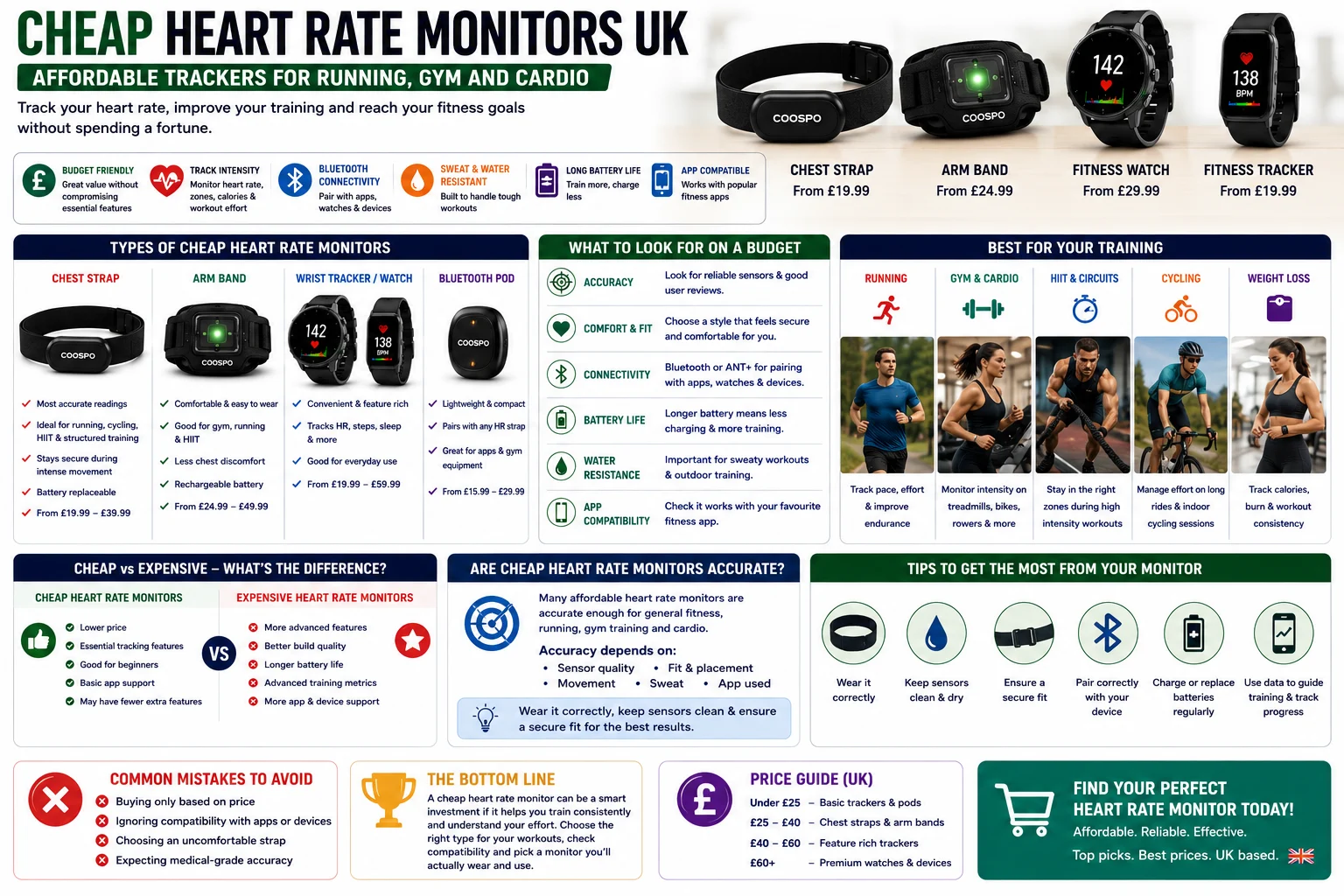
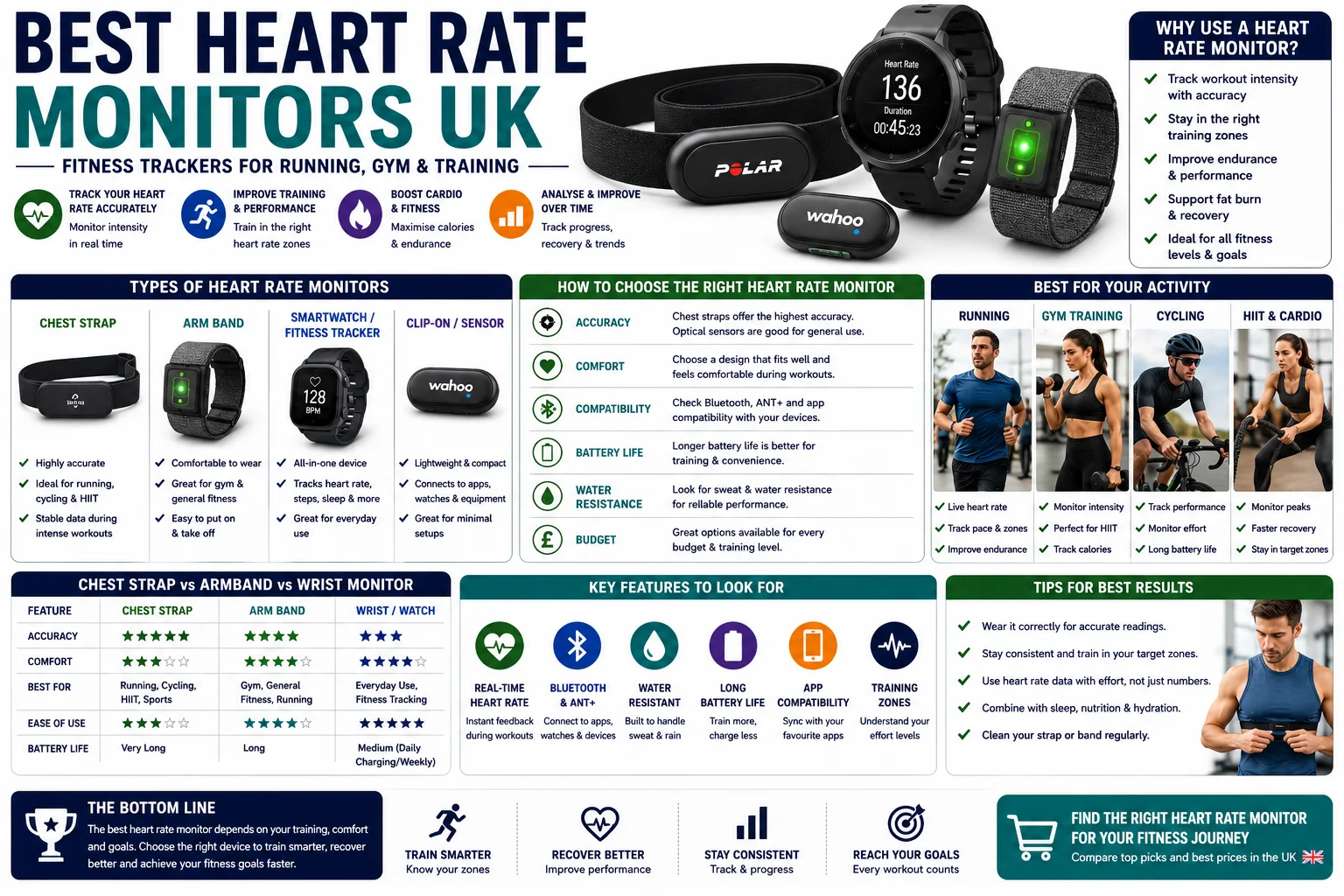
When choosing a heart rate monitor, look at accuracy, comfort, battery life, connectivity, water resistance, app compatibility, display options and how easy it is to use during exercise.
The best option depends on your routine. Runners may want reliable live data, gym users may want comfort, and beginners may want something simple that connects easily to a phone.
Best heart rate monitors for running
Runners often use heart rate monitors to track effort, pacing and training zones. A reliable monitor can help you keep easy runs easy and hard sessions controlled.
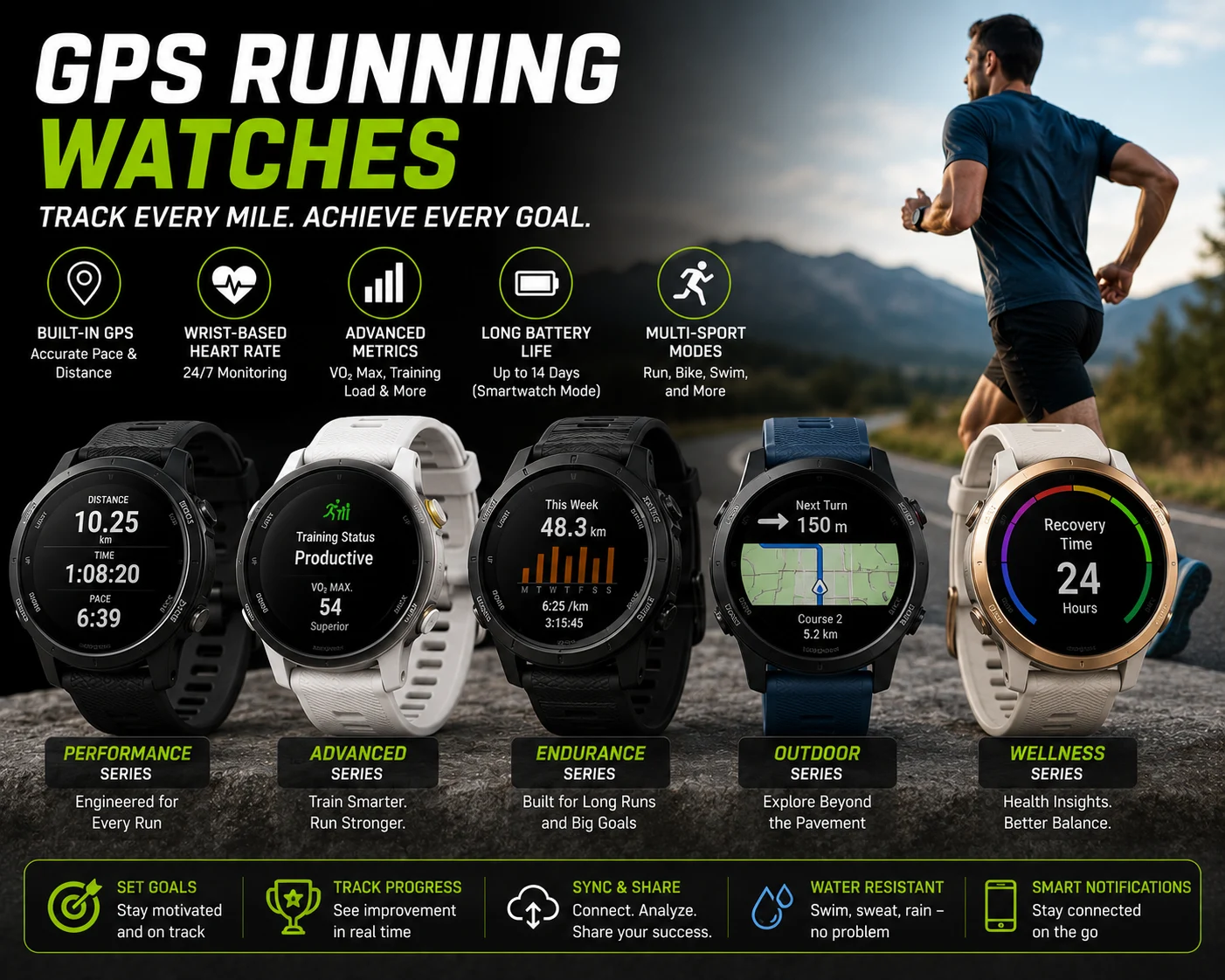
Chest straps and arm band monitors are often popular for running because they can provide stable readings during movement. A smartwatch may also be useful if you want heart rate, GPS and pace in one device.
Best heart rate monitors for gym training
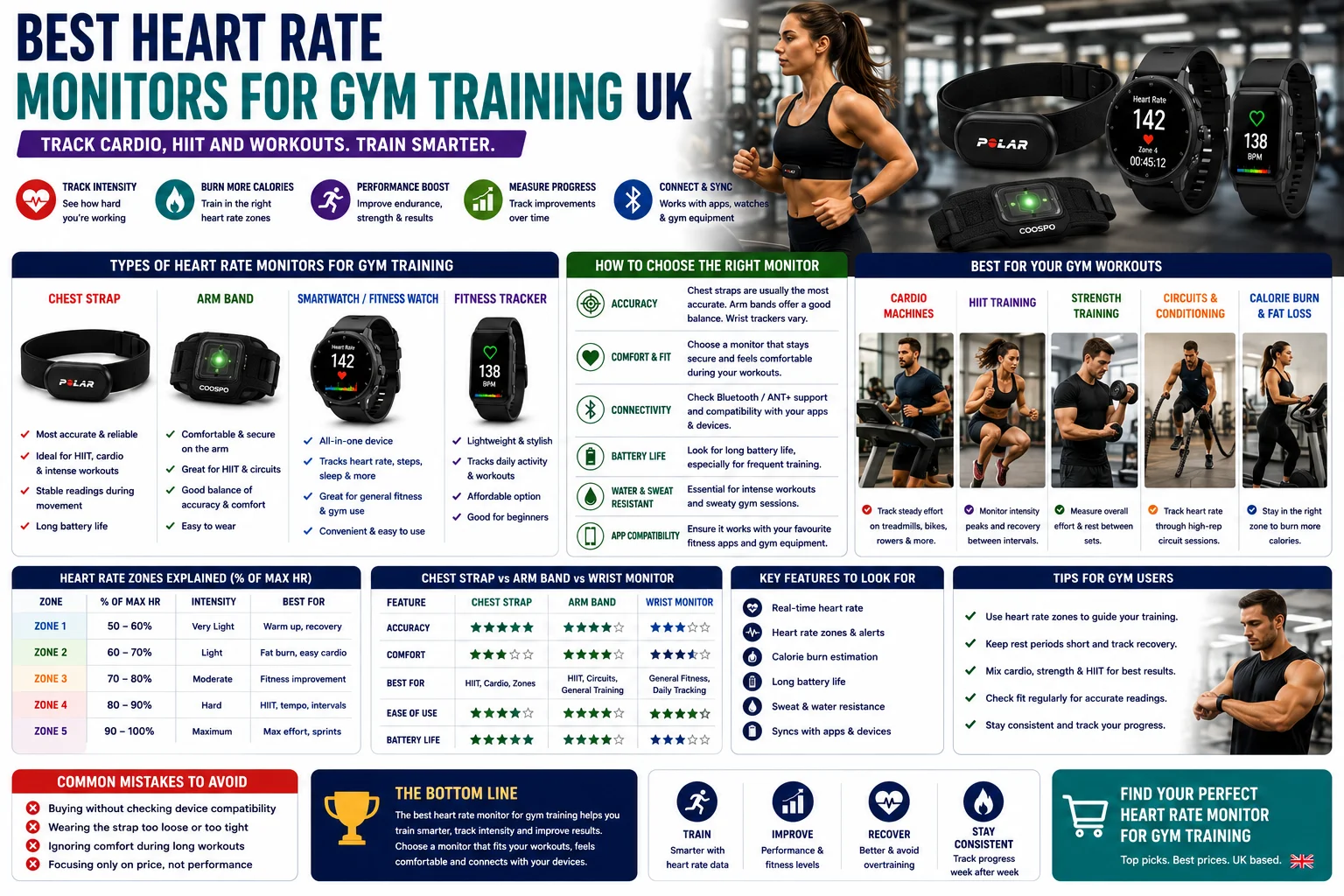
For gym training, heart rate monitors can be useful during cardio machines, circuits, HIIT sessions and conditioning workouts. They can help you see whether you are training at the intended intensity.
Comfort matters in the gym. Some users prefer arm bands because they are easier to wear than chest straps, while others prefer watches for convenience.
Best heart rate monitors for HIIT
HIIT workouts involve fast changes in intensity, so a heart rate monitor can help you see how hard you are working and how quickly you recover between efforts.
For HIIT, choose a device that stays secure during movement. Chest straps and arm bands may be better than loose wrist trackers for very dynamic sessions.
Best heart rate monitors for cycling
Cyclists may use heart rate monitors to track endurance effort, climbs, intervals and longer rides. A monitor that connects to cycling computers, watches or apps can be useful.
Chest straps are commonly used by cyclists because they can provide consistent readings and do not get in the way while riding.
Chest strap heart rate monitors
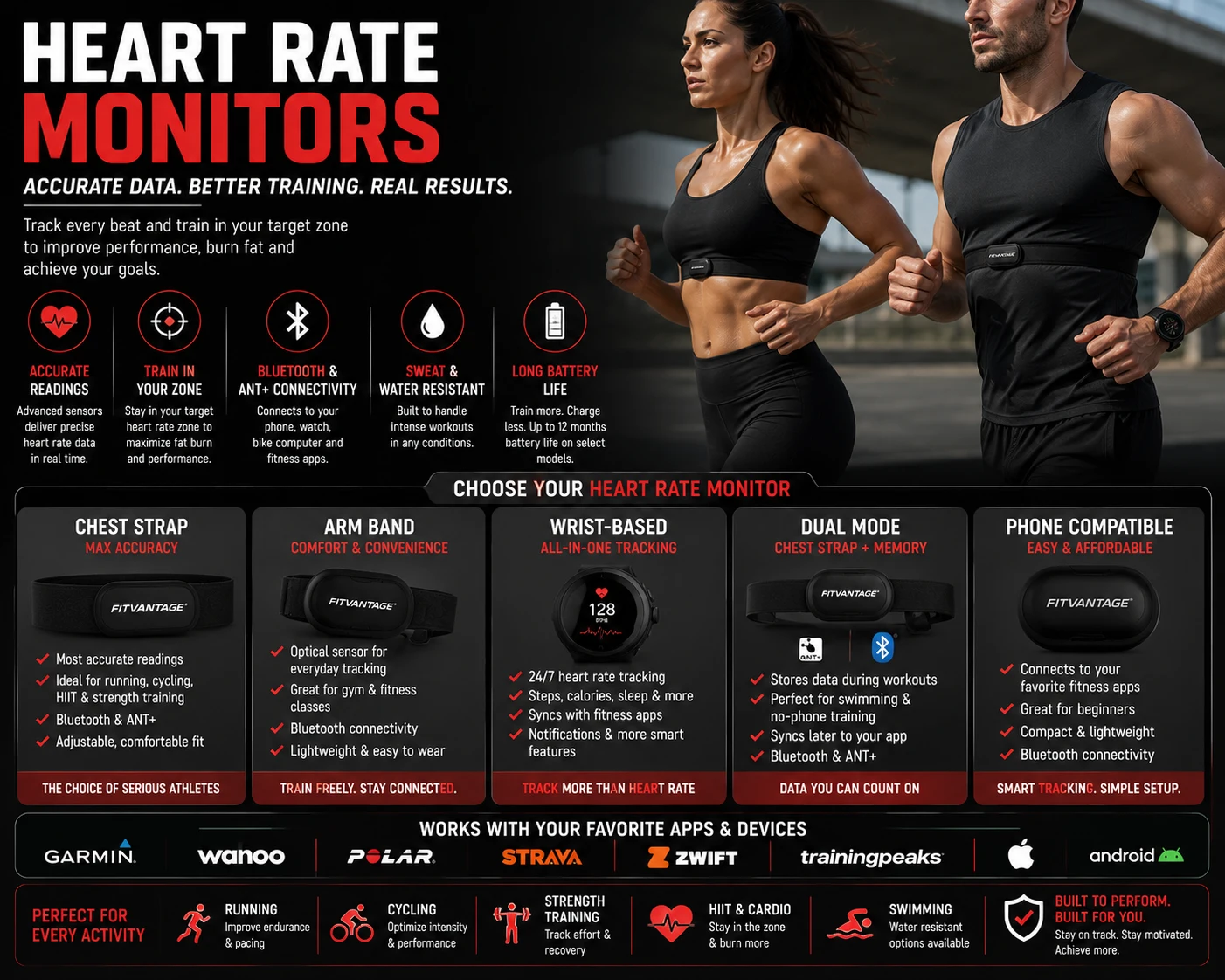
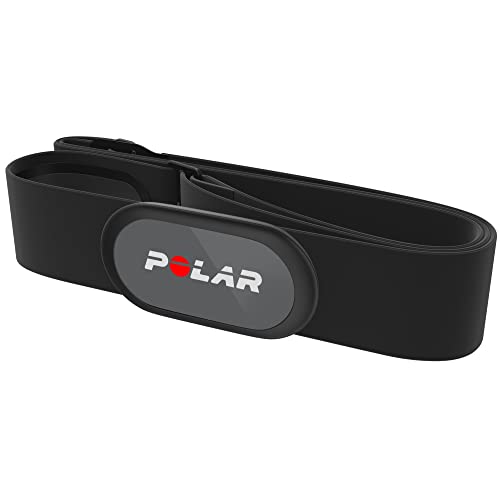
Chest strap heart rate monitors are worn around the chest and usually measure electrical activity from the heart. They are often chosen by runners, cyclists and athletes who want stable workout readings.
They can be very useful, but some people find chest straps less comfortable than arm bands or watches. Fit and strap adjustment matter.
Arm band heart rate monitors
Arm band heart rate monitors are usually worn on the upper arm or forearm. They often use optical sensors and can be more comfortable than chest straps for some users.
They can be a good option for gym users, runners and people who want a balance between comfort and reliable workout tracking.
Wrist heart rate monitors and smartwatches
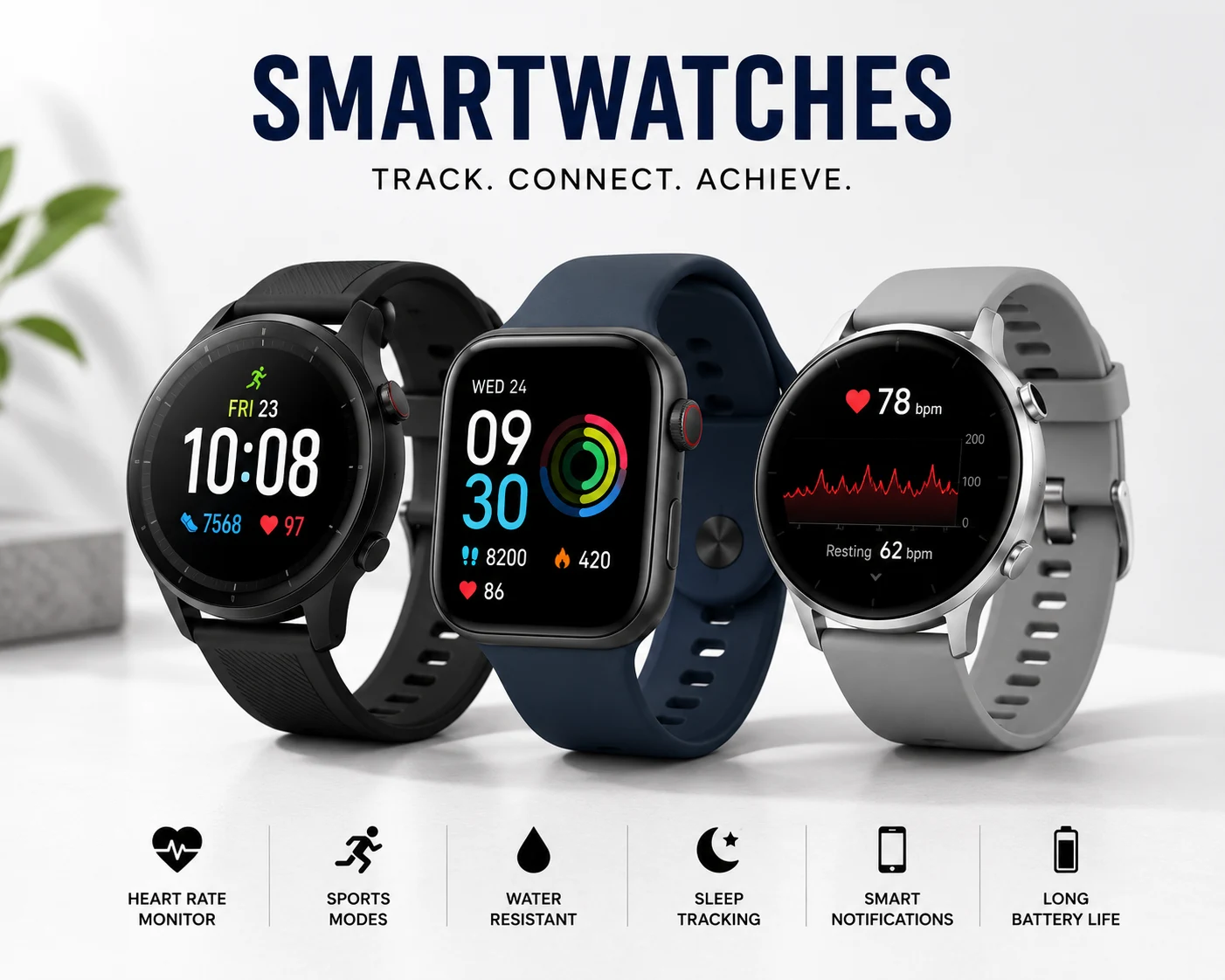
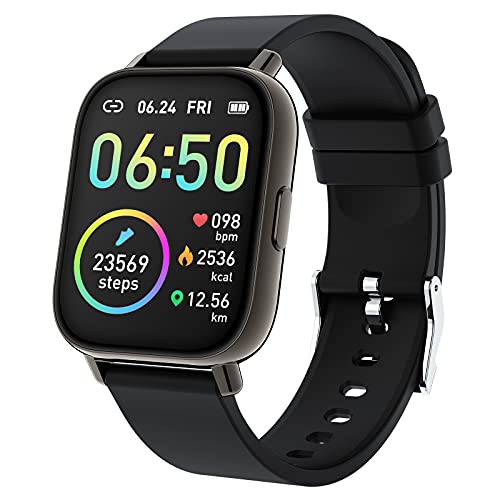
Wrist-based monitors are often built into smartwatches and fitness trackers. They are convenient because they can track heart rate, steps, workouts and daily activity in one device.
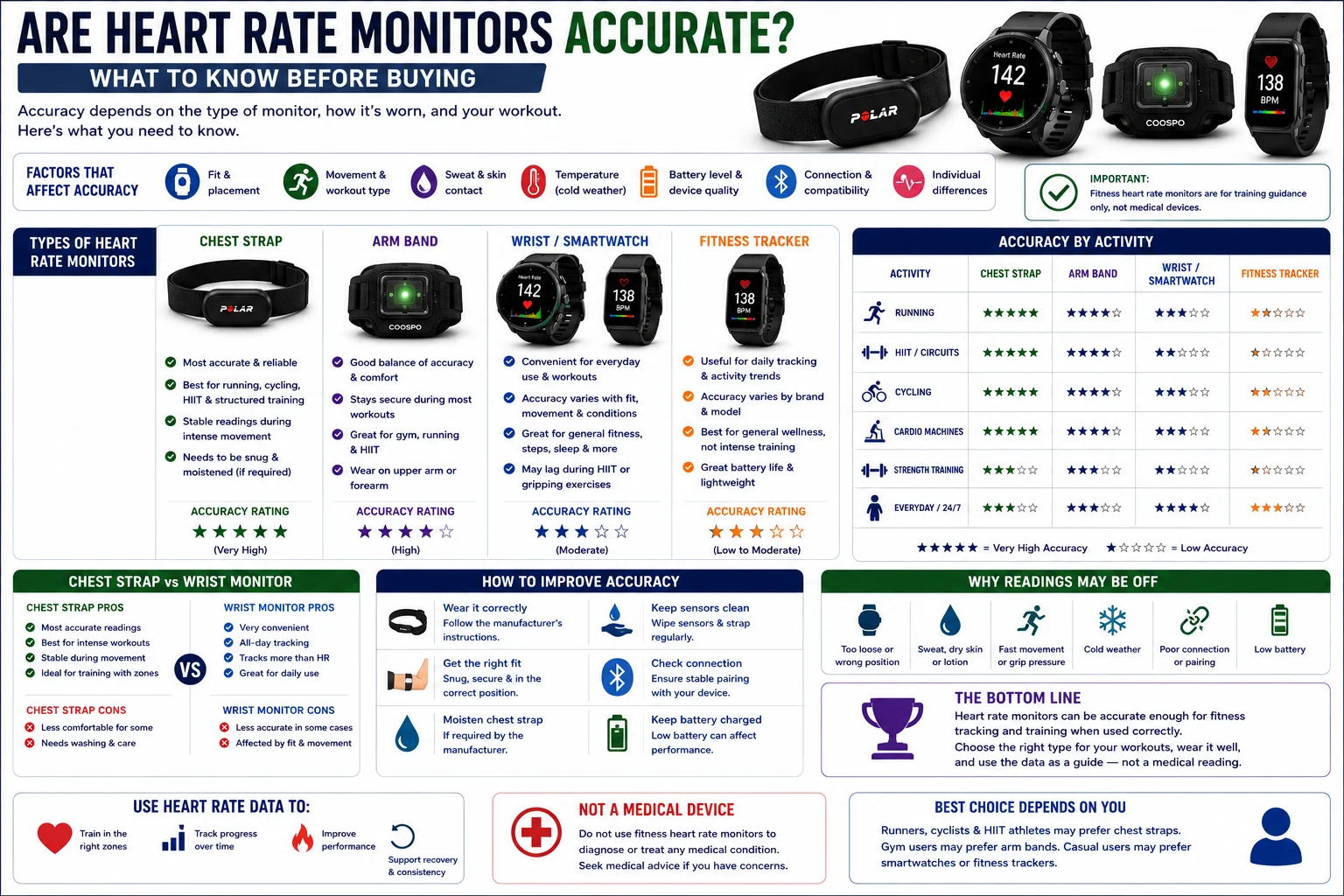
However, wrist readings can vary depending on fit, movement, skin contact and workout type. For serious interval training, some people prefer a chest strap or arm band.
Bluetooth heart rate monitors
Bluetooth heart rate monitors can connect to phones, watches, fitness apps and some gym equipment. This is useful if you want live workout data or want to record sessions in an app.
Before buying, check compatibility with the apps or devices you already use.
ANT+ heart rate monitors
Some heart rate monitors support ANT+ connectivity as well as Bluetooth. This can be useful for cyclists, runners and users with sports watches or cycling computers.
If you use specific fitness equipment or devices, check whether Bluetooth, ANT+ or both are supported.
Heart rate monitor vs fitness tracker
A heart rate monitor usually focuses on workout heart rate accuracy and training data. A fitness tracker may include heart rate along with steps, sleep, calories, notifications and general activity tracking.
If your main goal is accurate workout heart rate, a dedicated monitor may be better. If you want everyday lifestyle tracking, a fitness tracker may be more convenient.
Heart rate monitor vs smartwatch
A smartwatch gives you many features in one device, including notifications, apps, workout tracking and often GPS. A dedicated heart rate monitor may be simpler and more focused on training accuracy.
Some people use both: a chest strap or arm band for workouts and a smartwatch for display, GPS and daily tracking.
Are heart rate monitors accurate?
Heart rate monitor accuracy depends on the type of sensor, fit, movement and how the device is used. Chest straps are often preferred by people who want stable exercise readings, while wrist trackers are convenient but may vary more during movement.
For most everyday fitness users, a good monitor can provide useful training guidance. For medical concerns, you should not rely on a fitness heart rate monitor as a medical device.
Are heart rate monitors useful for weight loss?
Heart rate monitors can support weight loss routines by helping you track workout intensity and stay consistent with cardio or conditioning sessions.
However, they do not cause weight loss by themselves. Nutrition, total activity, calories, sleep and consistency still matter most.
Are heart rate monitors good for beginners?
Yes, beginners can use heart rate monitors to understand workout intensity and avoid training too hard too often. They can make cardio sessions feel more structured.
Beginners should choose a simple monitor that is comfortable and easy to connect. Too many features can become confusing if you are just starting.
How to use heart rate zones
Heart rate zones are ranges that estimate exercise intensity. Lower zones are usually easier and suitable for steady cardio, while higher zones are more intense and used for harder efforts.
Heart rate zones can be useful for running, cycling, cardio machines and interval training. Treat them as guidance rather than perfect rules.
Common mistakes when buying heart rate monitors
One common mistake is buying a monitor without checking compatibility with your phone, watch or training app. Always check whether the device supports the platform you plan to use.
Another mistake is choosing only by price. Comfort, fit, connectivity and battery life matter if you want to use the monitor regularly.
Final thoughts
The best heart rate monitors are comfortable, reliable and suitable for your training routine. Chest straps may suit runners and cyclists who want stable workout readings, while arm bands and watches may be more convenient for everyday fitness users.
Choose a heart rate monitor based on how you train, what devices you use and how much data you actually need. The best option is the one you can wear consistently and understand easily.