Introduction
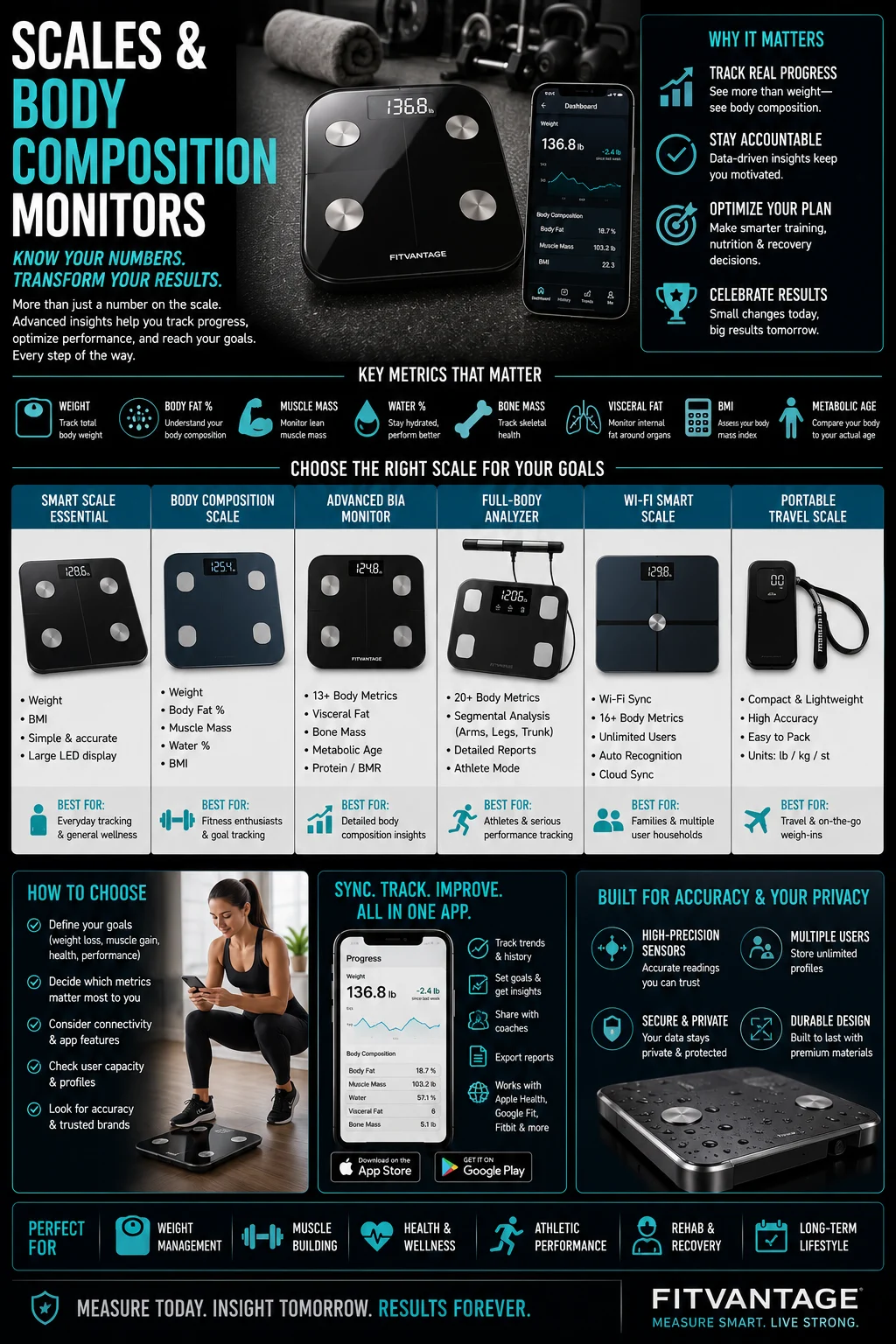
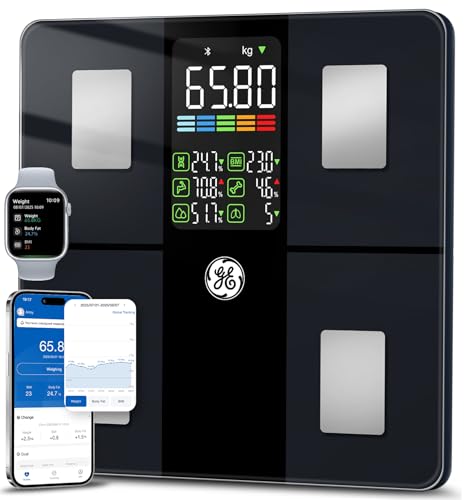
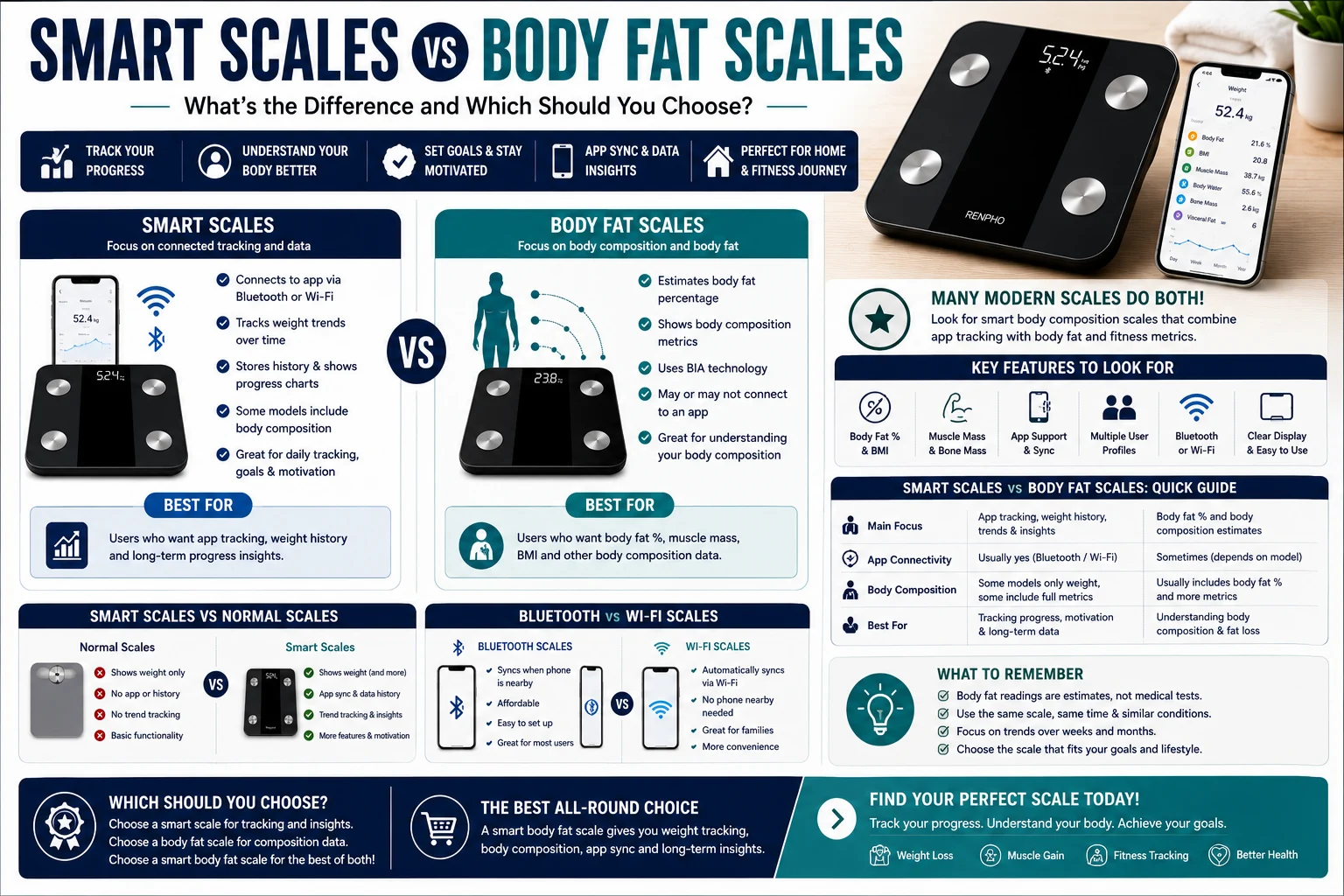
Smart scales are digital bathroom scales that connect to an app and help you track weight and body composition over time. Many smart scales estimate body fat percentage, BMI, muscle mass, body water and other useful fitness metrics.
They are useful for people who want more than a simple weight reading. Instead of writing numbers down manually, a smart scale can save your progress automatically and show trends through your phone.
In this guide, we explain what to look for when buying smart scales in the UK and how to choose the right option for weight loss, fitness tracking, body composition and home use.
What are smart scales?
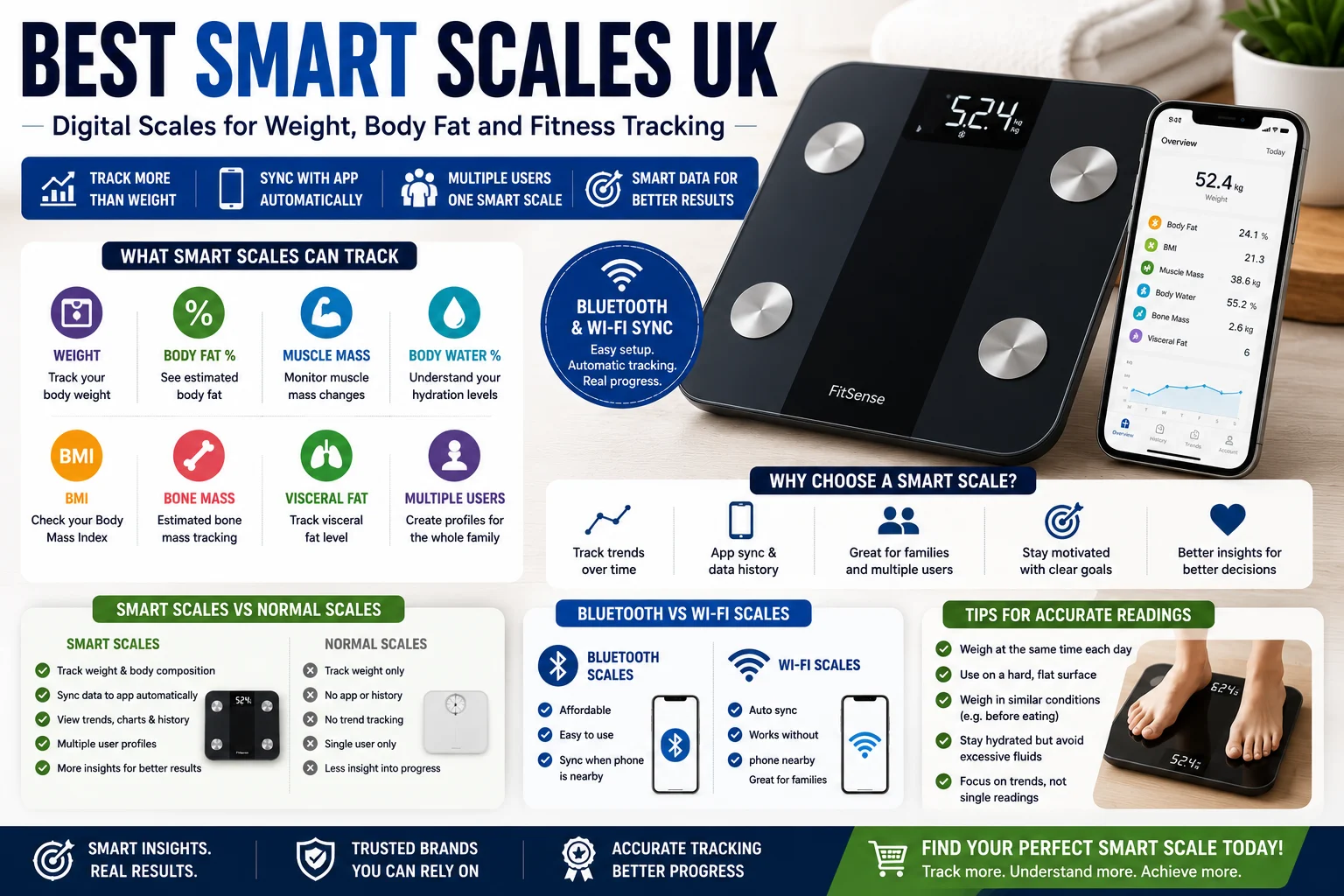
Smart scales are app-connected digital scales. They measure body weight and often estimate extra body composition data such as body fat percentage, muscle mass, body water, BMI, bone mass and visceral fat estimates.
Most smart scales connect through Bluetooth or Wi-Fi. The readings are then stored in an app so you can view your progress over days, weeks and months.
Who should buy smart scales?
Smart scales can be useful for anyone who wants to track weight, fitness progress or body composition at home. They are especially helpful for people working on weight loss, strength training, general health goals or long-term habit tracking.
They can also be useful for families or households because many models support multiple user profiles.
What to look for in smart scales
When choosing smart scales, look for app quality, Bluetooth or Wi-Fi connectivity, consistent readings, clear display, multiple user profiles and useful tracking features.
The best smart scale is not always the one with the most metrics. It should be simple enough to use regularly and reliable enough to track trends over time.
Best smart scales for home use
For home use, choose a smart scale that is easy to set up and suitable for the people who will use it. A clear display, stable platform and simple app can make a big difference.
If several people will use the same scale, look for a model with multiple user profiles or automatic user recognition.
Best smart scales for weight loss
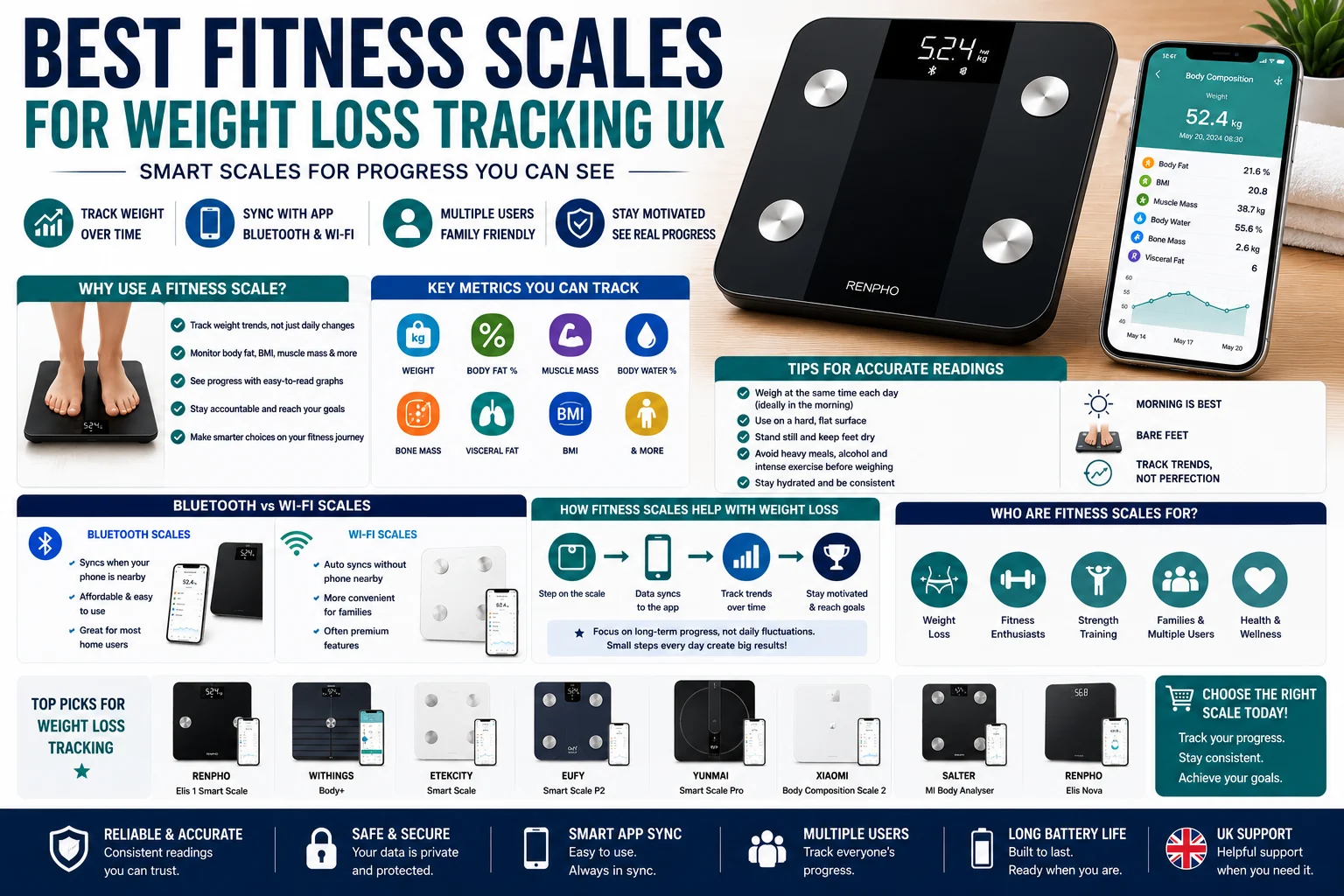
Smart scales can support weight loss by helping you monitor progress consistently. App tracking makes it easier to see long-term trends instead of reacting to one daily reading.
Weight can fluctuate because of water, food, exercise and time of day, so it is better to focus on weekly and monthly patterns rather than single measurements.
Best smart scales for body fat tracking
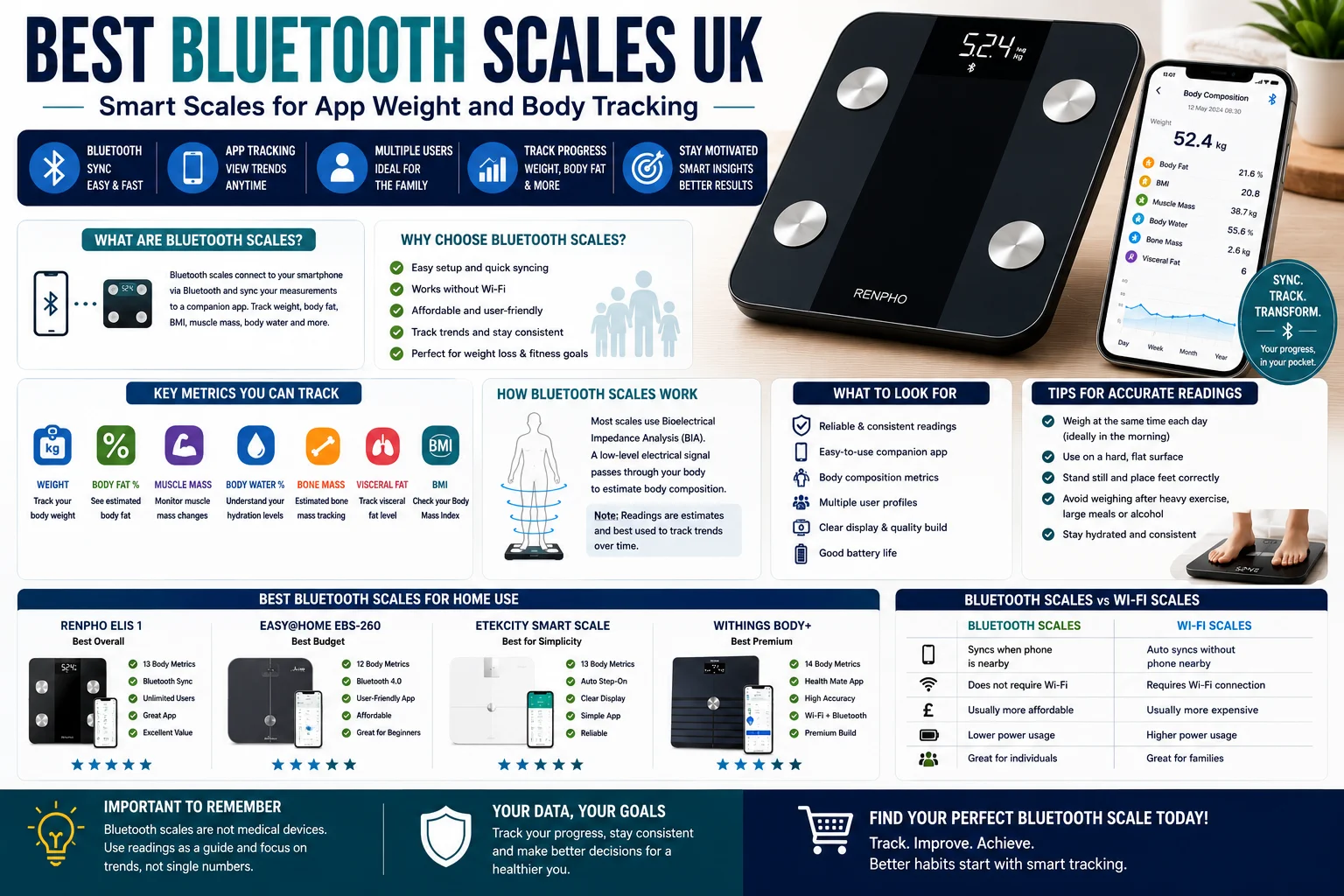
Many smart scales estimate body fat percentage using bioelectrical impedance analysis, often called BIA. This can be useful for tracking general body composition trends.
However, body fat readings are estimates. They can be affected by hydration, exercise, food intake and other factors, so they should be used as a guide rather than an exact medical measurement.
Best smart scales for fitness tracking
If you train regularly, a smart scale can help you track weight, estimated muscle mass and body composition changes. This is useful because fitness progress is not always visible from body weight alone.
For example, someone doing strength training may lose fat and gain muscle while body weight changes slowly. A smart scale can give extra context.
Bluetooth smart scales vs Wi-Fi smart scales
Bluetooth smart scales usually sync readings when your phone is nearby and the app is open or active. They are often affordable and simple to use.
Wi-Fi smart scales can usually sync automatically without needing your phone next to the scale. This can be more convenient for regular tracking or multi-user households.
Smart scales vs normal bathroom scales
A normal bathroom scale measures body weight only. A smart scale can save your readings to an app and may estimate body fat, BMI, muscle mass and other body composition metrics.
If you only want a basic weight reading, a normal scale may be enough. If you want trends, app history and fitness tracking, a smart scale is usually more useful.
Are smart scales accurate?
Smart scales can be useful for tracking trends, but they are not perfectly accurate for body composition. Body weight readings are usually more reliable than estimated body fat or muscle metrics.
The best way to use smart scales is to weigh yourself under similar conditions and look at the trend over time. Avoid judging progress from one reading.
How to get consistent smart scale readings
For more consistent readings, place the scale on a hard, flat surface and use it at the same time of day. Many people prefer weighing in the morning before eating.
Try to avoid comparing readings taken after heavy exercise, late meals or large changes in hydration. Consistency matters more than chasing a perfect number.
Common mistakes when buying smart scales
One common mistake is choosing a scale only because it lists many body composition metrics. More data is not always better if the app is difficult to use or the readings are inconsistent.
Another mistake is expecting medical-level accuracy. Smart scales are useful for home tracking and trends, but they should not replace professional health advice.
Final thoughts
The best smart scales are easy to use, app-connected and consistent enough for long-term tracking. They can help you monitor weight, estimated body fat, BMI and other body composition trends at home.
If you want simple weight tracking, a basic digital scale may be enough. If you want app history, body composition estimates and progress trends, a smart scale is a better choice.