Introduction
Weight plates are one of the most important pieces of strength training equipment for a home gym. They allow you to add resistance to barbells, dumbbell handles, weight machines and some plate-loaded gym equipment.
The best weight plates should match your bar, training style, available space and budget. Some people need Olympic plates for barbell lifting, while others may prefer standard plates, rubber-coated plates, cast iron plates or bumper plates.
In this guide, we explain what to look for when buying weight plates in the UK and how to choose the right gym plates for home workouts, strength training, muscle building and progressive overload.
What are weight plates?
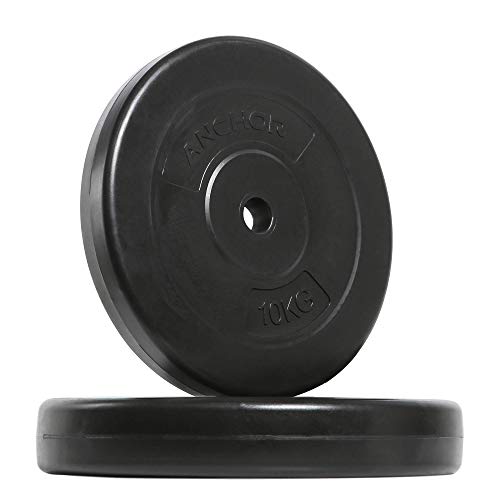
Weight plates are round or shaped discs used to add load to barbells, dumbbell handles and strength training equipment. They usually come in different weights so you can increase or reduce resistance gradually.
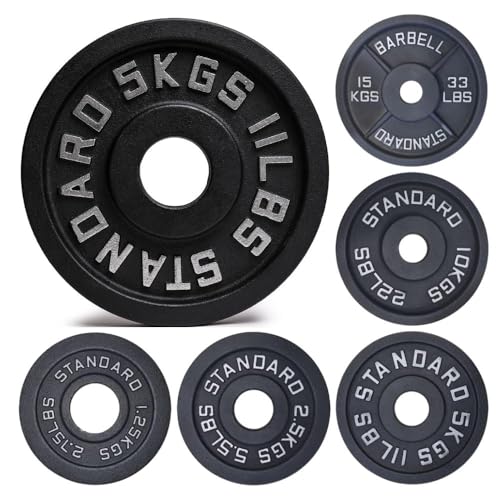
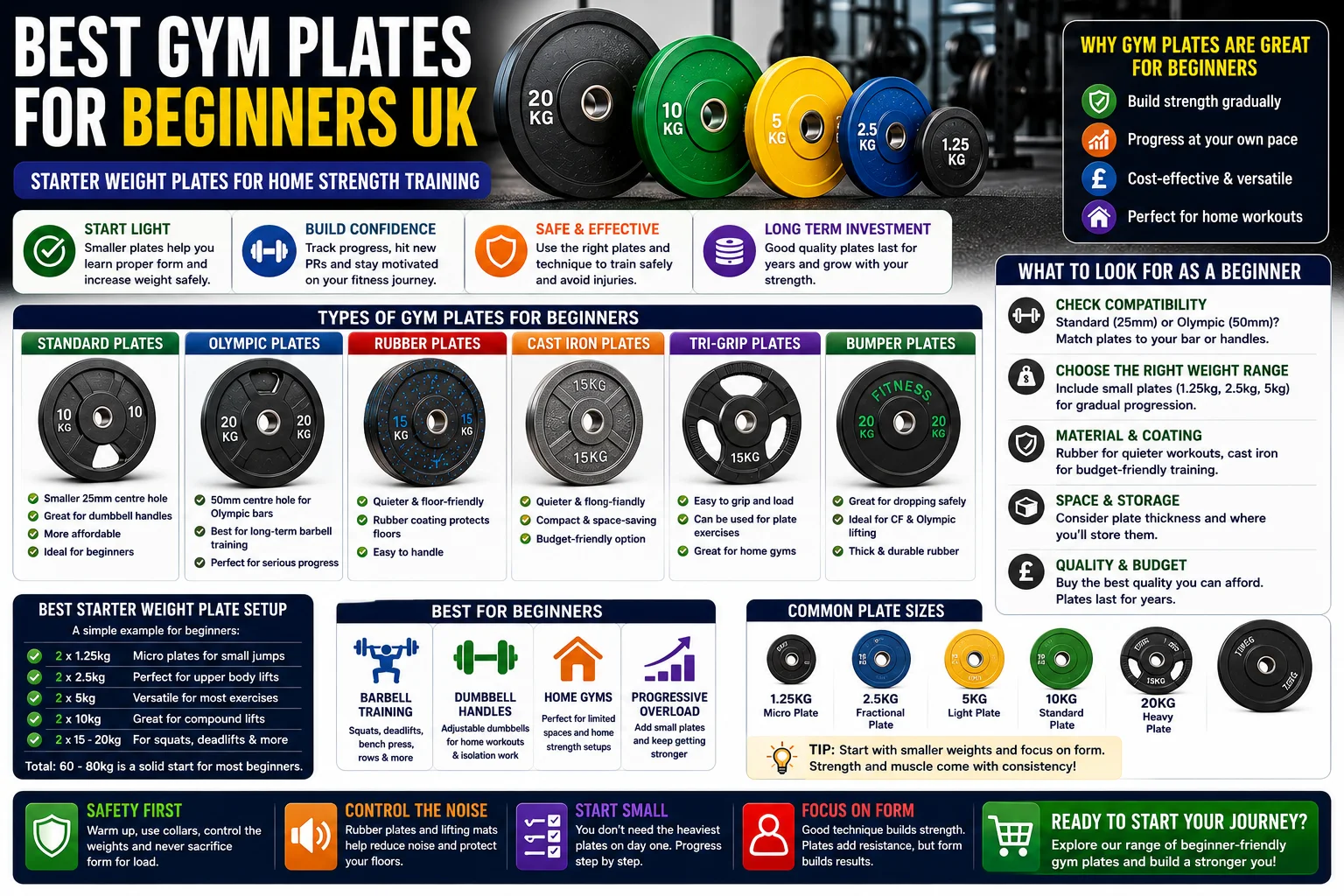
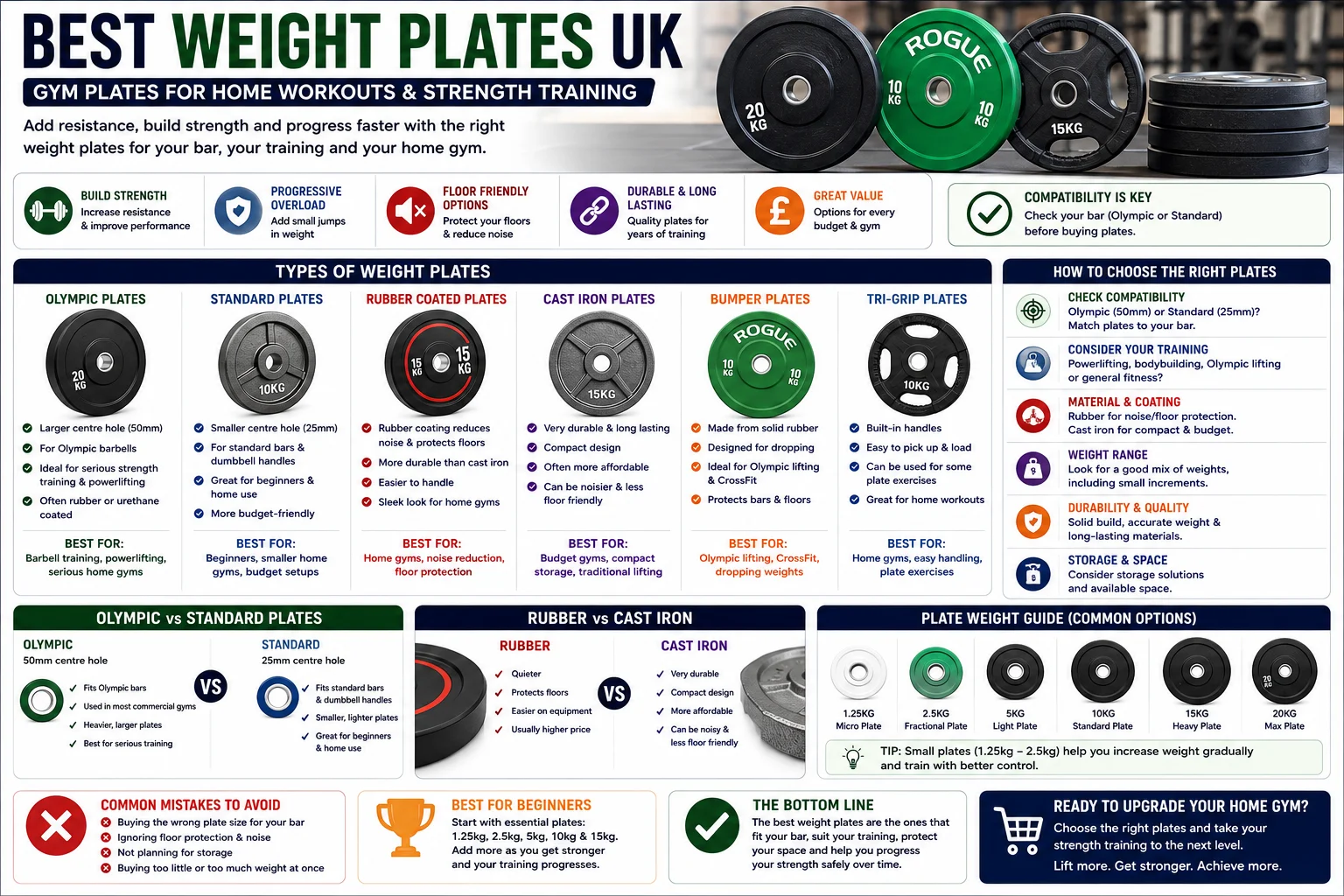
Common weight plate types include Olympic plates, standard plates, bumper plates, cast iron plates, rubber-coated plates and tri-grip plates.
Who should buy weight plates?
Weight plates can be useful for home gym users, beginners, strength training users, bodybuilders, powerlifters, garage gym owners and anyone who wants to lift progressively heavier weights.
They are especially useful if you already have a barbell, dumbbell handles, a weight bench, squat rack or plate-loaded equipment.
What to look for in weight plates
When choosing weight plates, look at hole size, plate type, material, weight range, grip design, durability, floor protection, storage and compatibility with your existing equipment.
The most important point is compatibility. Olympic plates and standard plates have different centre hole sizes, so you must choose plates that fit your bar or handles.
Olympic weight plates
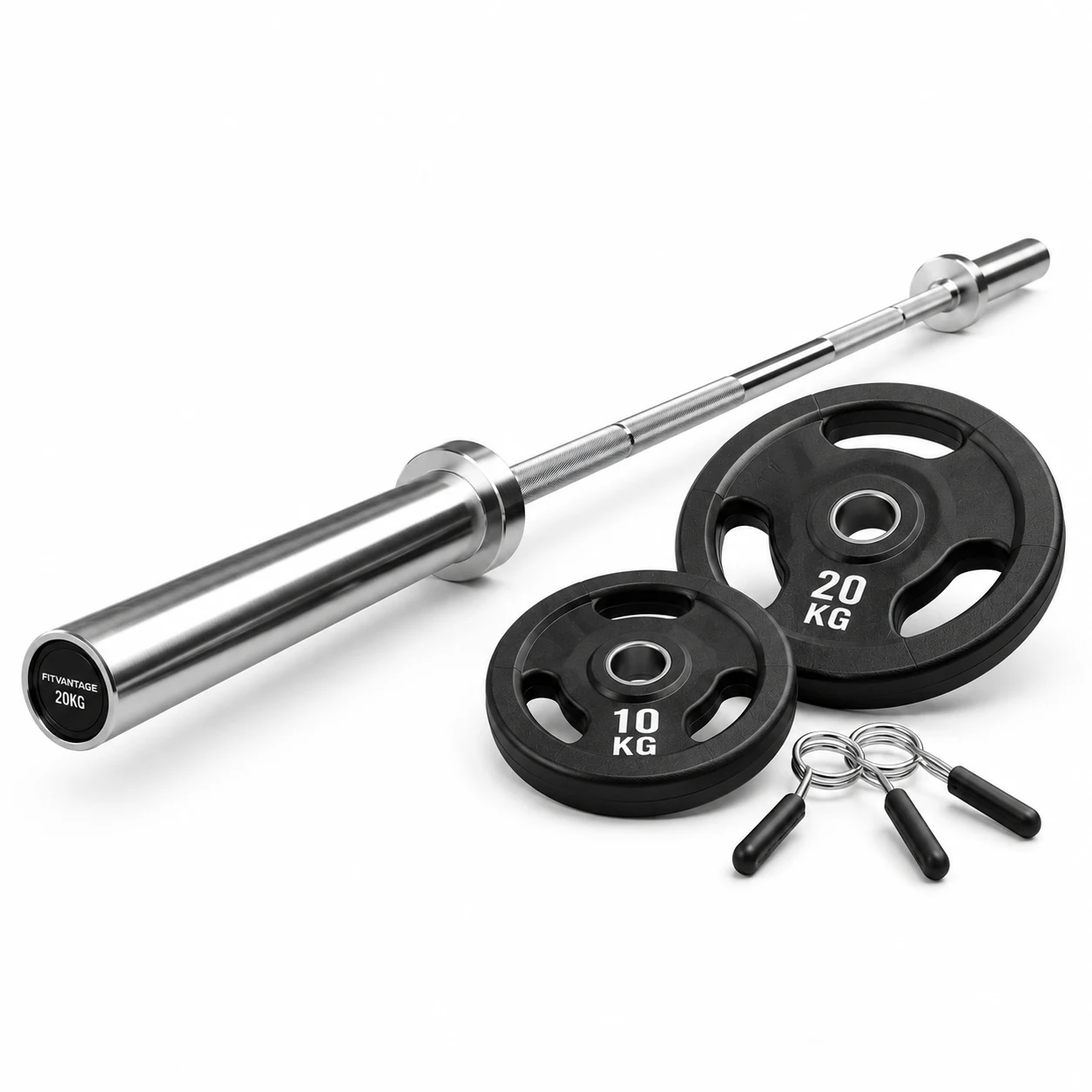
Olympic weight plates are designed for Olympic barbells and usually have a larger centre hole. They are common in commercial gyms, powerlifting setups and serious home gyms.
They are often a good choice if you plan to use a full-size barbell for squats, deadlifts, bench press, rows and overhead press.
Standard weight plates
Standard weight plates usually have a smaller centre hole and are often used with standard bars or adjustable dumbbell handles. They can be useful for beginners and smaller home gym setups.
Before buying standard plates, make sure they fit your existing bar. Standard plates will not fit Olympic bars properly, and Olympic plates will not fit standard bars.
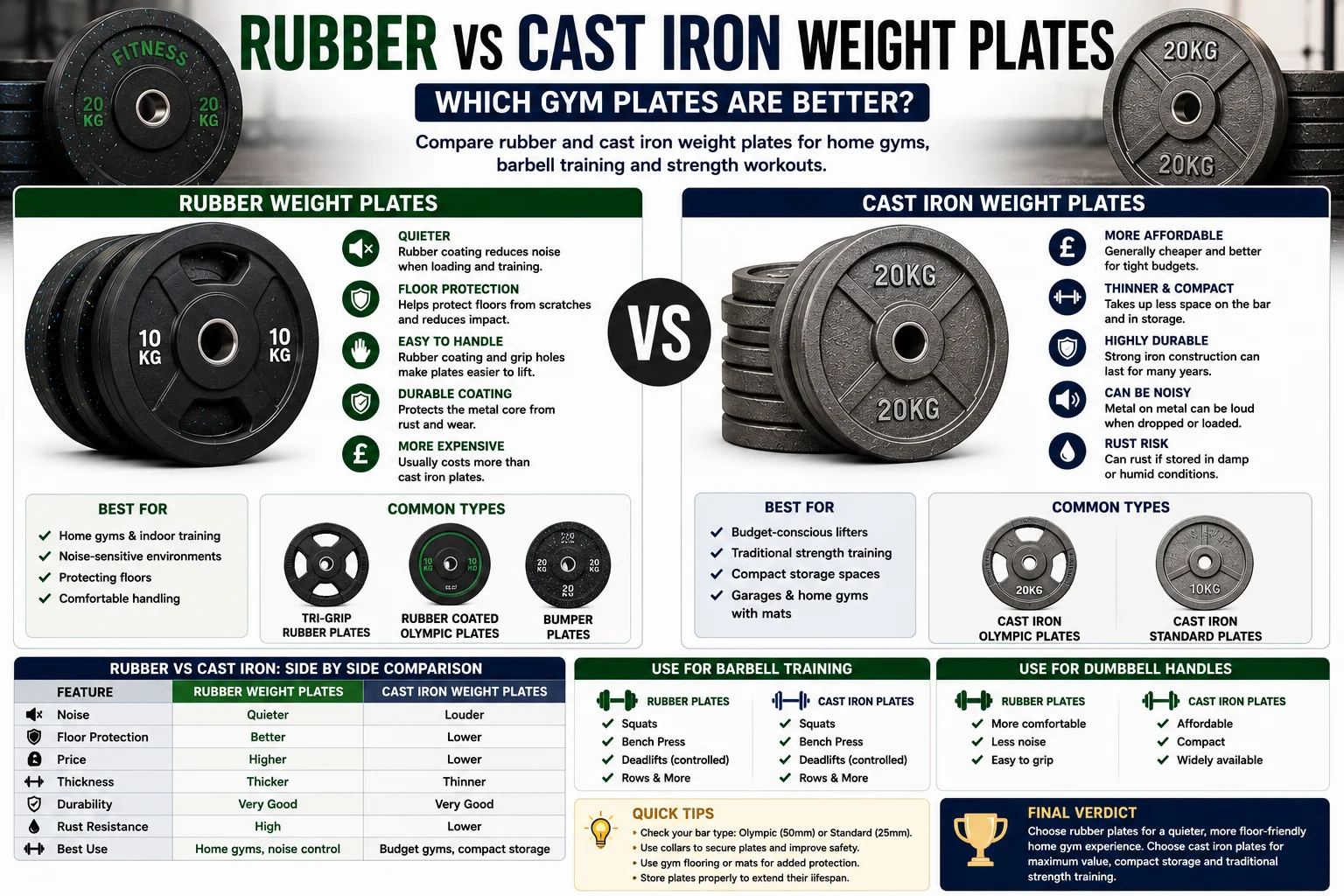
Rubber weight plates
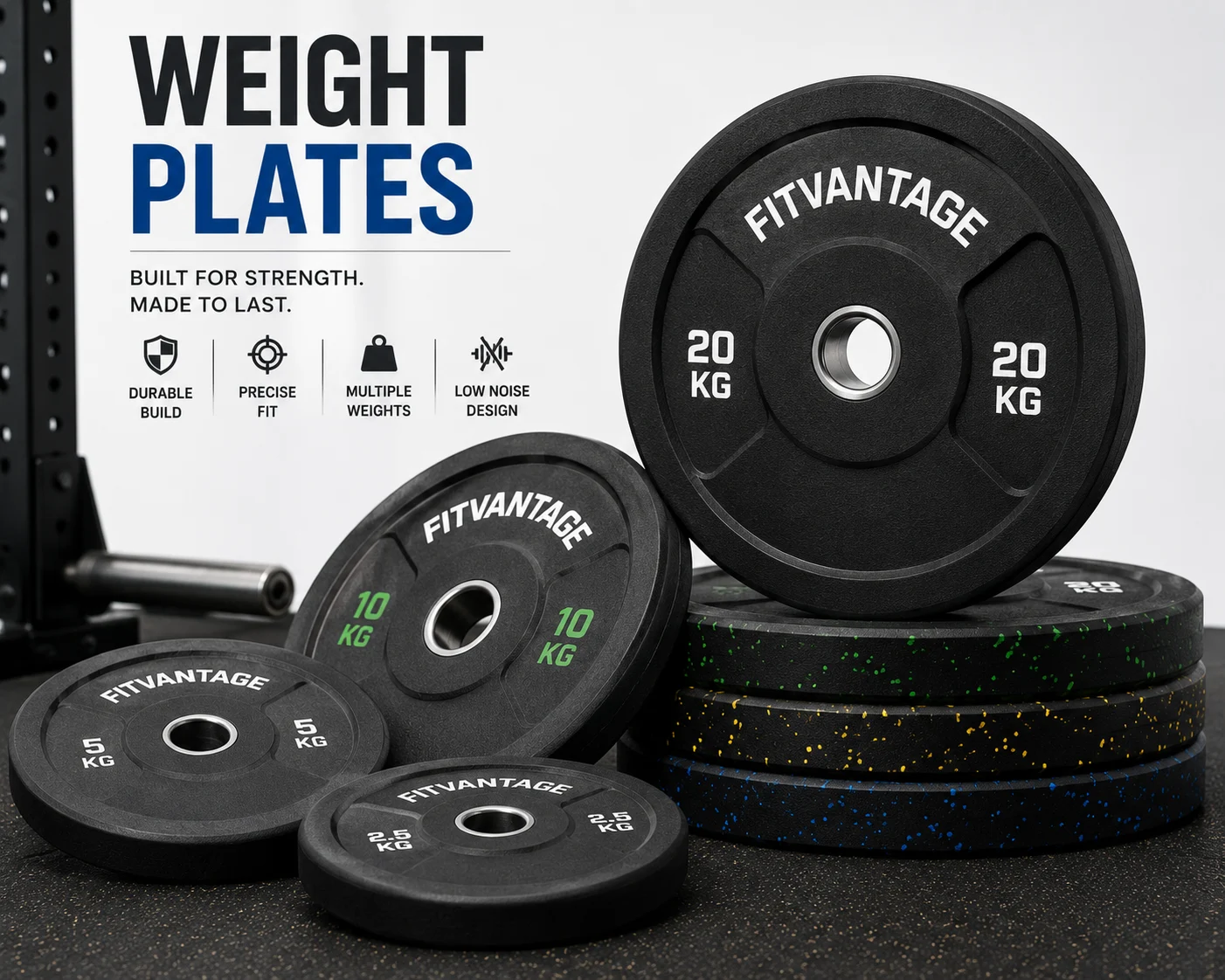
Rubber weight plates have a rubber coating or outer layer. They can help reduce noise, protect floors and make plates easier to handle compared with bare metal plates.
They are useful for home gyms where noise and floor protection matter. However, rubber plates may cost more than basic cast iron plates.
Cast iron weight plates
Cast iron weight plates are simple, durable and often more compact than rubber-coated plates. They are a traditional choice for strength training and home gyms.
The downside is that they can be noisier and harsher on floors. They may also chip or rust if not stored properly.
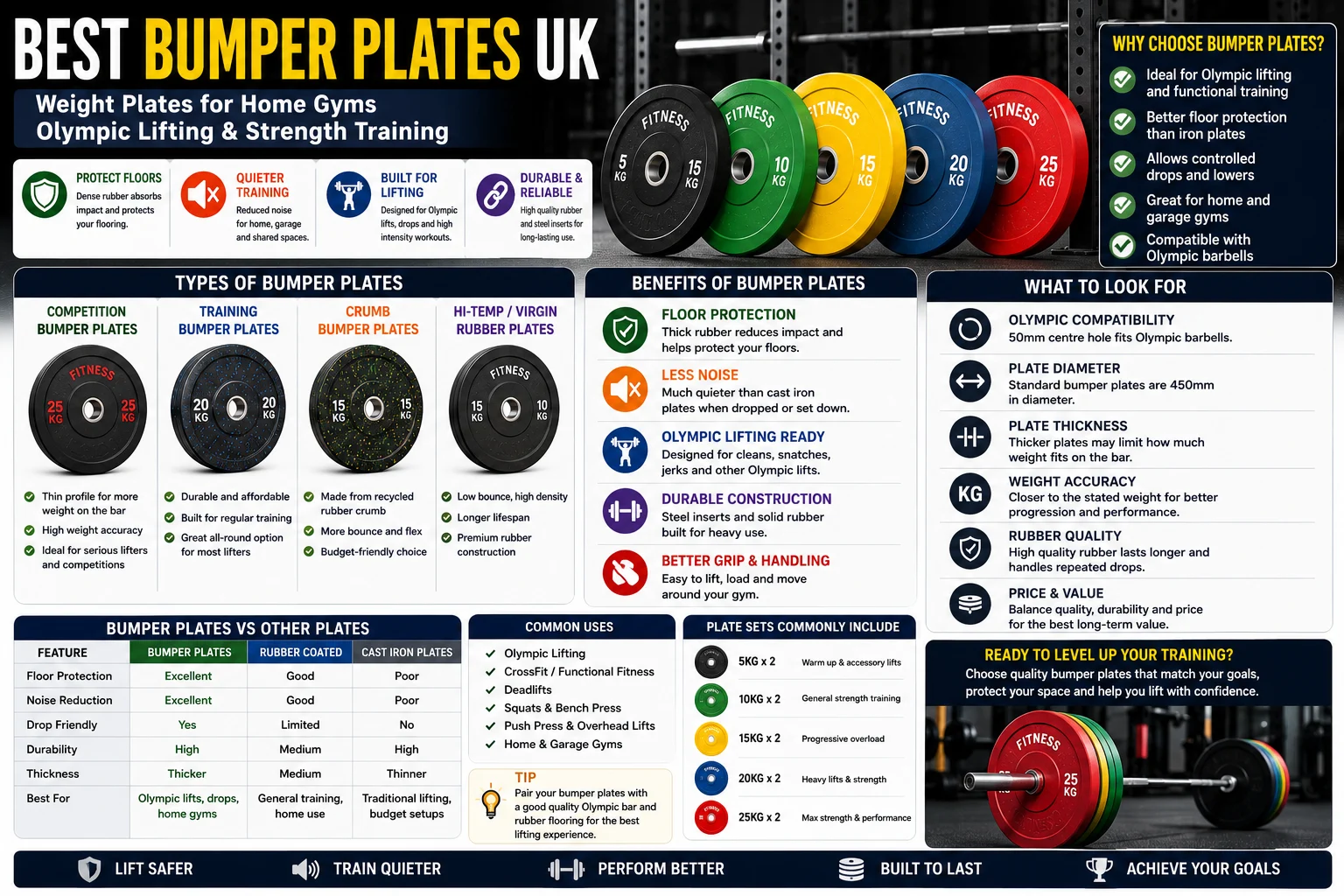
Bumper plates
Bumper plates are usually made from dense rubber and are designed to be dropped more safely during certain lifts. They are popular for Olympic lifting, CrossFit-style training and garage gyms.
They are usually more expensive and larger than cast iron plates, but they can be useful if your training involves dropping loaded barbells from height.
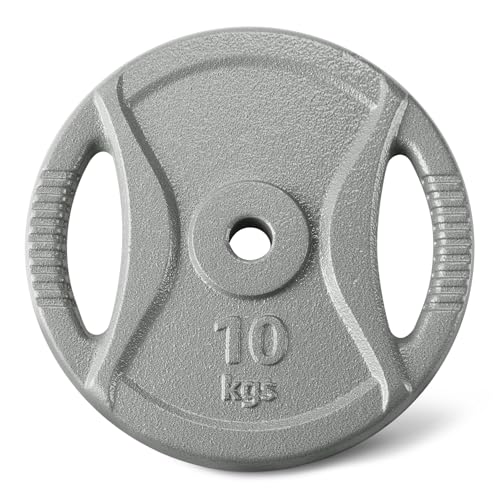
Tri-grip weight plates
Tri-grip weight plates have handle-style cut-outs that make them easier to pick up, carry and load onto bars. They can also be used for some plate-only exercises.
They are practical for home gyms because handling plates safely matters, especially when changing weights often during workouts.
Best weight plates for beginners
Beginners should focus on compatibility, manageable weight increments and value. You do not need the most expensive plates when starting, but you do need plates that fit your bar and allow steady progression.
A small set with lighter plates can be useful because it allows gradual increases rather than jumping too much between weights.
Best weight plates for home gyms
For home gyms, consider space, floor protection, noise and storage. Rubber-coated plates or bumper plates may be better if you train indoors and want to reduce noise.
Cast iron plates can be good if you want compact weight and lower cost, but you may need flooring or mats to protect the room.
Best weight plates for barbell training
For barbell training, Olympic plates are usually the most suitable if you use a full-size Olympic bar. They work well for squats, deadlifts, bench press, rows and overhead press.
If you use a standard bar, choose standard plates instead. Always match the plate hole size to the bar sleeve size.
Best weight plates for dumbbell handles
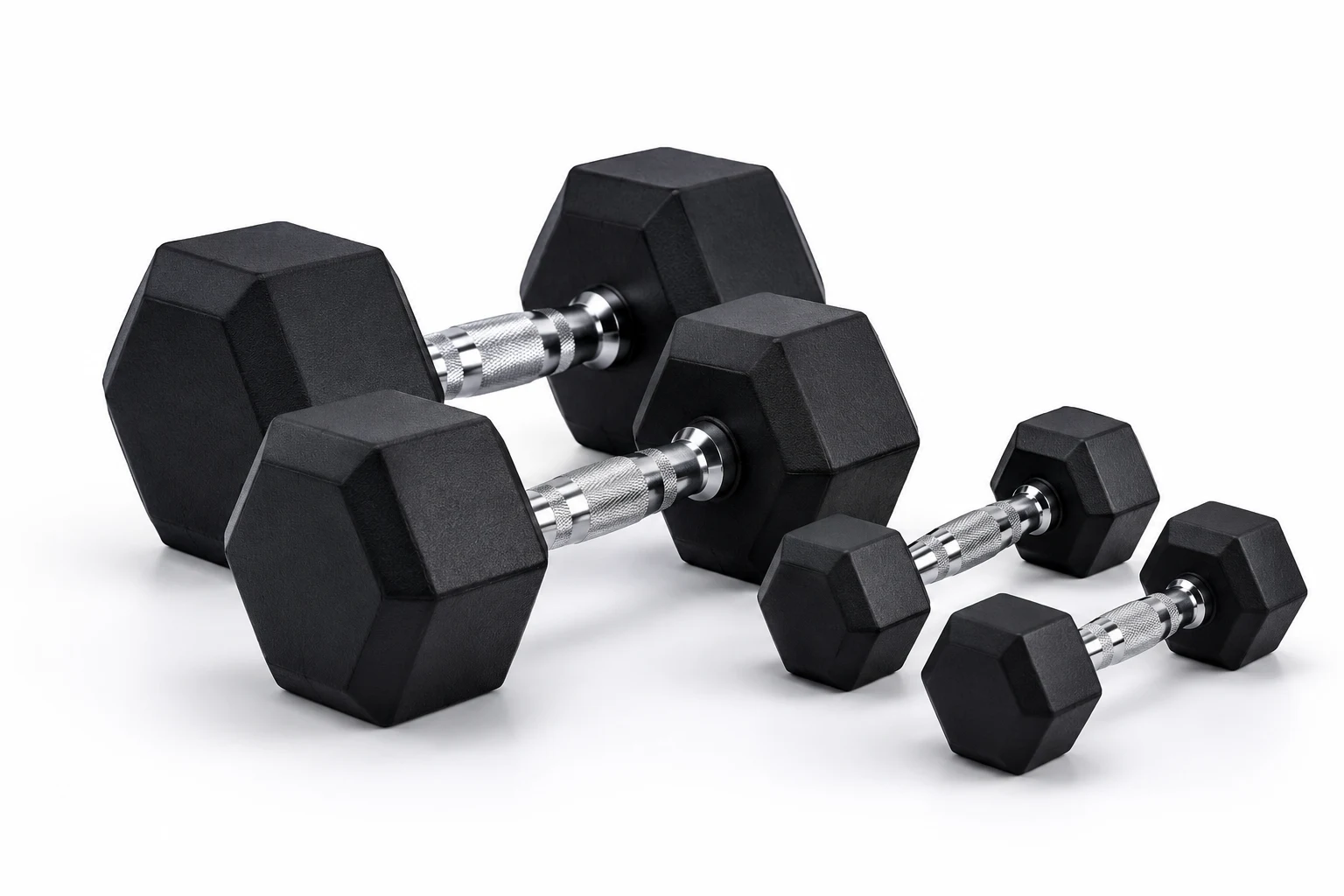
Some adjustable dumbbell handles use standard plates, while others use Olympic-sized plates. Check the handle specification before buying plates.
Smaller plates are usually easier to use on dumbbell handles because large plates can make the dumbbells awkward to move.
Best weight plates for progressive overload
Progressive overload means gradually increasing training demand over time. Weight plates help by allowing you to add small increments to a barbell or dumbbell setup.
Small plates are important because they let you make manageable jumps in weight. Look for lighter plates as well as heavier plates if you want better progression.
Weight plate sets vs individual plates
Weight plate sets are useful if you are starting a home gym and need a range of weights in one purchase. They can offer better value than buying plates one by one.
Individual plates are useful if you already own some weights and only need specific sizes to complete your setup.
Cheap weight plates vs premium weight plates
Cheap weight plates can be good value if they are compatible, durable and accurate enough for your training. They may suit beginners and basic home gym setups.
Premium plates may offer better finish, more accurate weight tolerance, better grip design, rubber coating or specialist features for Olympic lifting.
Olympic vs standard weight plates
Olympic and standard weight plates mainly differ by centre hole size and equipment compatibility. Olympic plates are used with Olympic bars, while standard plates are used with standard bars.
Do not mix them without checking your equipment. Buying the wrong type is one of the most common mistakes when setting up a home gym.
Rubber vs cast iron weight plates
Rubber plates are usually quieter and more floor-friendly, making them useful for home gyms. Cast iron plates are often compact, simple and cost-effective.
The better choice depends on your training space, budget and whether noise or floor protection matters.
How much weight should beginners buy?
Beginners should buy enough weight to train safely and progress gradually. The right amount depends on your current strength, exercises and whether you are using a barbell or dumbbell handles.
It is often better to start with a manageable set and add more plates as you get stronger, rather than buying a very heavy set you may not use immediately.
How to store weight plates
Weight plates should be stored safely to avoid damage, clutter and injury risk. Plate trees, wall racks, weight plate holders or storage pegs can keep plates organised.
Good storage also makes workouts easier because you can find the plates you need quickly and avoid leaving heavy plates on the floor.
Common mistakes when buying weight plates
One common mistake is buying Olympic plates for a standard bar or standard plates for an Olympic bar. Always check the centre hole size and bar type before buying.
Another mistake is ignoring storage and floor protection. Heavy plates can damage floors and make a home gym feel cluttered if there is no storage plan.
Final thoughts
The best weight plates are compatible with your bar, durable enough for your training and suitable for your home gym space. Olympic plates may suit serious barbell training, while standard plates may suit smaller beginner setups.
Choose based on your equipment, budget, flooring, noise tolerance and training goals. A good set of weight plates can support strength training, muscle building and progressive overload for years.