Introduction
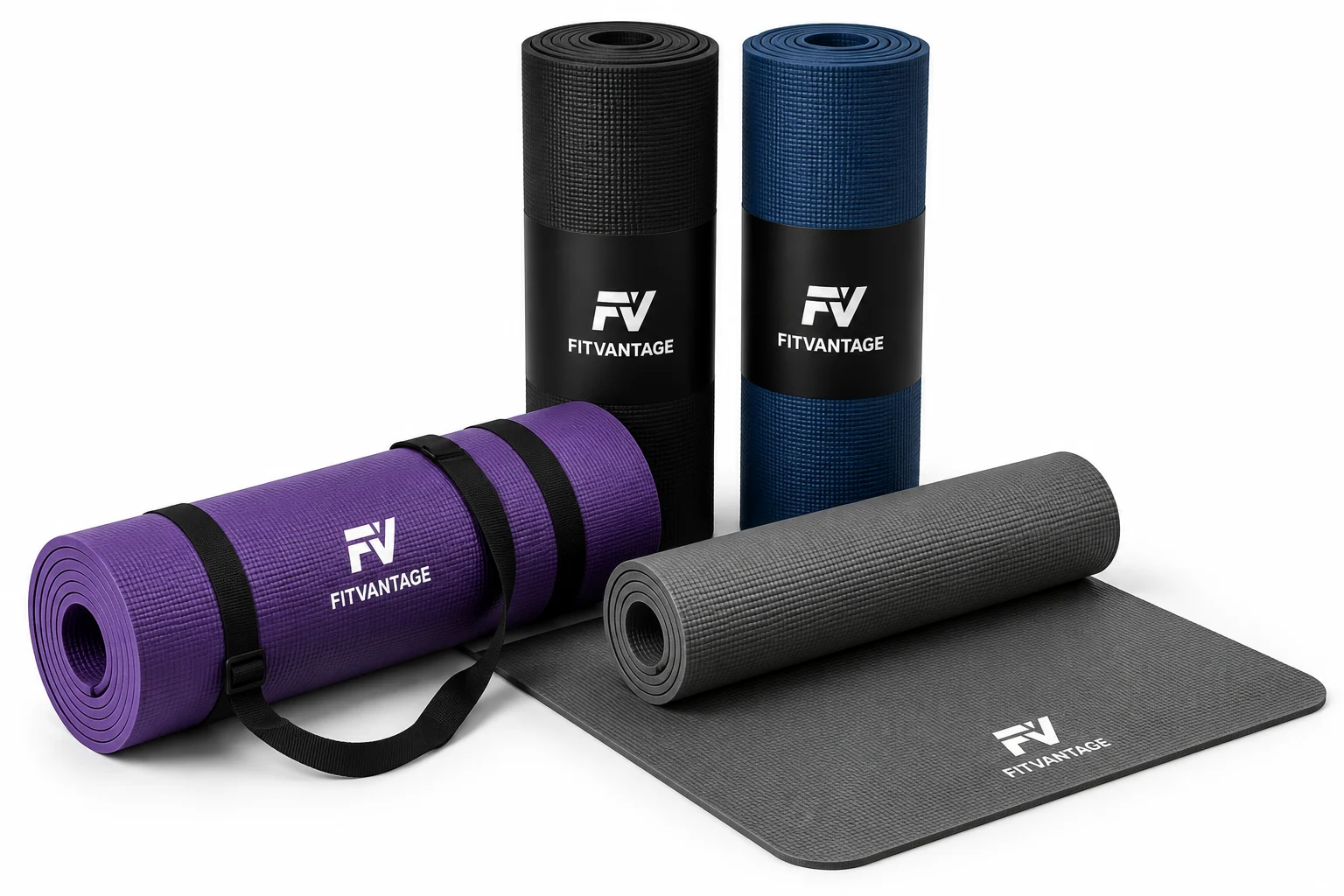
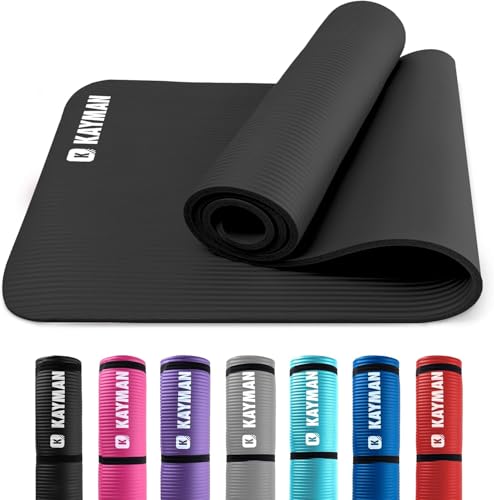
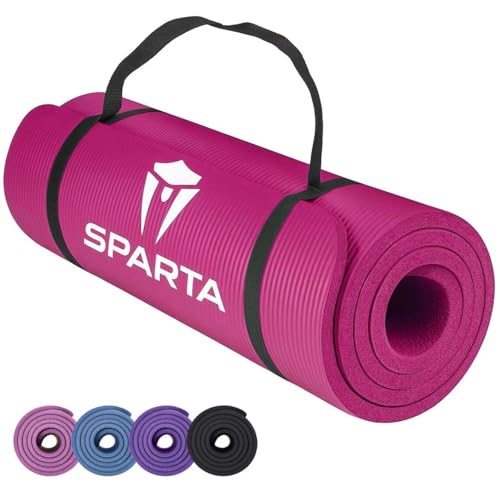
A good yoga mat can make home workouts, stretching, Pilates and yoga sessions more comfortable. It gives you a stable surface, adds cushioning under your joints and helps reduce slipping during movement.
The best yoga mat for you depends on how you train, how much cushioning you need and whether you prefer a lightweight mat or a thicker exercise mat for extra support.
In this guide, we explain what to look for when buying yoga mats in the UK and how to choose the right mat for beginners, home workouts, Pilates and stretching.
Who should buy a yoga mat?
A yoga mat can be useful for beginners, regular yoga users, Pilates users, home workout beginners and anyone doing stretching or floor exercises.
You do not need to be an advanced yoga practitioner to benefit from a mat. A simple non-slip mat can make floor-based exercises more comfortable and hygienic.
What to look for in a yoga mat
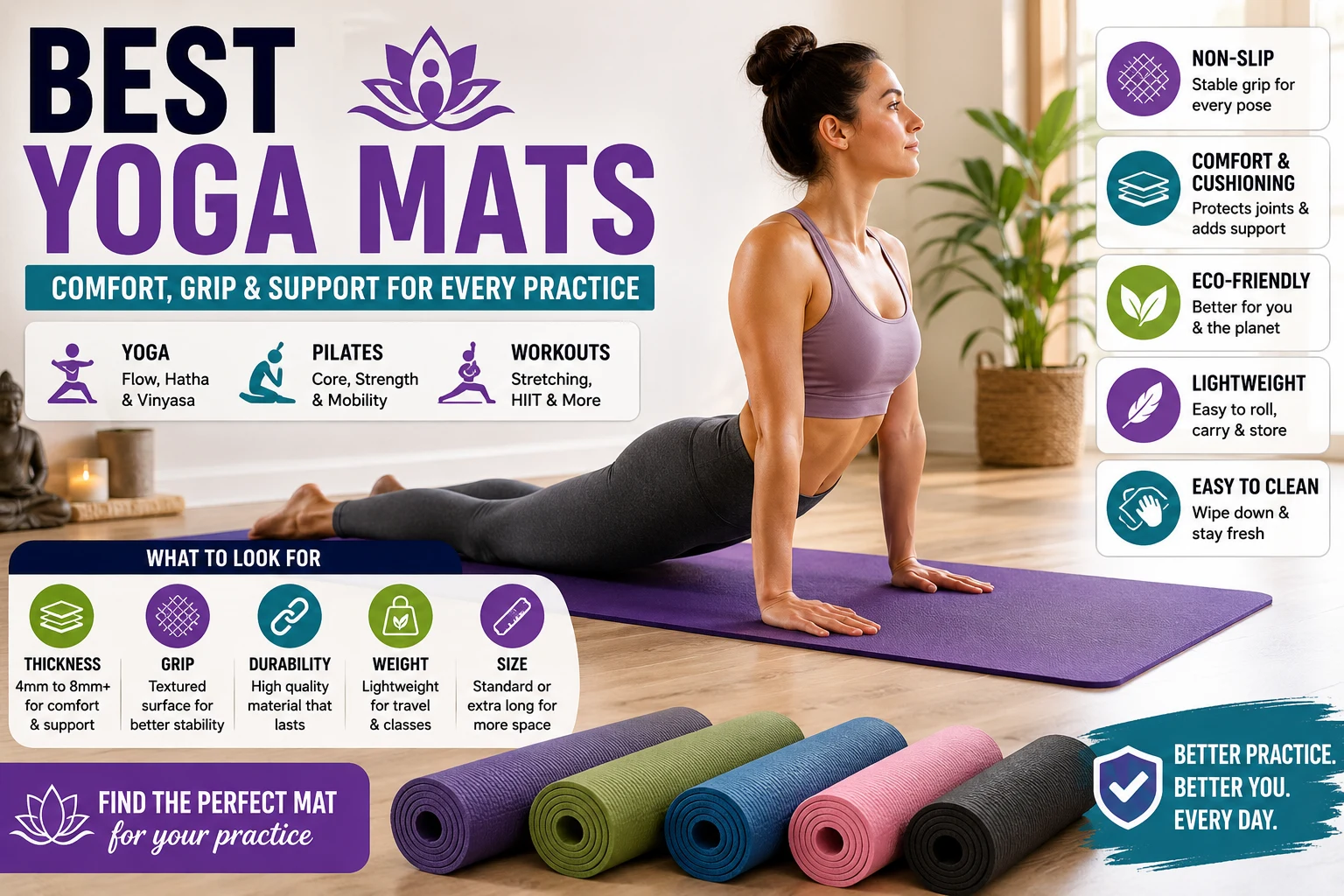
When choosing a yoga mat, look for comfort, grip, thickness, durability, weight and ease of cleaning. A good mat should feel stable under your hands and feet without sliding around on the floor.
If you are using the mat mainly for yoga, grip and stability are important. If you are using it for Pilates, stretching or floor workouts, cushioning may matter more.
Best yoga mats for beginners
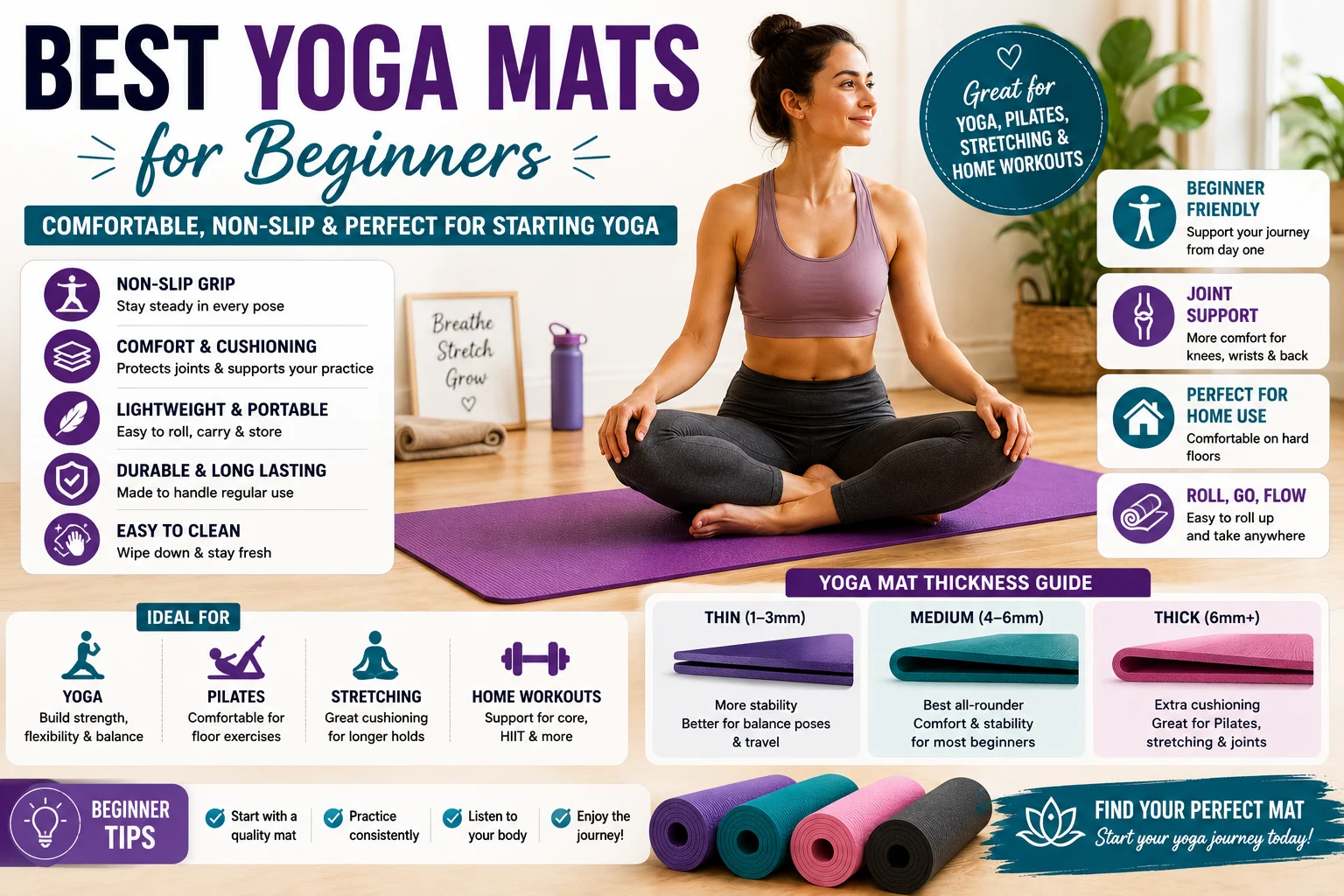
Beginners usually need a mat that is comfortable, affordable and easy to use. A medium-thickness mat is often a good starting point because it gives some cushioning without feeling unstable.
If you are new to yoga, avoid choosing a mat that is too slippery or too thin. A basic non-slip yoga mat is usually enough for starting at home.
Best yoga mats for home workouts
For home workouts, choose a yoga mat that is easy to roll away, simple to clean and comfortable for floor exercises. It should provide enough grip for planks, lunges, stretching and bodyweight movements.
If you use the mat on hard flooring, a slightly thicker mat may feel better under your knees, wrists and back.
Best yoga mats for Pilates
Pilates often involves more time on the floor, so cushioning is important. A thicker mat can help support your spine, hips and knees during exercises.
However, the mat should still feel stable. If it is too soft, it may make balance exercises harder.
Best non-slip yoga mats
A non-slip yoga mat is useful if your hands or feet slide during poses. Grip is especially important for downward-facing dog, lunges, planks and standing poses.
Look for textured surfaces, good floor contact and materials designed to reduce slipping. If you sweat during practice, you may also want to use a towel or choose a mat with better moisture grip.
Thick vs thin yoga mats
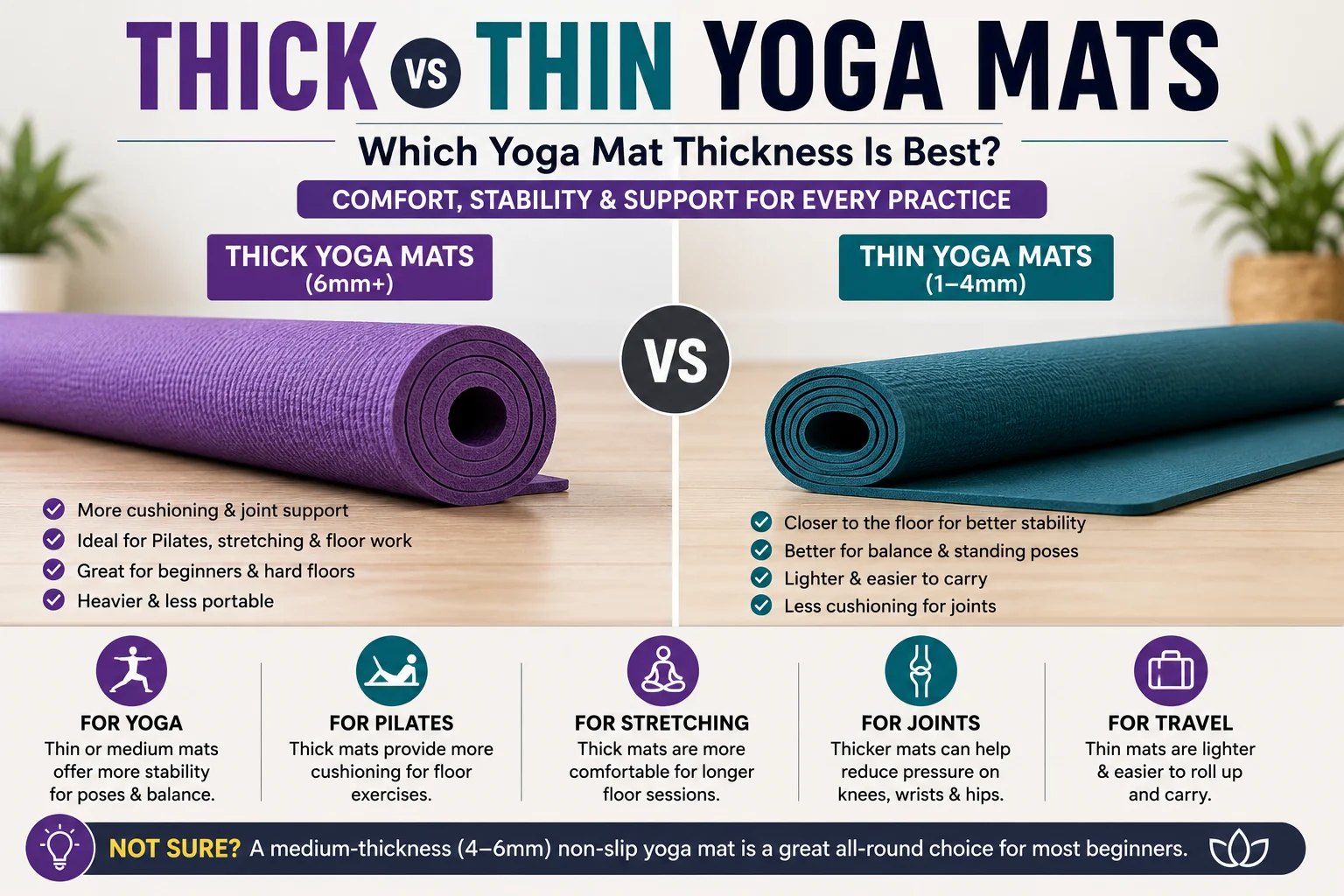
Thin yoga mats are usually lighter and easier to carry. They can feel more stable for balance poses because your feet are closer to the floor.
Thick yoga mats provide more cushioning and can be better for beginners, Pilates, stretching and people who want more joint comfort. The trade-off is that very thick mats may feel less stable for standing poses.
What thickness yoga mat is best?
For most beginners, a mat around medium thickness is a good starting point. It gives enough comfort for floor work while still feeling stable for basic yoga poses.
If you have sensitive knees or mainly do Pilates and stretching, a thicker mat may be more comfortable. If you travel or take your mat to classes, a thinner lightweight mat may be easier to carry.
Are cheap yoga mats good enough?
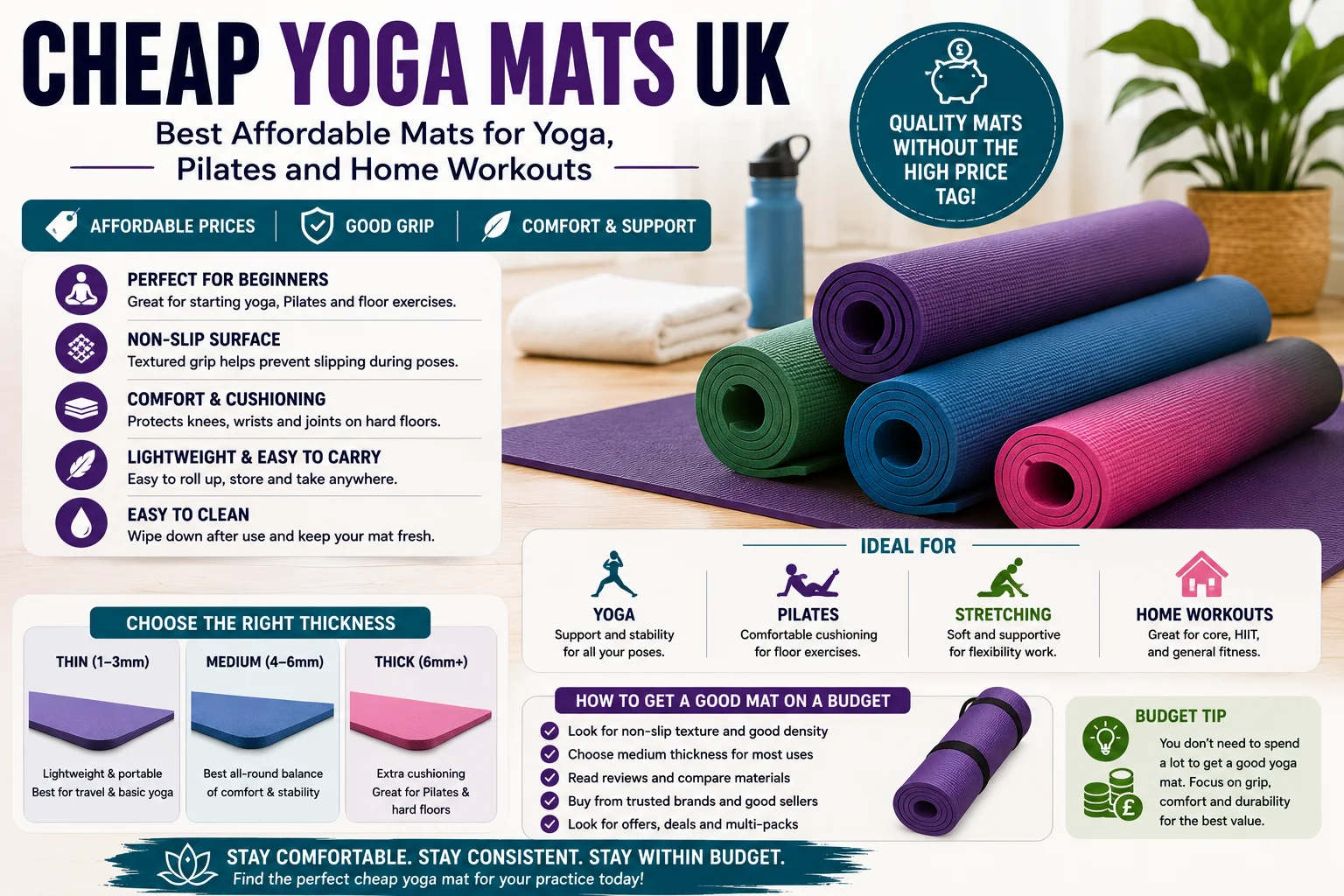
Cheap yoga mats can be good enough for beginners and casual home workouts. Many affordable mats offer reasonable grip and cushioning for basic use.
If you practise often, sweat heavily or need stronger durability, it may be worth upgrading to a higher-quality mat later.
How to clean a yoga mat
Most yoga mats can be wiped down after use with a damp cloth or mild cleaning solution. Always check the care instructions for your specific mat before using any cleaning product.
Let the mat dry fully before rolling it up. This helps keep it fresher and reduces odour after sweaty workouts.
Final thoughts
The best yoga mat is comfortable, stable, non-slip and suitable for the type of exercise you do most often. Beginners usually do well with a medium-thickness non-slip mat.
If you mainly do Pilates or stretching, choose more cushioning. If you focus on yoga poses and balance, prioritise grip and stability.