Introduction
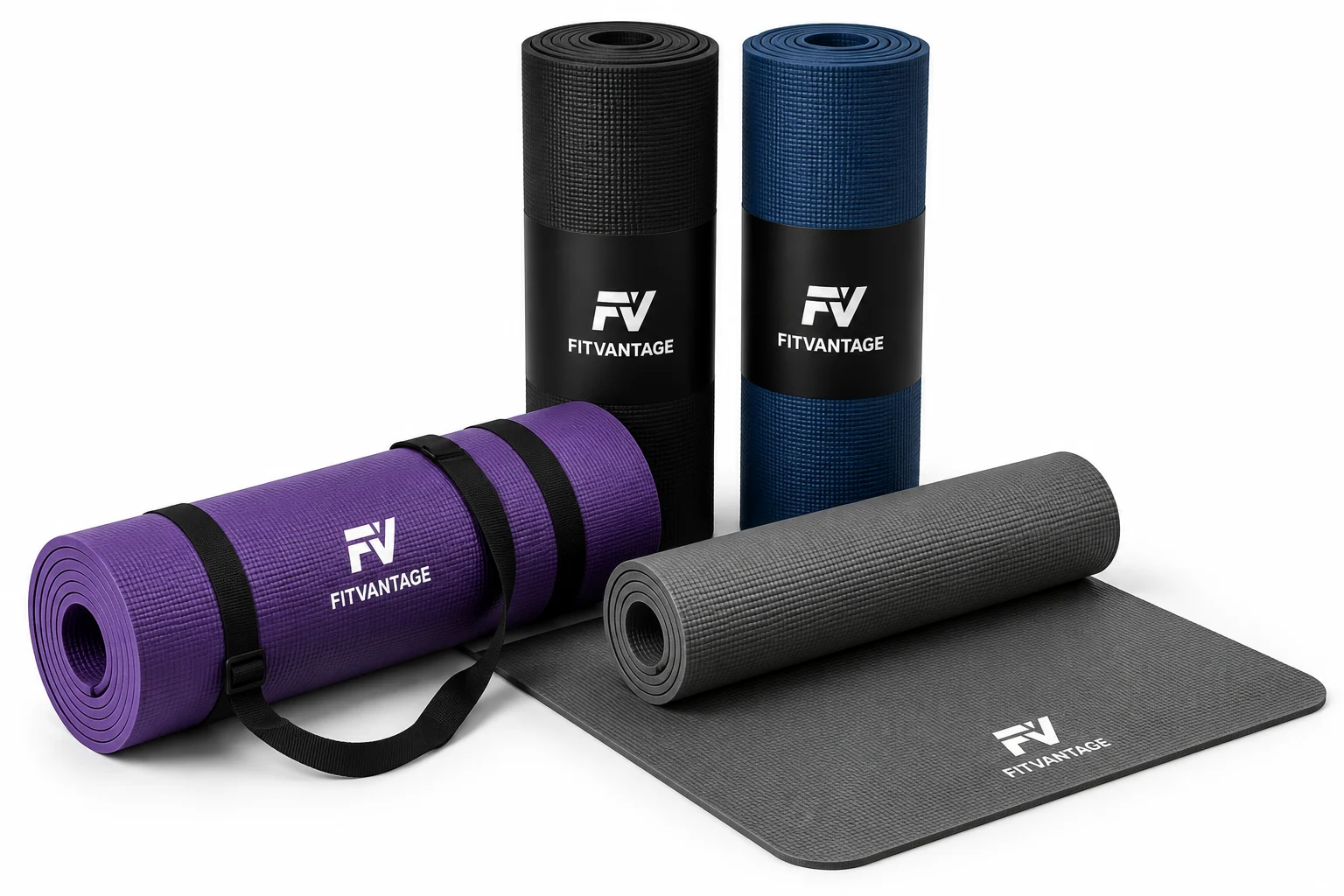
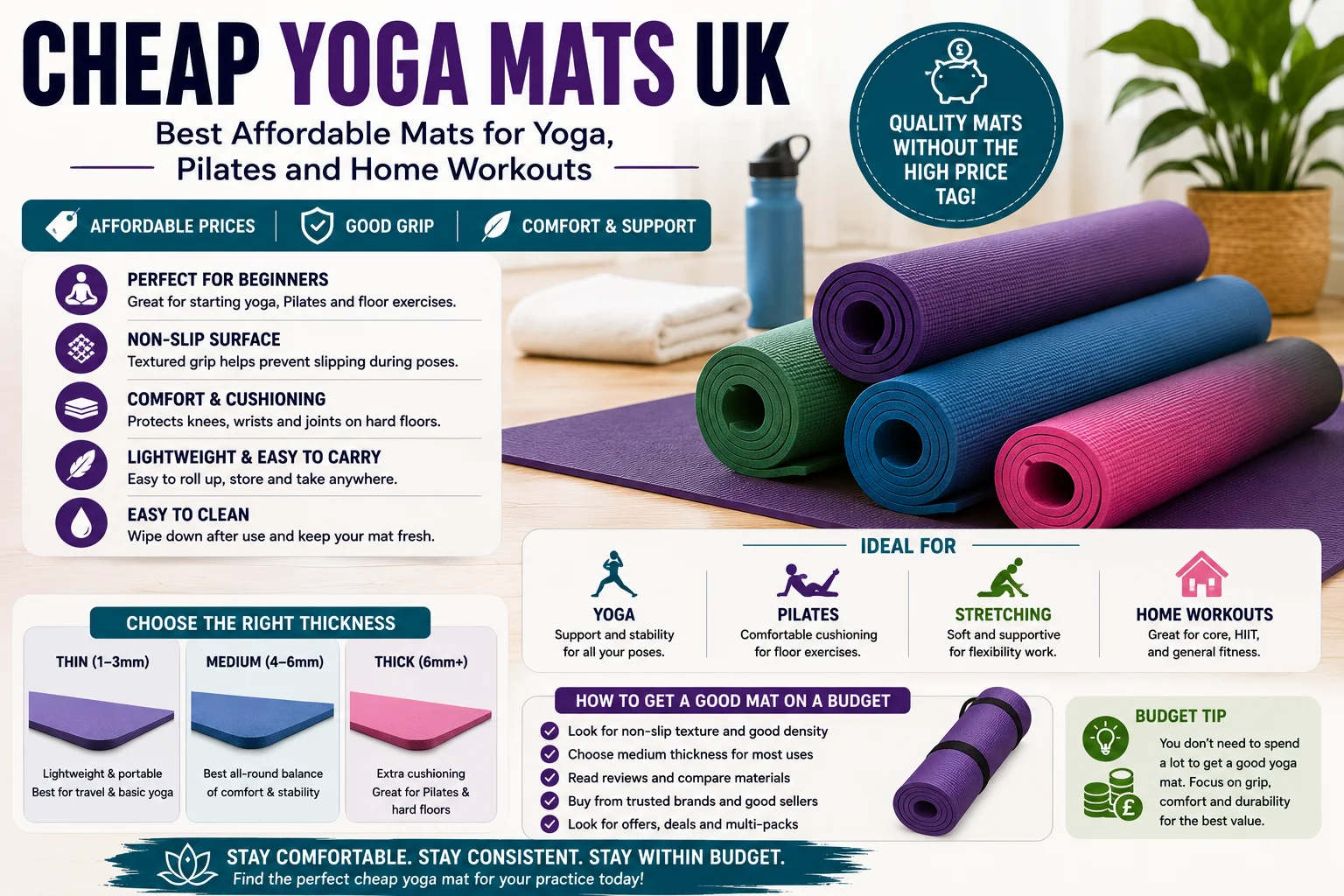
Yoga mat thickness can make a big difference to comfort, stability and how confident you feel during exercise. Some people prefer thick yoga mats for cushioning, while others prefer thin yoga mats for better balance and floor connection.
The best choice depends on how you use the mat. Yoga, Pilates, stretching and home workouts can all need slightly different levels of support.
In this guide, we compare thick vs thin yoga mats so you can choose the right mat for your training style, comfort needs and home workout space.
Why yoga mat thickness matters
Yoga mat thickness affects how much cushioning you get under your knees, wrists, elbows, hips and back. A thicker mat usually feels softer and more comfortable for floor exercises.
However, more thickness can sometimes reduce stability. If the mat feels too soft or spongy, balance poses may feel harder because your feet and hands sink slightly into the mat.
What is a thick yoga mat?
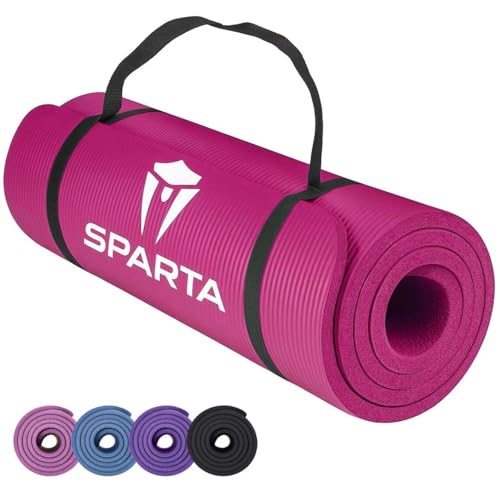
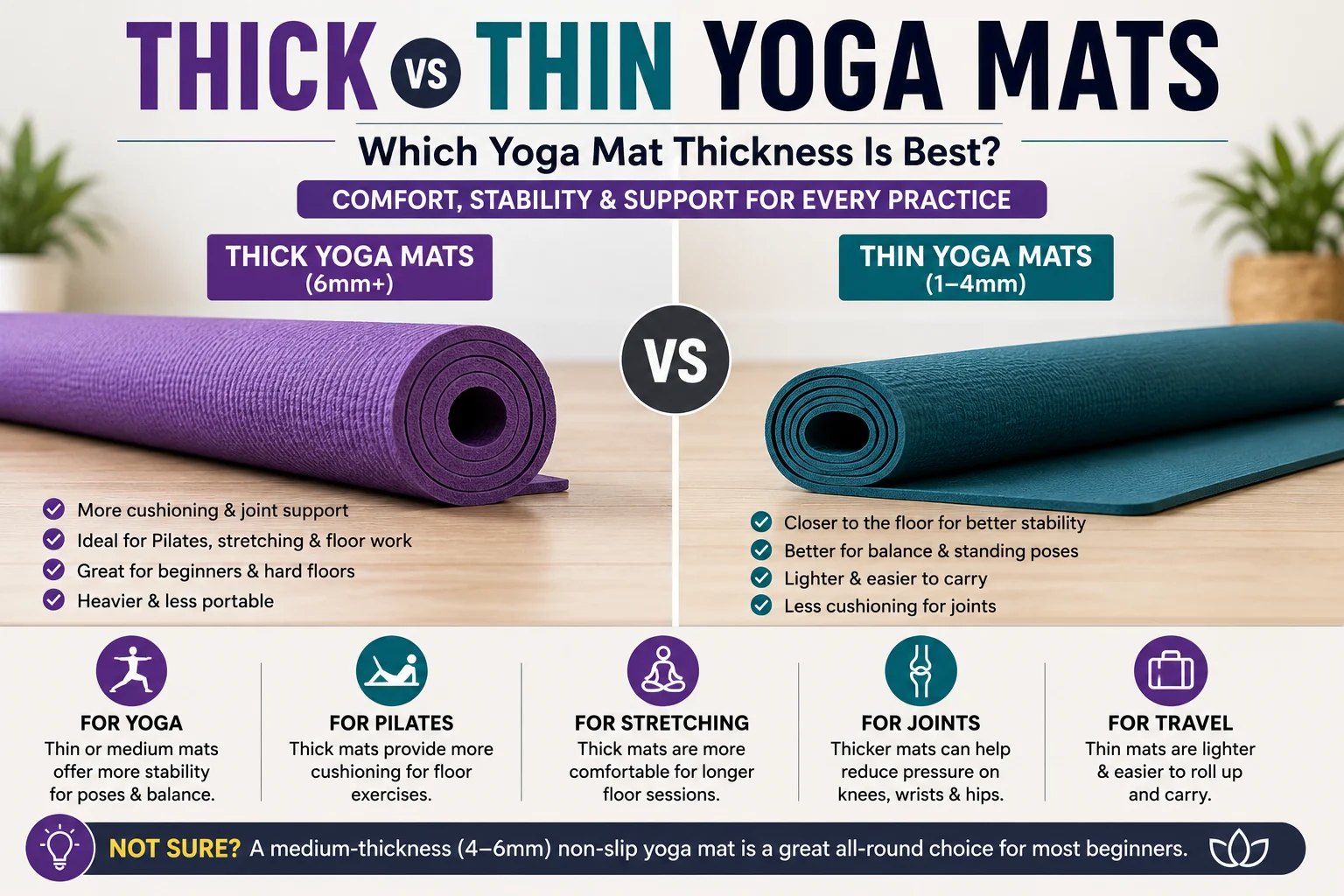
A thick yoga mat is usually designed to provide more cushioning and joint support. These mats are often used for beginners, Pilates, stretching, rehabilitation-style exercises and home workouts on hard floors.
Thick mats can be useful if you find standard yoga mats uncomfortable under your knees, spine or wrists.
What is a thin yoga mat?
A thin yoga mat is usually lighter, easier to carry and closer to the floor. Thin mats often feel more stable for standing poses, balance work and traditional yoga practice.
They may not provide as much cushioning, but they can give better grip, control and floor feedback during movement.
Thick vs thin yoga mats: main difference
The main difference is cushioning versus stability. Thick yoga mats usually offer more comfort, while thin yoga mats usually offer better balance and a firmer surface.
If your main concern is joint comfort, a thicker mat may be better. If your main concern is balance, grip and stability, a thinner mat may be better.
Best yoga mat thickness for beginners
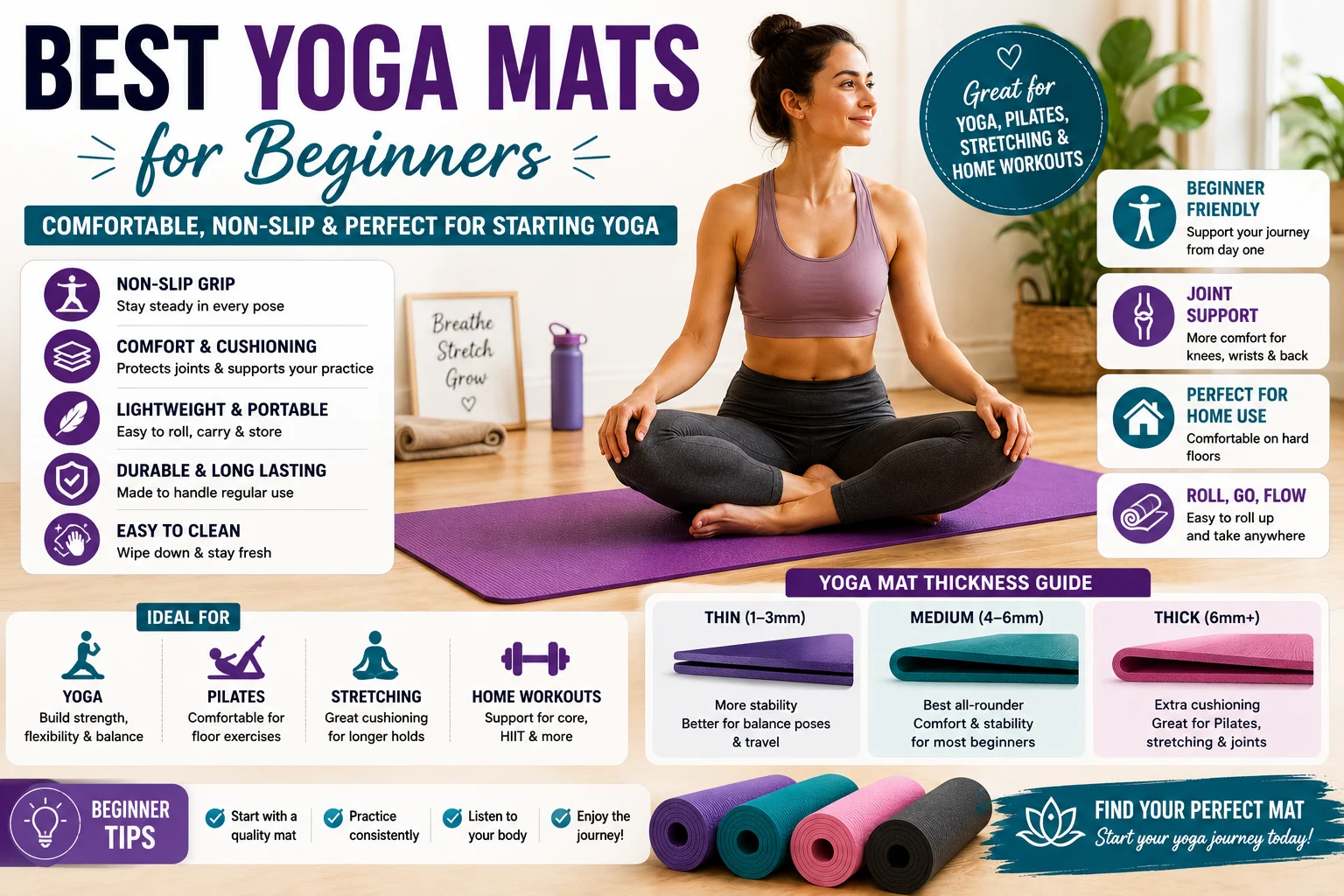
Beginners usually do well with a medium-thickness yoga mat. This gives enough cushioning for basic floor work without feeling too unstable during standing poses.
If you are completely new to yoga, avoid extremes at first. A mat that is too thin may feel uncomfortable, while a mat that is too thick may make balance harder.
Best yoga mat thickness for Pilates
For Pilates, a thicker mat is often more comfortable because many exercises involve lying on your back, side or hips. Extra cushioning can make floor-based movements feel easier on the body.
However, the mat should still feel firm enough to support controlled movements. A mat that is too soft may make some Pilates exercises feel less stable.
Best yoga mat thickness for stretching
For stretching, comfort is usually more important than balance. A thicker mat can be useful if you spend more time sitting, kneeling or lying down.
If you use your mat mainly for stretching after workouts, a cushioned mat may be a better choice than a very thin yoga mat.
Best yoga mat thickness for balance poses
For balance poses, thinner mats are usually better. They help you feel more connected to the floor and can reduce wobbling during standing movements.
If you practise yoga poses that require balance and control, choose a mat that is stable, grippy and not too soft.
Best yoga mat thickness for hard floors
If you train on hard floors, a thicker or medium-thickness mat may feel better. It can reduce pressure on your knees, wrists and back during floor exercises.
This is especially useful for home workouts on wood, tile or laminate flooring.
Are thick yoga mats better for bad knees?
Thick yoga mats can be more comfortable for sensitive knees because they provide extra cushioning. They may help reduce pressure during kneeling poses or floor exercises.
However, if you need medical support for knee pain, it is sensible to follow professional advice. A mat can improve comfort, but it does not replace proper treatment or guidance.
Are thin yoga mats better for grip?
Thin yoga mats can feel more stable, but grip depends more on the mat material and surface texture than thickness alone.
A good thin mat can provide excellent grip, but a good thicker mat can also be non-slip if it uses the right surface material.
Which yoga mat should you choose?
Choose a thick yoga mat if you want more cushioning for Pilates, stretching, floor work or hard floors.
Choose a thin yoga mat if you want better stability for yoga poses, balance work, travel or carrying to classes.
For most beginners, a medium-thickness non-slip yoga mat is the safest starting point because it gives a balance of comfort and stability.
Final thoughts
Thick and thin yoga mats both have advantages. Thick mats are usually better for comfort, cushioning and joint support. Thin mats are usually better for stability, balance and portability.
If you are not sure what to choose, start with a medium-thickness non-slip mat. It works well for beginners, home workouts, stretching and general yoga practice.