Introduction
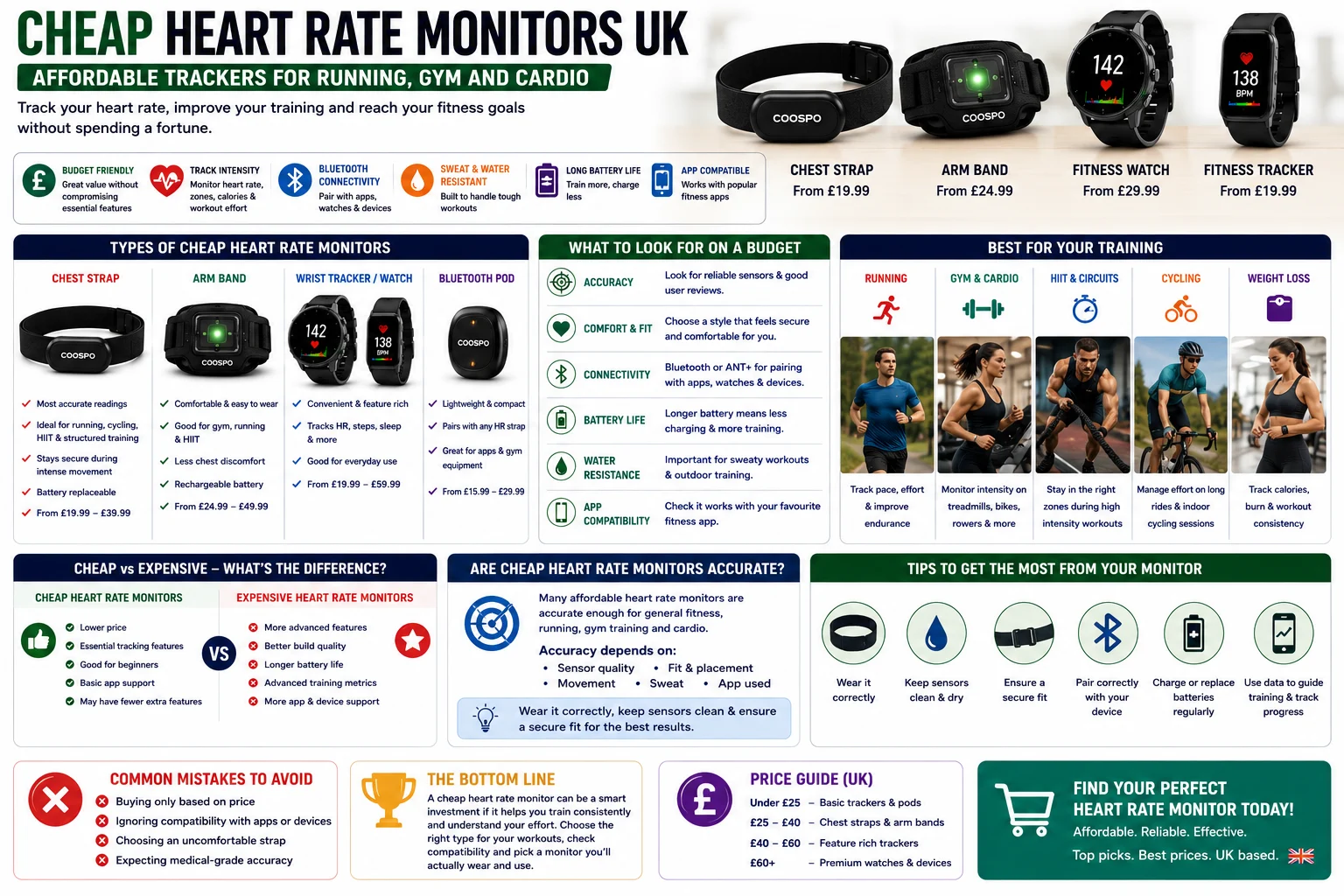
Chest strap and wrist heart rate monitors are two of the most common ways to track heart rate during exercise. Both can be useful, but they suit different users and different types of training.
A chest strap is usually worn around the chest and is often chosen for stable workout readings. A wrist heart rate monitor is usually built into a smartwatch or fitness tracker and is more convenient for daily use.
In this guide, we compare chest strap vs wrist heart rate monitors so you can choose the right option for running, gym training, cycling, HIIT, cardio and everyday fitness tracking.
What is a chest strap heart rate monitor?
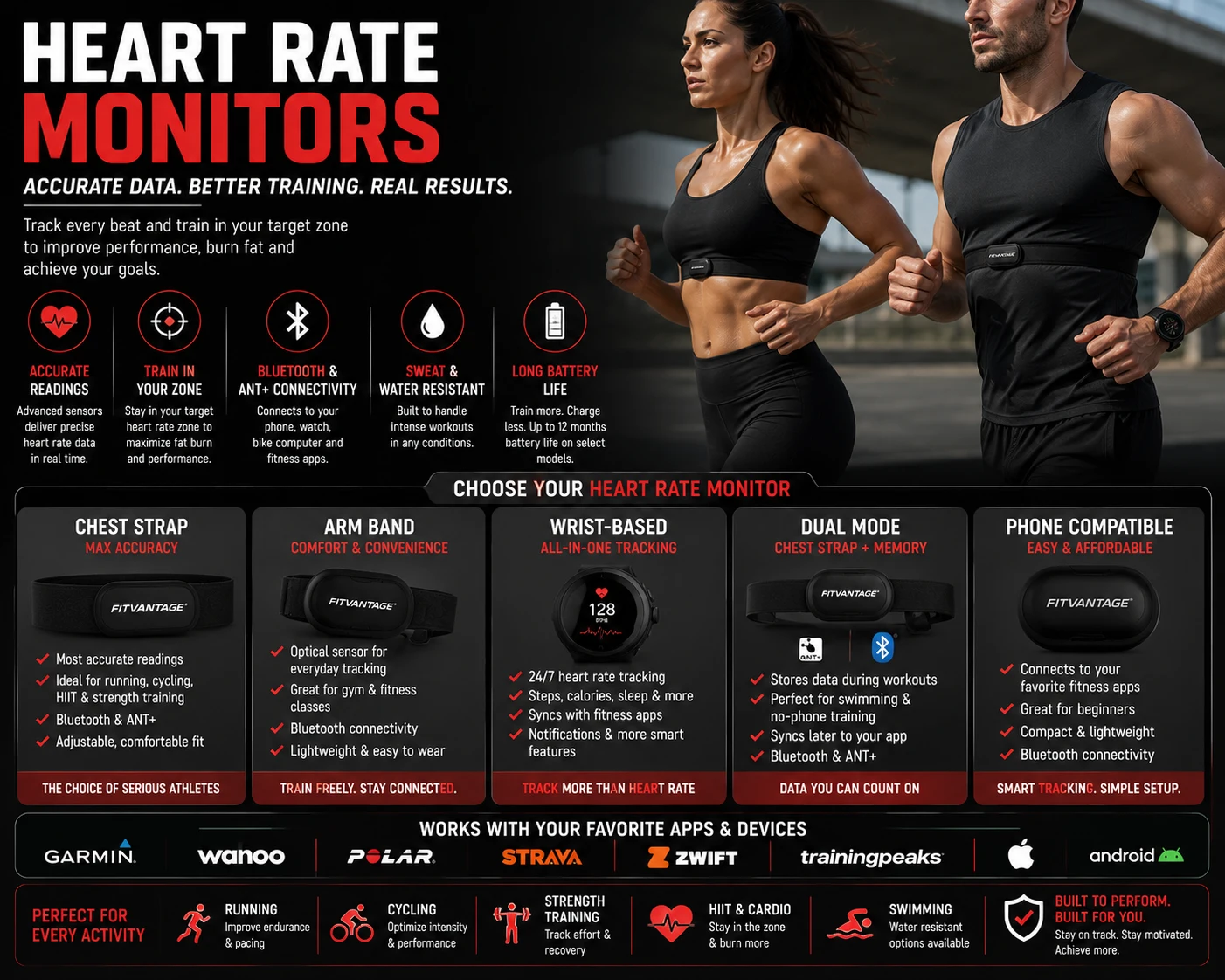
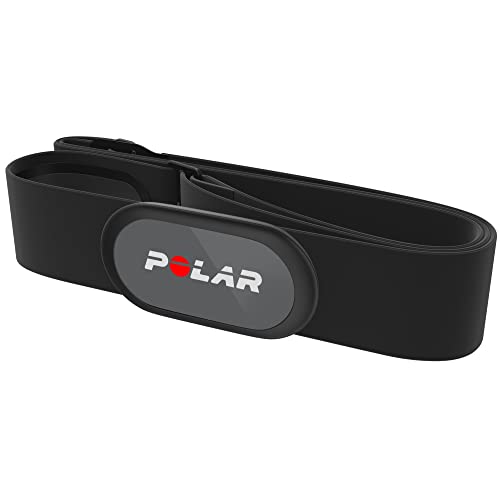
A chest strap heart rate monitor is worn around the chest, usually just below the chest muscles. It tracks heart rate during exercise and sends the data to a watch, phone, app, cycling computer or gym equipment.
Chest straps are commonly used by runners, cyclists, athletes and people who want reliable workout heart rate data.
What is a wrist heart rate monitor?
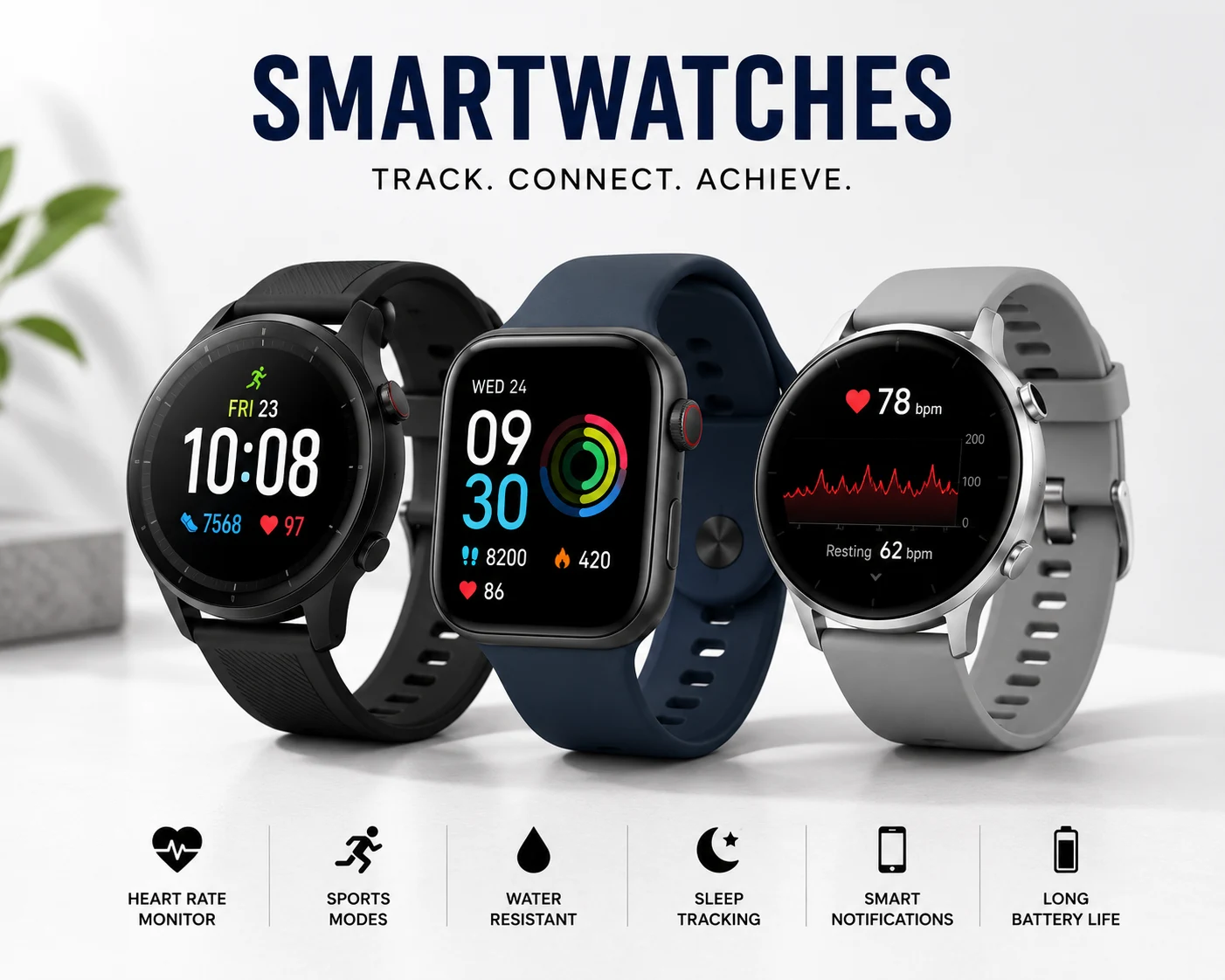
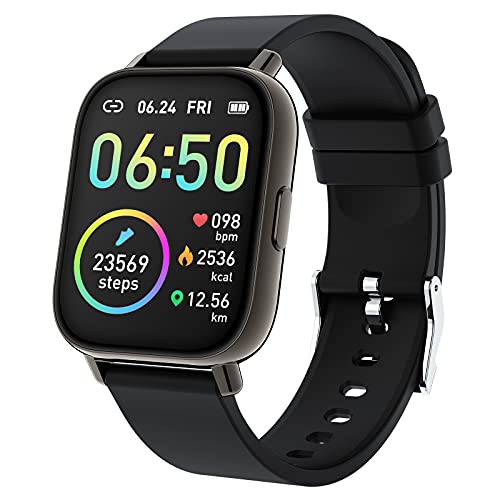
A wrist heart rate monitor is usually built into a smartwatch or fitness tracker. It sits on the wrist and uses optical sensors to estimate heart rate during workouts and daily activity.
Wrist monitors are popular because they are convenient, easy to wear and often include extra features such as steps, sleep tracking, GPS, notifications and workout modes.
Chest strap vs wrist monitor: main difference
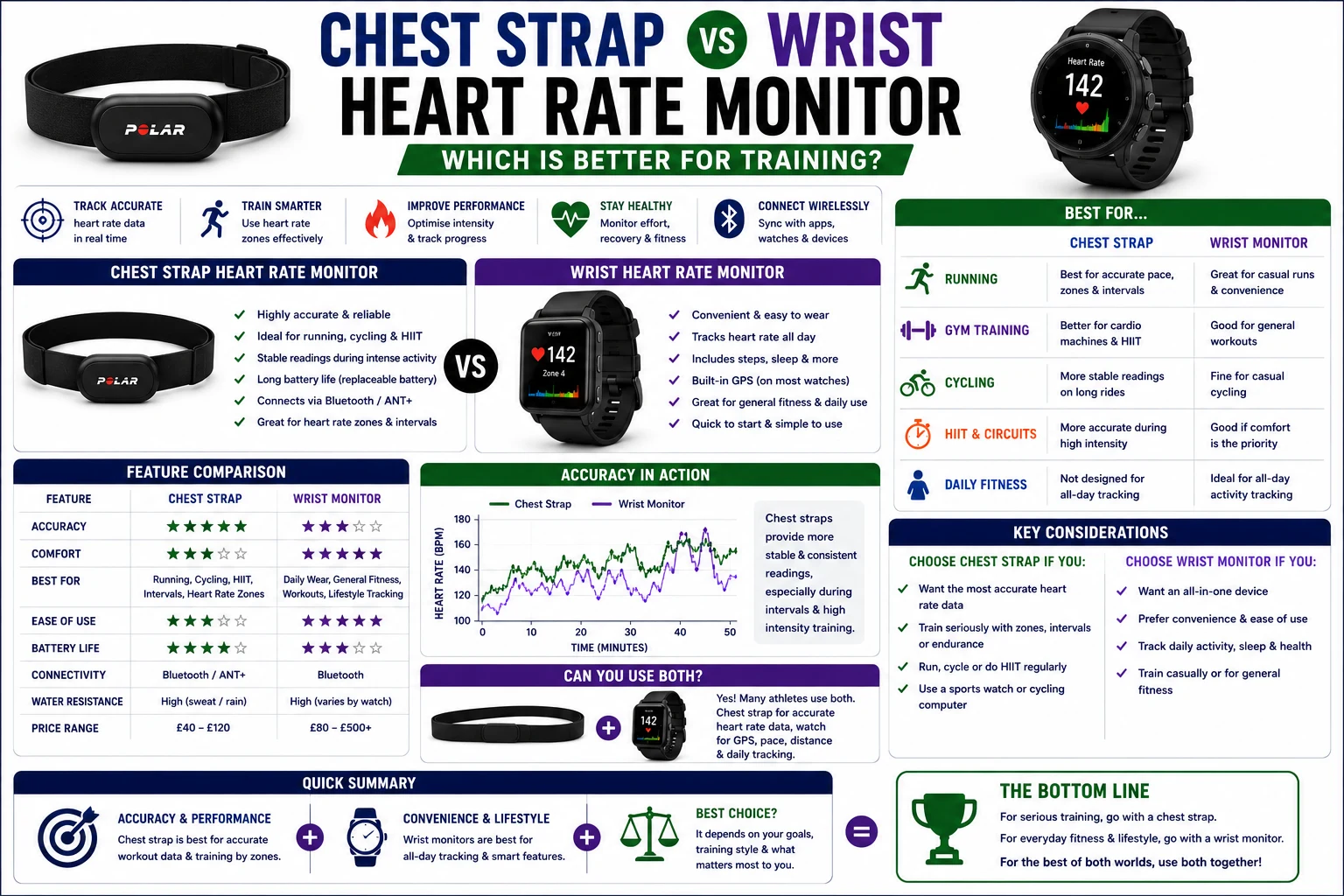
The main difference is where the device is worn and how it is used. Chest straps are more focused on workout heart rate tracking, while wrist monitors are more convenient for everyday fitness tracking.
Chest straps are often preferred for training accuracy, while wrist monitors are better if you want one device for workouts, daily activity and smartwatch-style features.
Which is more accurate?
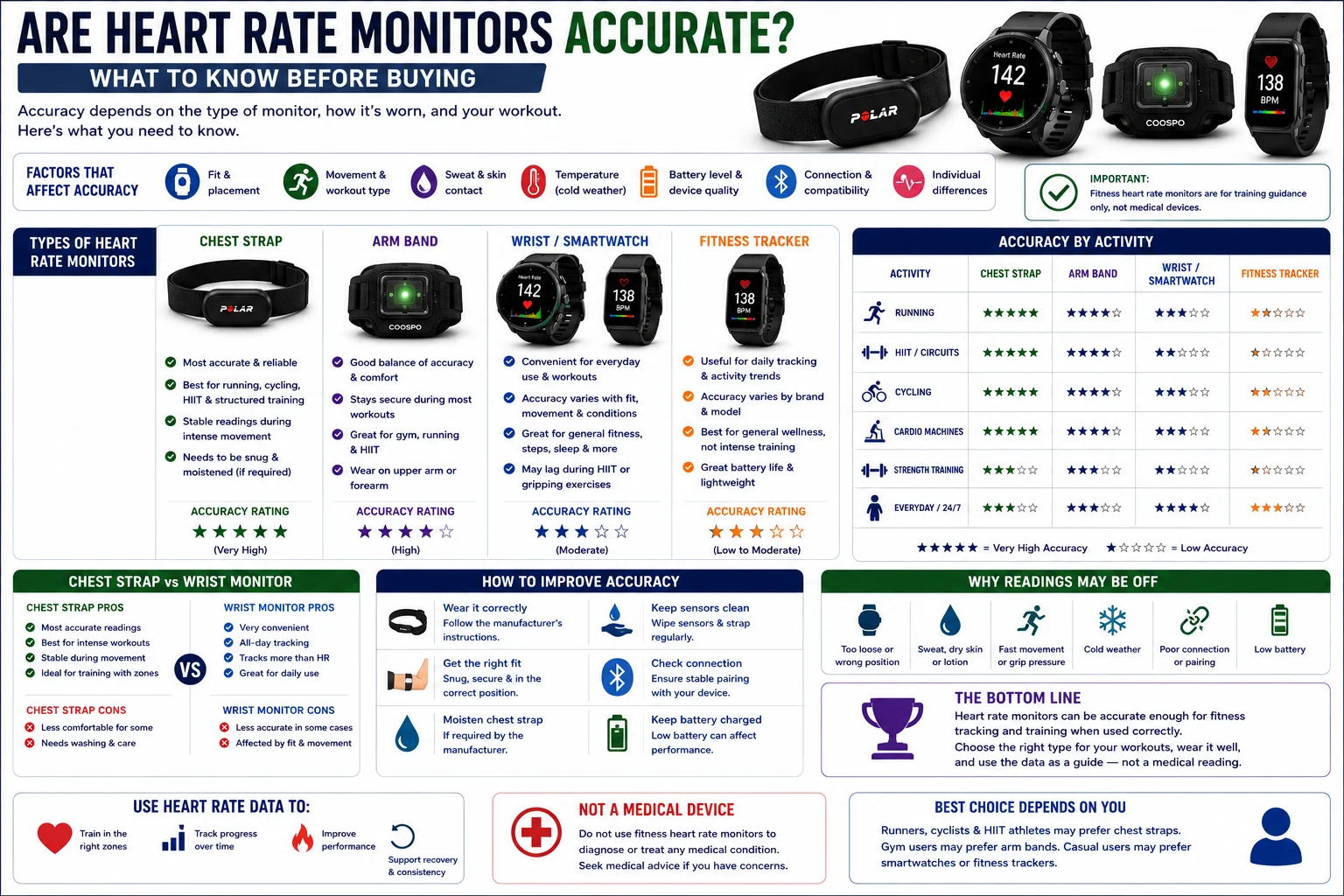
Chest straps are often preferred by serious runners, cyclists and athletes because they can provide stable heart rate readings during exercise.
Wrist monitors can still be useful, but readings may vary more during fast movement, intense sessions, cold weather, loose fit or exercises where the wrist moves a lot.
Which is more comfortable?
Wrist monitors are usually more comfortable for everyday wear because they feel like a normal watch or fitness band. You can wear them all day without needing to put on a separate strap.
Chest straps can feel less comfortable for some users because they sit around the chest. However, many people get used to them once the strap is adjusted properly.
Which is better for running?
For running, a chest strap may be better if you want stable heart rate readings for intervals, tempo runs, long runs and heart rate zone training.
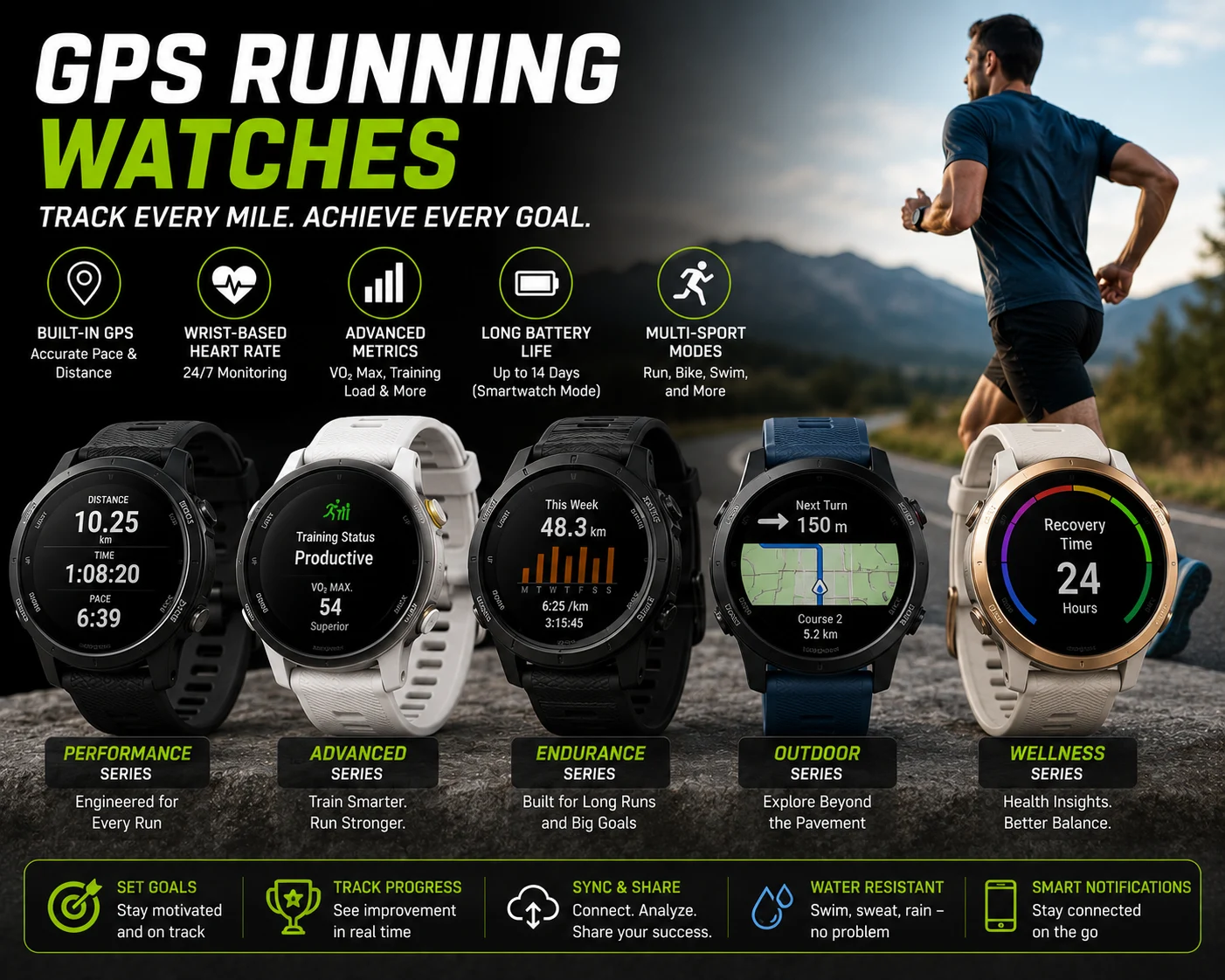
A wrist monitor may be better if you want convenience, GPS, pace, distance and heart rate in one device. Many runners use a wrist watch for display and a chest strap for heart rate data.
Which is better for gym training?
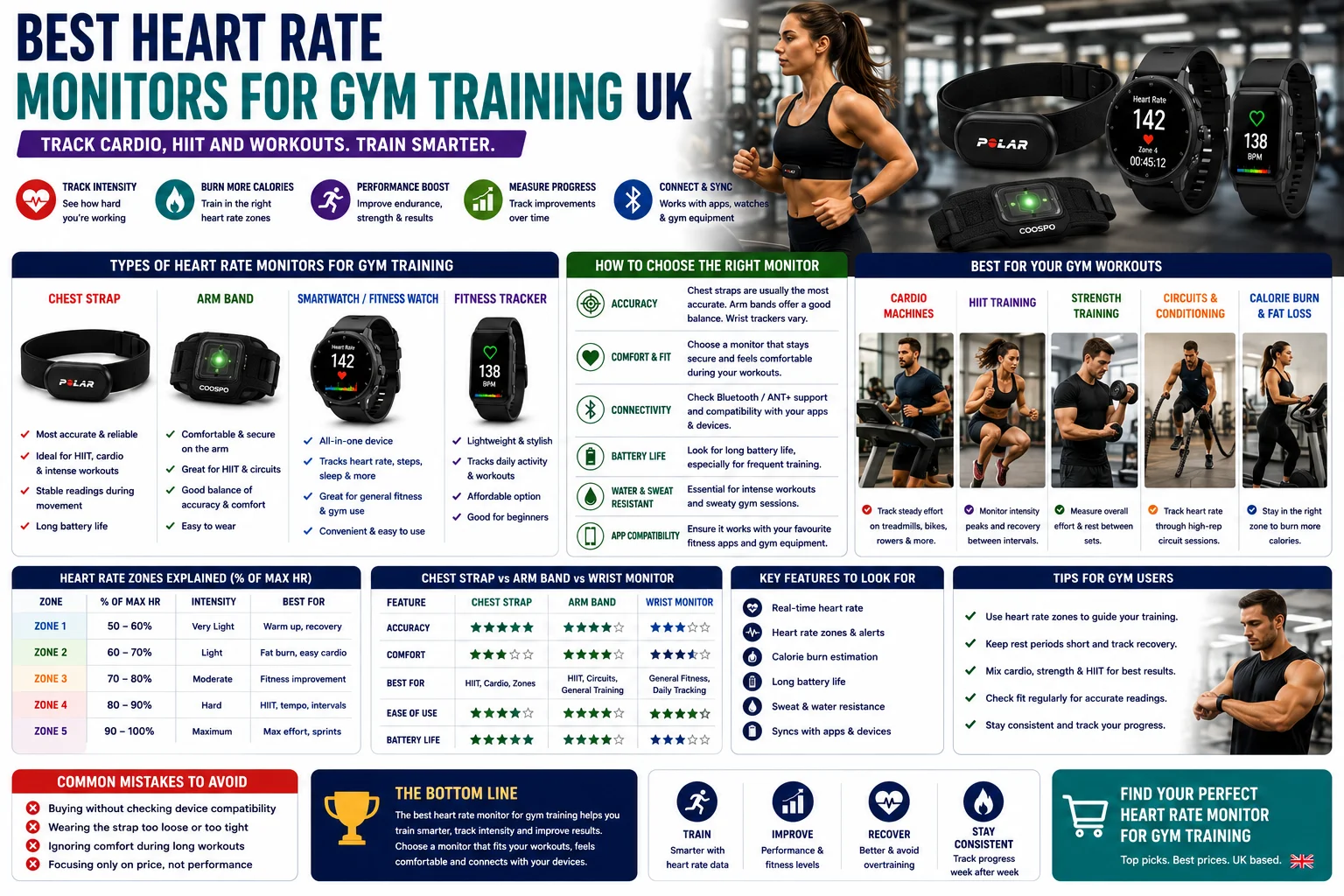
For gym training, the best choice depends on the workout. A wrist monitor may be convenient for general strength training, treadmill sessions and everyday fitness tracking.
A chest strap may be better for cardio machines, circuits or sessions where you want more stable heart rate data. Some gym users may prefer an arm band monitor as a middle option.
Which is better for HIIT?
HIIT workouts involve fast changes in intensity and lots of movement. A chest strap may stay more stable than some wrist monitors during intense intervals.
However, some people find chest straps uncomfortable during dynamic workouts. If comfort is the priority, an arm band heart rate monitor may also be worth considering.
Which is better for cycling?
Cyclists often use chest straps because they can provide stable readings and connect to cycling computers, watches or apps.
Wrist monitors can still work for casual cycling, but wrist position on handlebars may affect readings for some users. A chest strap is often the more training-focused option.
Which is better for daily fitness tracking?
Wrist heart rate monitors are usually better for daily tracking because they can monitor heart rate throughout the day. They may also track steps, sleep, calories, workouts and activity trends.
Chest straps are not usually worn all day. They are better as a dedicated workout tool rather than a daily lifestyle tracker.
Which is easier to use?
Wrist monitors are usually easier because you simply wear the watch or tracker. They often start tracking automatically or through a workout mode.
Chest straps require putting on the strap, adjusting the fit and pairing it with another device. Once set up, they are straightforward, but they are less convenient than a wrist device.
Which has better battery life?
Chest straps often have long battery life because they are used mainly during workouts and many use replaceable batteries.
Wrist monitors usually need more frequent charging because they power screens, sensors, notifications, GPS and daily tracking features.
Which is better for heart rate zones?
Both chest straps and wrist monitors can be used for heart rate zones. If you are training seriously by zones, a chest strap may provide more stable workout readings.
If you are using zones for general fitness guidance, a wrist monitor may be enough and more convenient.
Chest strap vs wrist monitor for beginners
Beginners may prefer a wrist heart rate monitor because it is easier to use and provides more general fitness data in one device.
However, if the goal is structured running or cycling training, a chest strap can still be a good choice, especially if paired with a compatible watch or app.
Chest strap vs wrist monitor for weight loss
Both options can support weight loss routines by helping you track workout intensity and stay consistent with cardio sessions.
A wrist monitor may be better for overall activity tracking, while a chest strap may be better for workout-specific heart rate data. Neither device causes weight loss by itself.
Can you use both together?
Yes, many people use both. A chest strap can provide workout heart rate data, while a watch displays pace, distance, workout time and other metrics.
This setup can be useful for runners, cyclists and gym users who want both convenience and more stable heart rate tracking.
Who should choose a chest strap?
Choose a chest strap if you want focused workout heart rate tracking, stable exercise readings and compatibility with running watches, cycling computers or fitness apps.
Chest straps are especially useful for runners, cyclists, endurance athletes and people who train by heart rate zones.
Who should choose a wrist monitor?
Choose a wrist heart rate monitor if you want convenience, daily activity tracking and smartwatch-style features in one device.
Wrist monitors are useful for beginners, casual fitness users, gym users and people who want heart rate tracking without wearing a separate strap.
Common mistakes when choosing
One common mistake is assuming a wrist monitor and chest strap do exactly the same job. They overlap, but one is usually more convenient and the other is more training-focused.
Another mistake is buying a chest strap without checking compatibility with your watch, phone or fitness app.
Final thoughts
Chest straps and wrist heart rate monitors can both be useful. A chest strap is usually better for stable workout readings and structured training, while a wrist monitor is usually better for convenience and daily fitness tracking.
If you are a beginner, a wrist monitor may be enough. If you are serious about running, cycling, intervals or heart rate zone training, a chest strap may be the better choice.